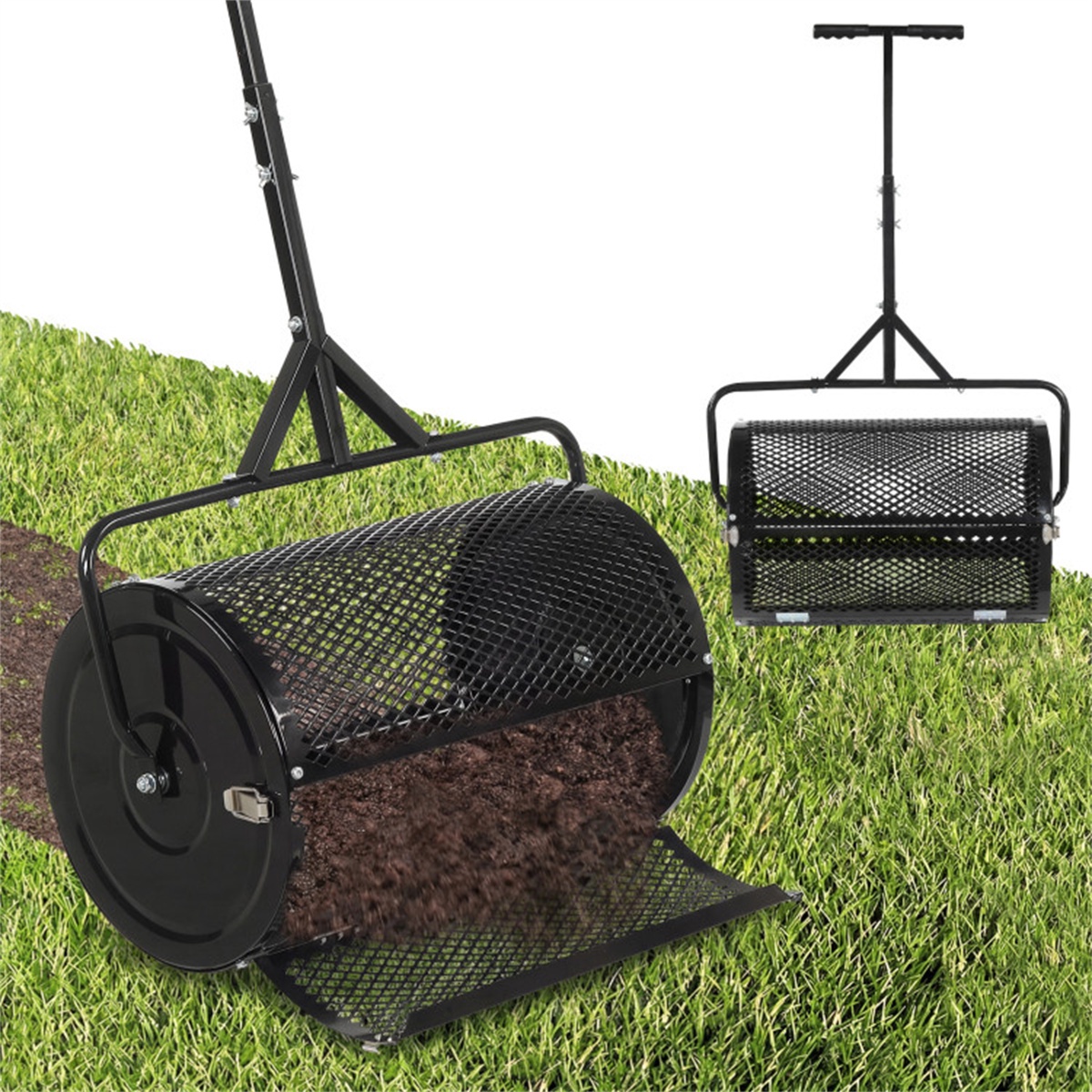

Photos from current listings. Actual item, color, and included accessories may vary.
Sand Spreader Lawn Buying Guide
A lawn sand spreader is a drop spreader or broadcast spreader built to handle dense, abrasive media like mason sand, paver sand, and sand/soil blends for leveling, topdressing, and traction. The core trade-off is hopper and gate durability versus spread pattern: drop spreaders give precise, stripe-free placement for leveling but demand exact overlap, while broadcast spreaders cover fast but throw sand unevenly and stress gears. Choose a drop spreader with a metal gate and sealed gearbox for leveling work; reserve broadcast units for large-area, low-precision topdressing.
Key takeaways
- Drop spreaders meter sand through a full-width gate for precise, stripe-free placement; broadcast spreaders use an impeller and throw sand in an arc that drifts with wind and overlap.
- Sand is far denser than fertilizer or seed, so hopper bodies should be polypropylene or galvanized steel with reinforced ribs; thin ABS hoppers crack at the axle mounts under a full sand load.
- Gate and linkage hardware determines longevity: stainless or zinc-plated steel control rods and a positive-stop gate resist grit binding, while plastic sliders wear oval and jam.
At a glance
- Category
- Lawn Care
- Last updated
- Nov 28, 2026
Current offers
Highlights
- Drop spreaders meter sand through a full-width gate for precise, stripe-free placement; broadcast spreaders use an impeller and throw sand in an arc that drifts with wind and overlap.
- Sand is far denser than fertilizer or seed, so hopper bodies should be polypropylene or galvanized steel with reinforced ribs; thin ABS hoppers crack at the axle mounts under a full sand load.
- Gate and linkage hardware determines longevity: stainless or zinc-plated steel control rods and a positive-stop gate resist grit binding, while plastic sliders wear oval and jam.
- Pneumatic turf tires roll over damp lawn without rutting; hard plastic wheels sink and skip under a loaded sand hopper, especially on slopes.
Best use cases
- Best fit: leveling low spots and filling lawn dips with mason or paver sand — pick a drop spreader with a metal gate and pneumatic tires; skip broadcast units, which scatter sand into stripes.
- Best fit: large-area topdressing with a sand/compost blend — a broadcast spreader with a sealed metal gearbox covers ground fast; skip drop spreaders if your lawn exceeds roughly a quarter acre.
- Best fit: winter traction sand on driveways and walkways — a tow-behind or push broadcast spreader with a wide gate handles coarse sand; skip fine-gate lawn drop spreaders, which clog on rock salt and coarse grit.
- Wrong fit: spreading damp or wet sand — neither drop nor broadcast spreaders meter wet sand reliably; use kiln-dried sand and spread in dry conditions or the gate will bridge and starve.
Buying tips
- Match hopper capacity to area: a 1-cubic-foot hopper covers roughly 500-1,000 sq ft at leveling rates; for a full lawn topdress, step up to 2-3 cu ft to cut refill cycles.
- Check the gate type: a sliding steel gate with a calibrated lever gives repeatable sand flow; plastic gate tabs and wire-bail linkages bend and bind under sand load within a season.
- Confirm wheel type and axle: pneumatic tires on sealed ball bearings roll loaded sand without ruts; plastic wheels on a plain steel axle are the first failure point on slopes and wet turf.
- Buy a spreader rated for dense media, not just seed: spreaders marketed for fertilizer and grass seed often use light impellers and thin hoppers that distort under 50-80 lb of sand.
Specs
| Spreader Type | Drop (precision) vs Broadcast (coverage) |
|---|---|
| Hopper Capacity | 1-3 cu ft for lawn sand |
| Gate Material | Steel slider vs plastic tab |
| Wheel Type | Pneumatic turf vs hard plastic |
Related searches
What to check before buying
- Measure your lawn area and low spots first; drop spreaders suit lawns under roughly a quarter acre, broadcast spreaders suit larger or irregular areas.
- Verify your spreader path width versus gate width: a 24-inch drop spreader needs overlapping passes; a 36-inch gate needs a wider, flatter lawn to avoid missed strips.
- Check storage and terrain: pneumatic tires and a metal frame add weight, so confirm you can push a loaded hopper up your slopes and store it dry.
- Confirm the spreader handles the sand grade you will buy: kiln-dried mason or paver sand flows best; damp, coarse, or salt-laden sand requires a wide-gate broadcast unit.
FAQ
Data sources: eBay / Amazon listings and product attribute feeds. Updated Nov 28, 2026.
Some links on this page are affiliate links. If you buy after clicking one, we may earn a commission at no extra cost to you. This does not change which products appear here or their order. Affiliate disclosure.