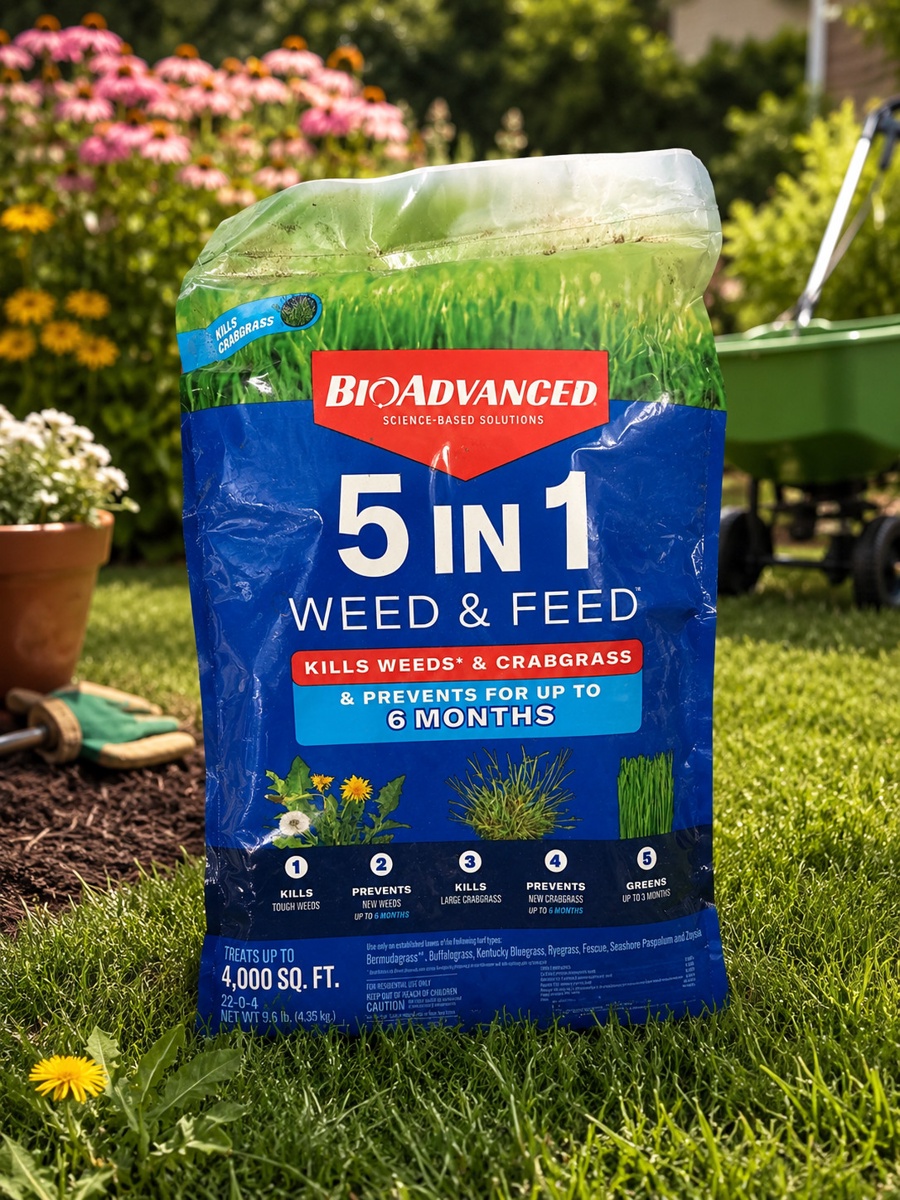

Photos from current listings. Actual item, color, and included accessories may vary.
Lawn Weed Control Buying Guide
Lawn weed control products fall into three distinct architectures: selective post-emergent herbicides that kill broadleaf weeds without harming grass, granular weed-and-feed hybrids that combine fertilizer with pre- or post-emergent chemistry, and physical barriers like woven landscape fabric that block weeds mechanically. The core trade-off is selectivity versus speed: synthetic selective herbicides (2,4-D, dicamba, quinclorac) act in days but require precise dosing and temperature windows, while barrier fabrics are chemical-free but only work where grass isn't meant to grow. The decision rule: match the product architecture to whether you are treating weeds inside an existing lawn (selective herbicide or weed-and-feed) or preventing weeds in bare beds and borders (woven fabric at 4 oz+).
Key takeaways
- Selective post-emergent concentrates rely on 2,4-D, MCPP, dicamba, or quinclorac to kill broadleaf and crabgrass weeds while leaving established turfgrass intact; non-selective glyphosate kills everything it contacts.
- Granular weed-and-feed products pair a nitrogen-phosphorus-potassium fertilizer with a pre-emergent (prodiamine or dithiopyr) or post-emergent herbicide, requiring uniform spreader calibration to avoid striping.
- Woven polypropylene landscape fabric at 4.1 oz per square yard and above resists tearing and UV degradation far better than 1-2 oz spun-bonded fabric, which frays and photodegrades within a season or two.
At a glance
- Category
- Lawn Care
- Last updated
- Nov 28, 2026
Current offers
Highlights
- Selective post-emergent concentrates rely on 2,4-D, MCPP, dicamba, or quinclorac to kill broadleaf and crabgrass weeds while leaving established turfgrass intact; non-selective glyphosate kills everything it contacts.
- Granular weed-and-feed products pair a nitrogen-phosphorus-potassium fertilizer with a pre-emergent (prodiamine or dithiopyr) or post-emergent herbicide, requiring uniform spreader calibration to avoid striping.
- Woven polypropylene landscape fabric at 4.1 oz per square yard and above resists tearing and UV degradation far better than 1-2 oz spun-bonded fabric, which frays and photodegrades within a season or two.
- Liquid concentrate coverage is calibrated in square feet per bottle (commonly 4,000-15,000 sq ft), while granular bags state both coverage and active-ingredient percentage — the active-ingredient load, not bag weight, determines efficacy.
Best use cases
- Best fit for selective post-emergent: established lawns with visible broadleaf weeds (dandelion, clover, plantain) — choose a 2,4-D/dicamba concentrate and spot-treat; skip if you are overseeding within 3-4 weeks, as most selective herbicides inhibit germination.
- Best fit for granular weed-and-feed: large lawns needing simultaneous fertilization and pre-emergent crabgrass control in early spring — pick a product matched to your grass type (avoid quinclorac on fine fescue); skip on newly seeded lawns.
- Best fit for woven landscape fabric: garden beds, driveways, and borders where no grass should grow — choose 4.1 oz+ woven PP; wrong fit for patching thin spots in an existing lawn, where fabric starves turf of light and water.
- Best fit for all-in-one bundles with spreader: first-time homeowners establishing a seasonal program — verify the spreader's calibration dial matches the product's setting chart; skip bundles that include both pre-emergent and post-emergent without a seasonal timing guide.
Buying tips
- Calculate lawn area as length × width in feet (irregular shapes: split into rectangles and sum); buy concentrate sized to at least 1.2× that area so you can re-treat hotspots without running short mid-season.
- Match the herbicide active ingredient to your grass: quinclorac is safe on most cool-season grasses but can injure fine fescue; dicamba and 2,4-D are broadleaf-only and safe on established bermuda, fescue, and zoysia at label rates.
- Apply selective herbicides when daytime temperatures are between 60°F and 85°F — above 85°F volatility increases drift and turf injury risk; below 60°F weeds stop translocating the chemical and control drops sharply.
- For landscape fabric, choose woven polypropylene at 4.1 oz/yd² or heavier for permanent installations; 1-2 oz spun-bonded fabric is only suitable for one-season annual beds and will tear under mulch or foot traffic.
Specs
| Product Type | Selective herbicide / Weed-and-feed / Fabric |
|---|---|
| Active Ingredient | 2,4-D, dicamba, quinclorac, prodiamine |
| Coverage | 1,000-15,000 sq ft per unit |
| Fabric Weight | 4.1 oz/yd² woven PP (heavy duty) |
Related searches
What to check before buying
- Measure and record lawn square footage and grass type (cool-season fescue/bluegrass vs warm-season bermuda/zoysia) before selecting any herbicide — grass type determines which active ingredients are safe.
- Confirm spreader compatibility: drop or broadcast spreaders need a calibration setting from the product label; a mismatched setting causes striping or under-application and weed resistance.
- Check soil temperature at 2-inch depth with a probe to time pre-emergent application — apply at 50-55°F rising, not after crabgrass has visibly emerged.
- For fabric barriers, verify bed dimensions and edging: buy fabric width that covers the bed plus 6-inch overlap at seams, and confirm UV-stabilized woven PP rated for exposure if not covered by mulch.
FAQ
Data sources: eBay / Amazon listings and product attribute feeds. Updated Nov 28, 2026.
Some links on this page are affiliate links. If you buy after clicking one, we may earn a commission at no extra cost to you. This does not change which products appear here or their order. Affiliate disclosure.