
Photos from current listings. Actual item, color, and included accessories may vary.
Lawn Leveling Rake Buying Guide
A lawn leveling rake is a wide, flat-bladed grading tool used to redistribute topdressing and smooth soil before seeding or after aeration. The core trade-off is between blade width and construction rigidity: wider heads cover ground faster but flex and bend unless the blade is thick-gauge steel with a reinforced spine. Buy a 30-36 inch stainless or powder-coated steel blade with a full-width spine for residential renovation; skip aluminum or thin stamped heads that bow under a full load of sand.
Median $59.99
Key takeaways
- Blade widths run 24, 30, 36, and 48 inches; 30-36 inch heads suit most residential lawns while 48-inch heads demand a flat, unobstructed lawn and strong operator leverage.
- Stainless steel or thick powder-coated carbon steel blades resist rust and hold a straight edge; aluminum and thin stamped blades flex permanently under wet topsoil loads.
- Handle length matters more than rake width for ergonomics: 66.5-inch handles suit shorter users, while 78-inch and adjustable 83.9-inch steel handles let taller operators work upright and reduce back strain.
At a glance
- Category
- Lawn Care
- Last updated
- Nov 27, 2026
Current offers
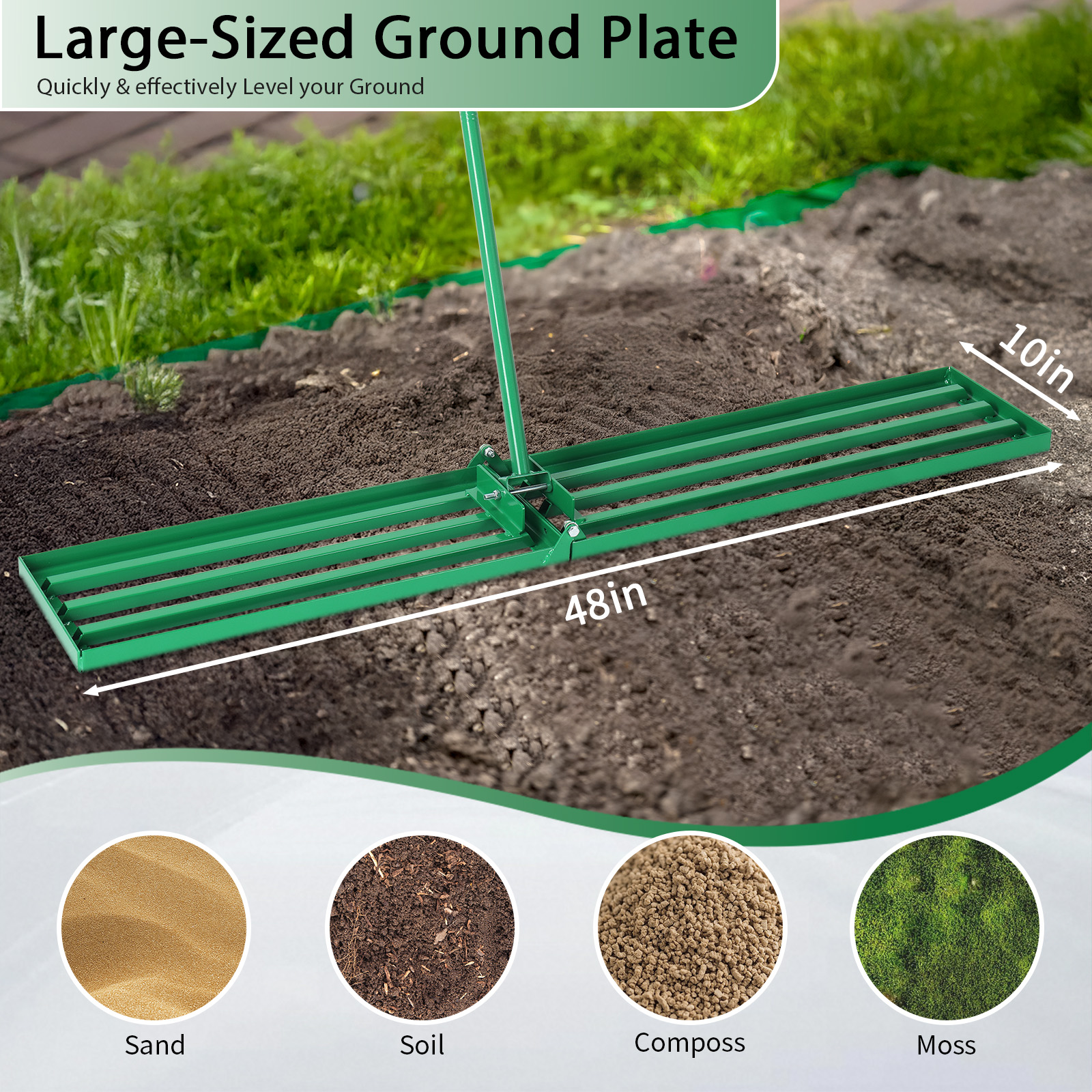 Lawn Leveling Rake - 30/36/48 Inch XL Lawn Care Yard, and Garden Leveler Rake$38.99Last checked Nov 19, 2026View on eBay
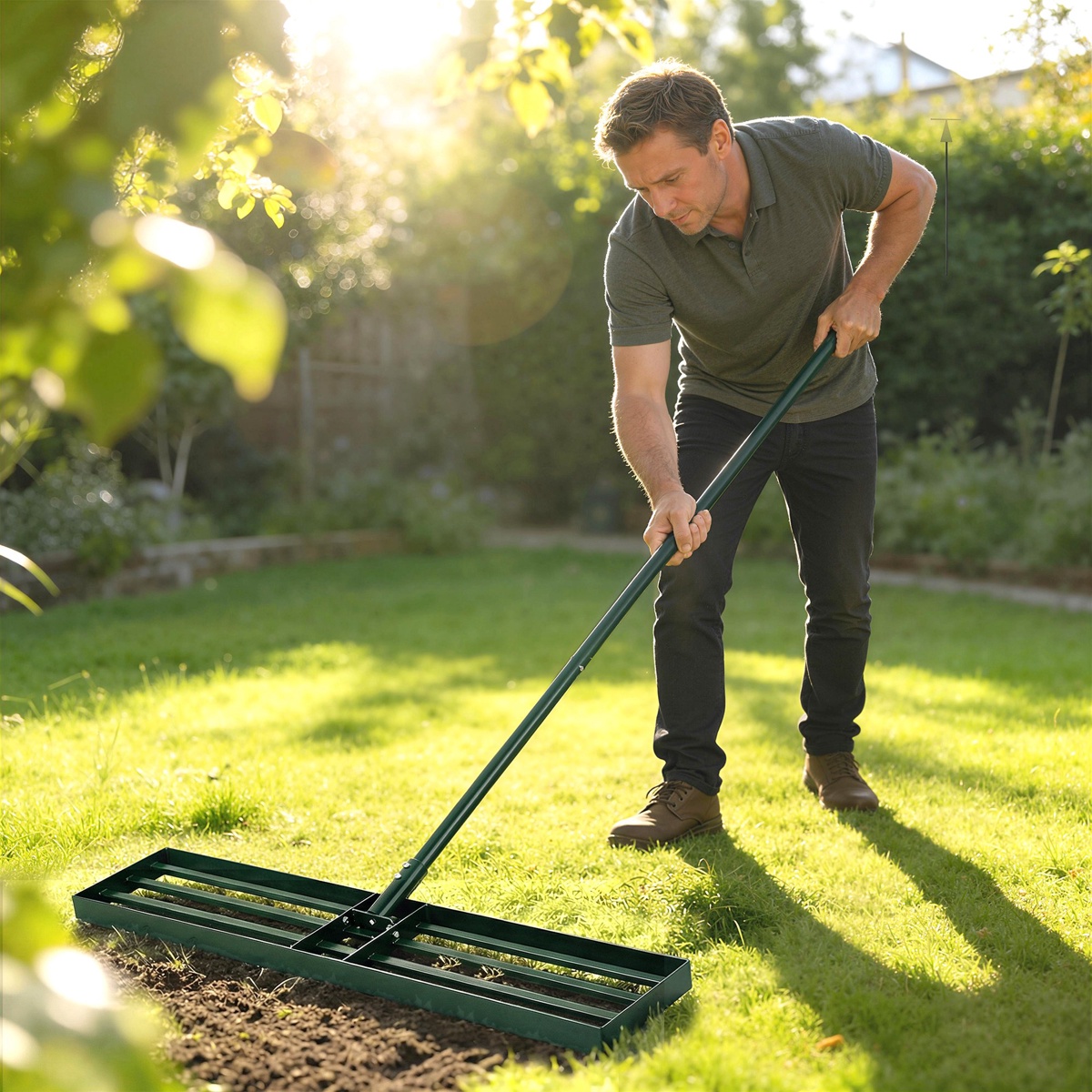 Lawn Leveling Rake, 36" x 10" Heavy Duty Yard with 66.5" Handle for Backyard, Golf Course$37.99View on Mallflare
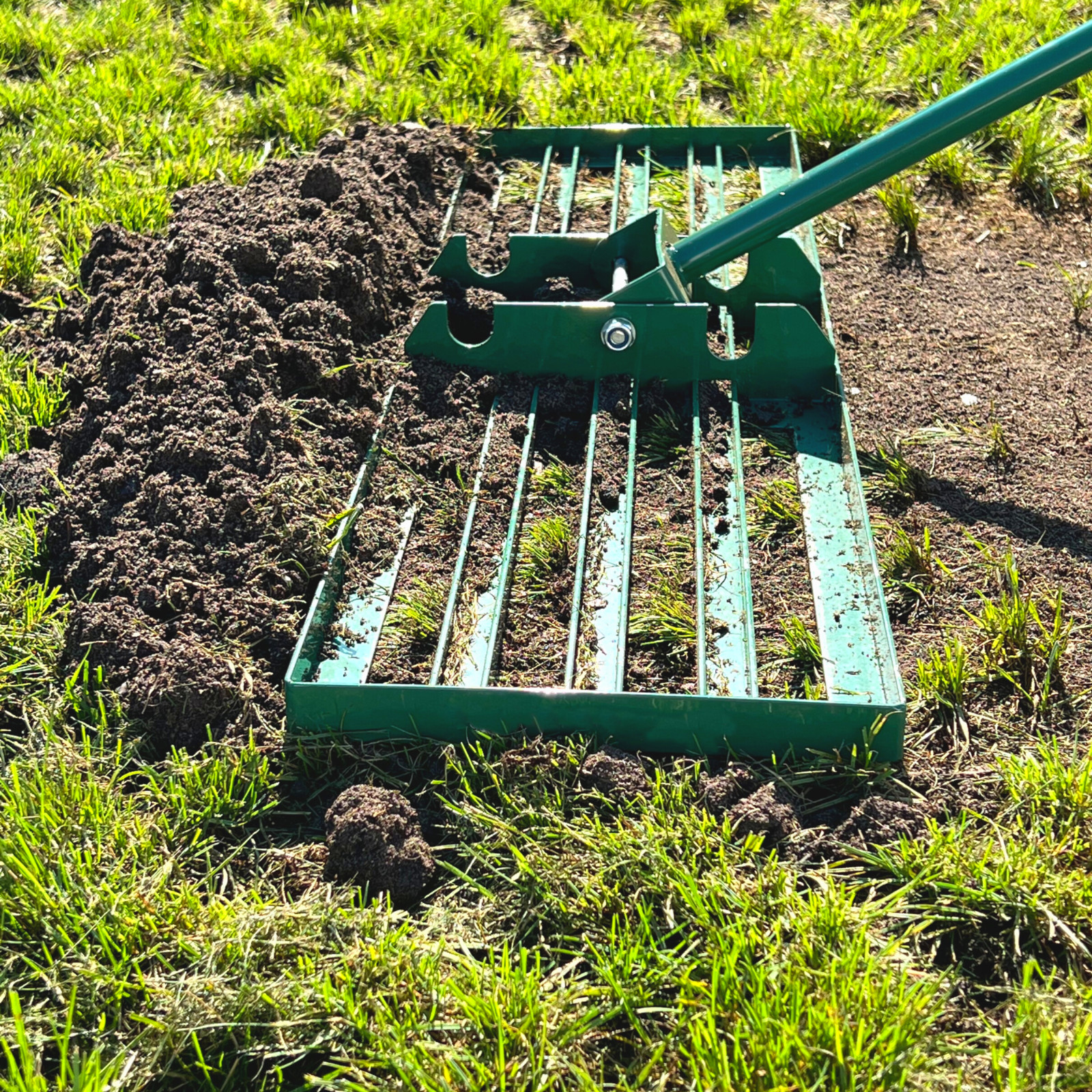 Landzie Lawn Leveling Rake - 24 Inch Lawn Care Yard, and Garden Leveler Rake$59.99Last checked Nov 27, 2026View on eBay
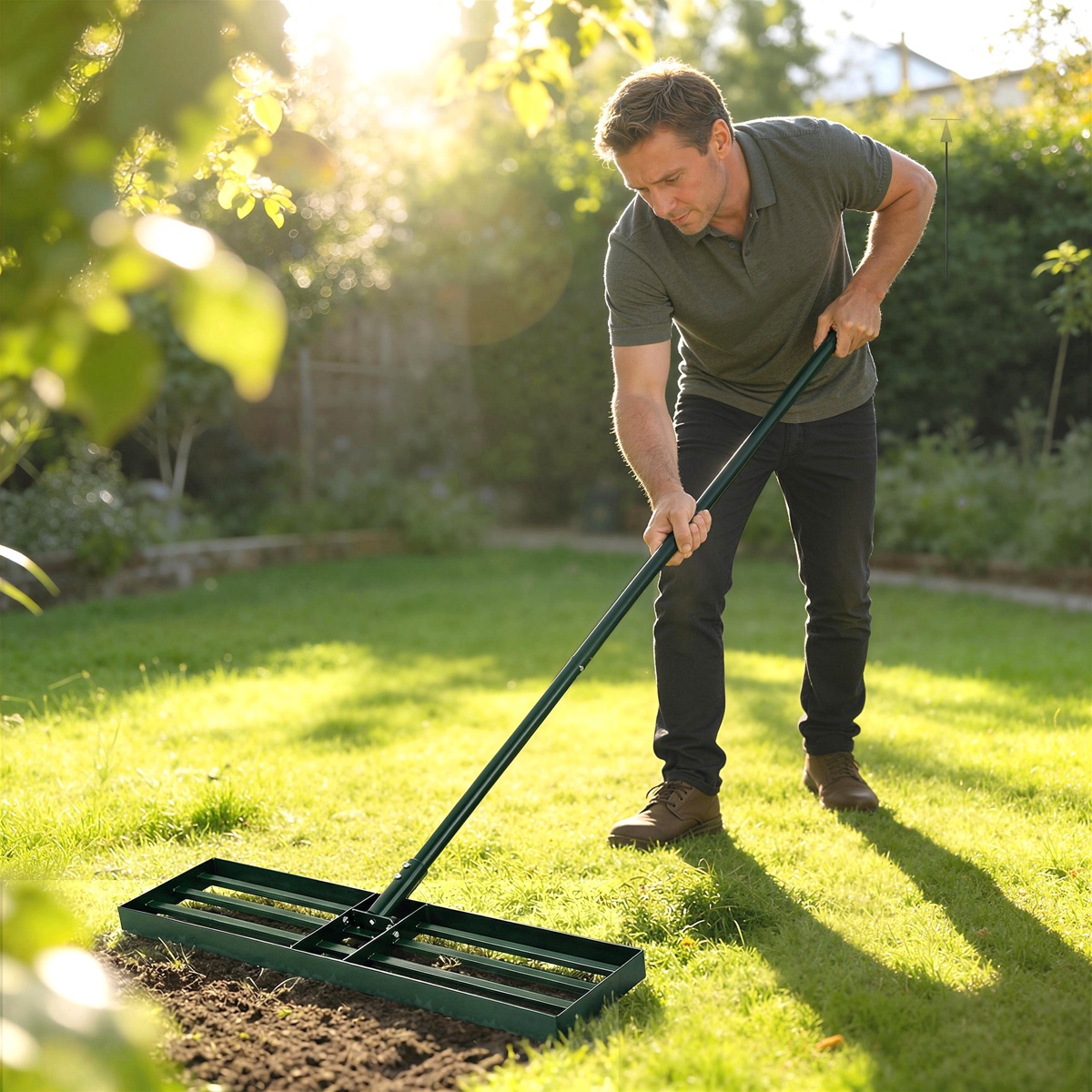 Lawn Leveling Rake, 30" x 10" Heavy Duty Yard with 66.5" Handle for Backyard, Golf Course$39.99View on Mallflare
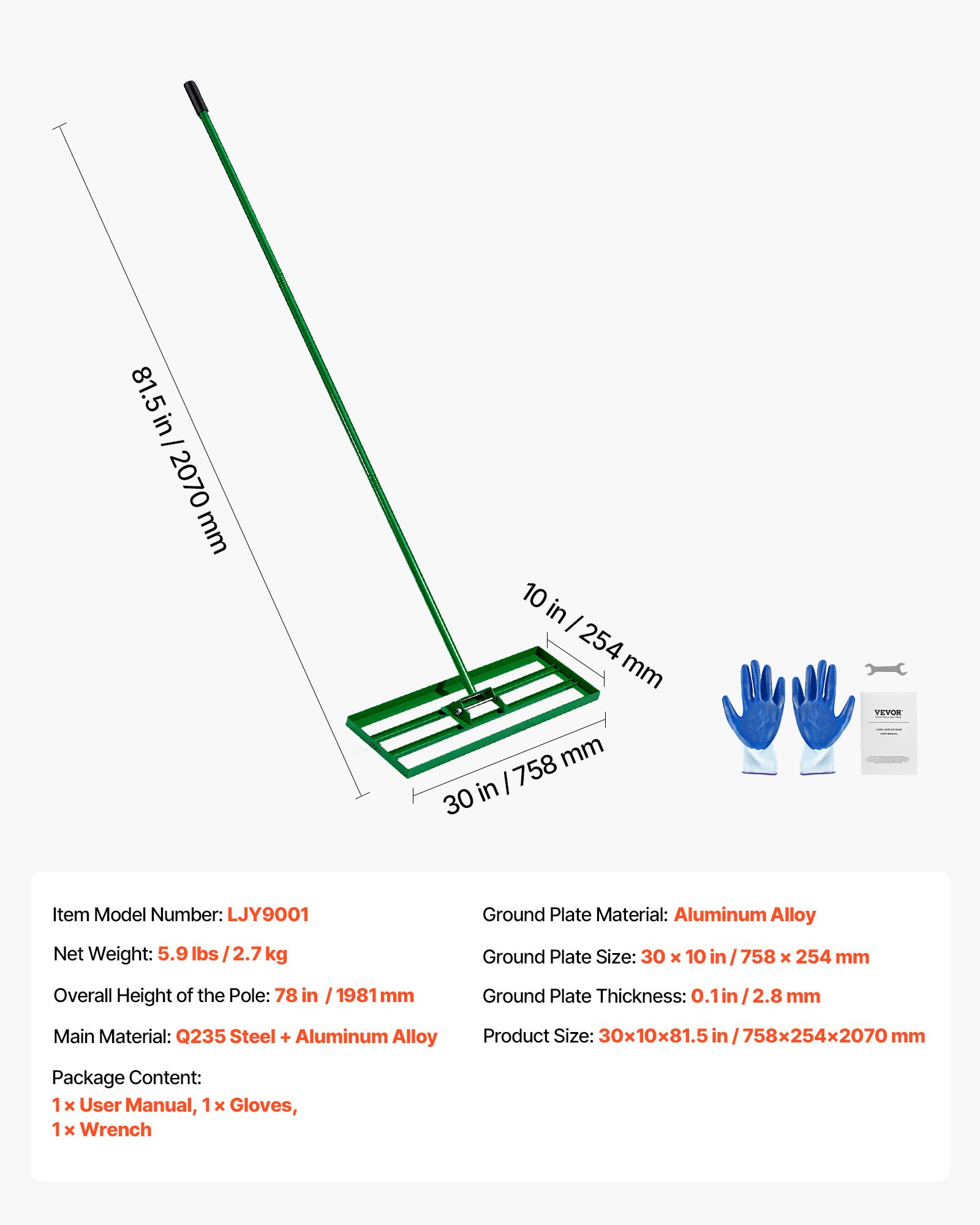 Lawn Leveling Rake, 30"x10" Level Tool, Heavy-duty Leveler With 78" Steel Extended Handle, Yard Suit For Garden, Golf Farm$46.99View on Mallflare
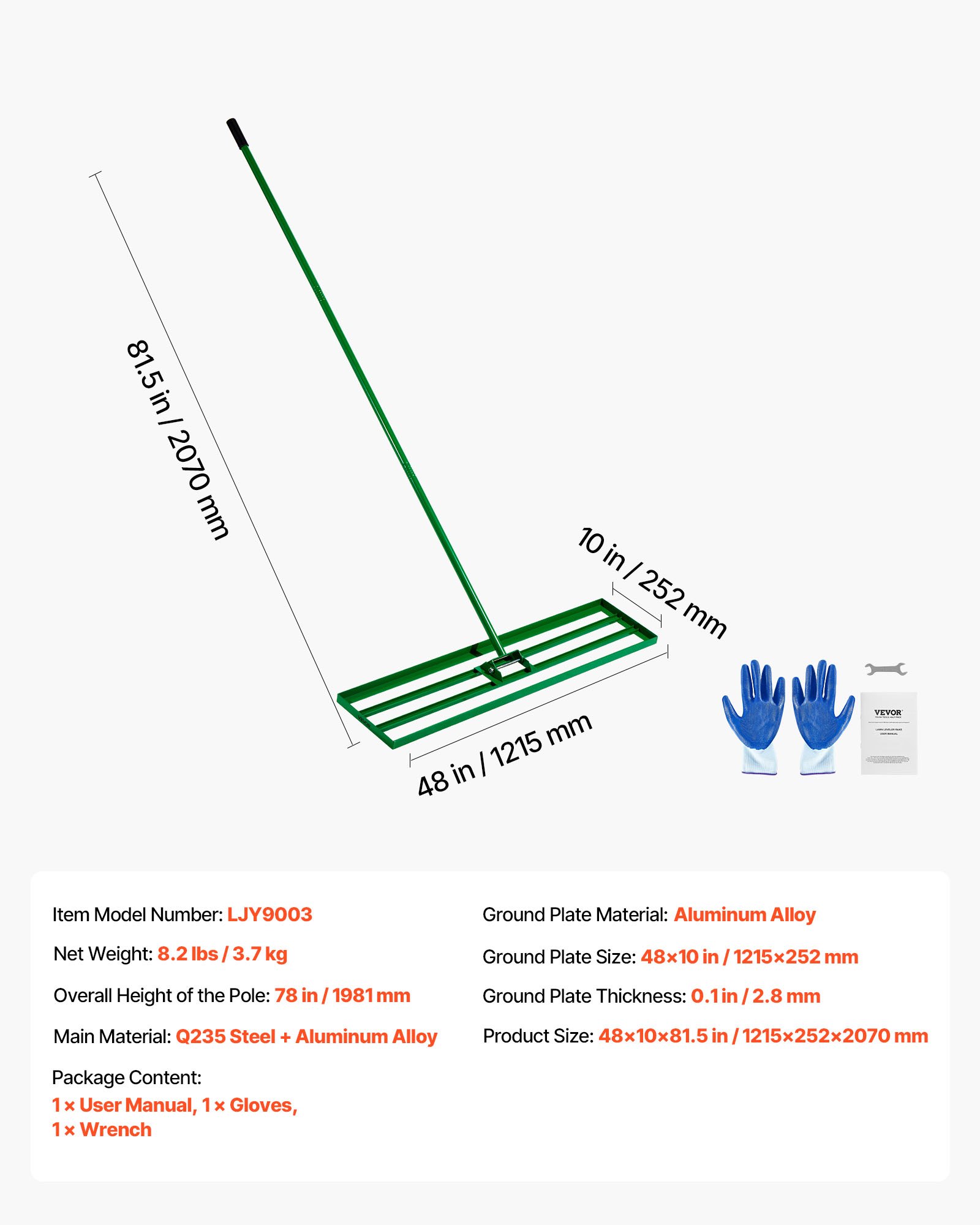 Lawn Leveling Rake, 48"x10" Level Tool, Heavy-duty Leveler With 78" Steel Extended Handle, Yard Suit For Garden, Golf Farm$51.99View on Mallflare
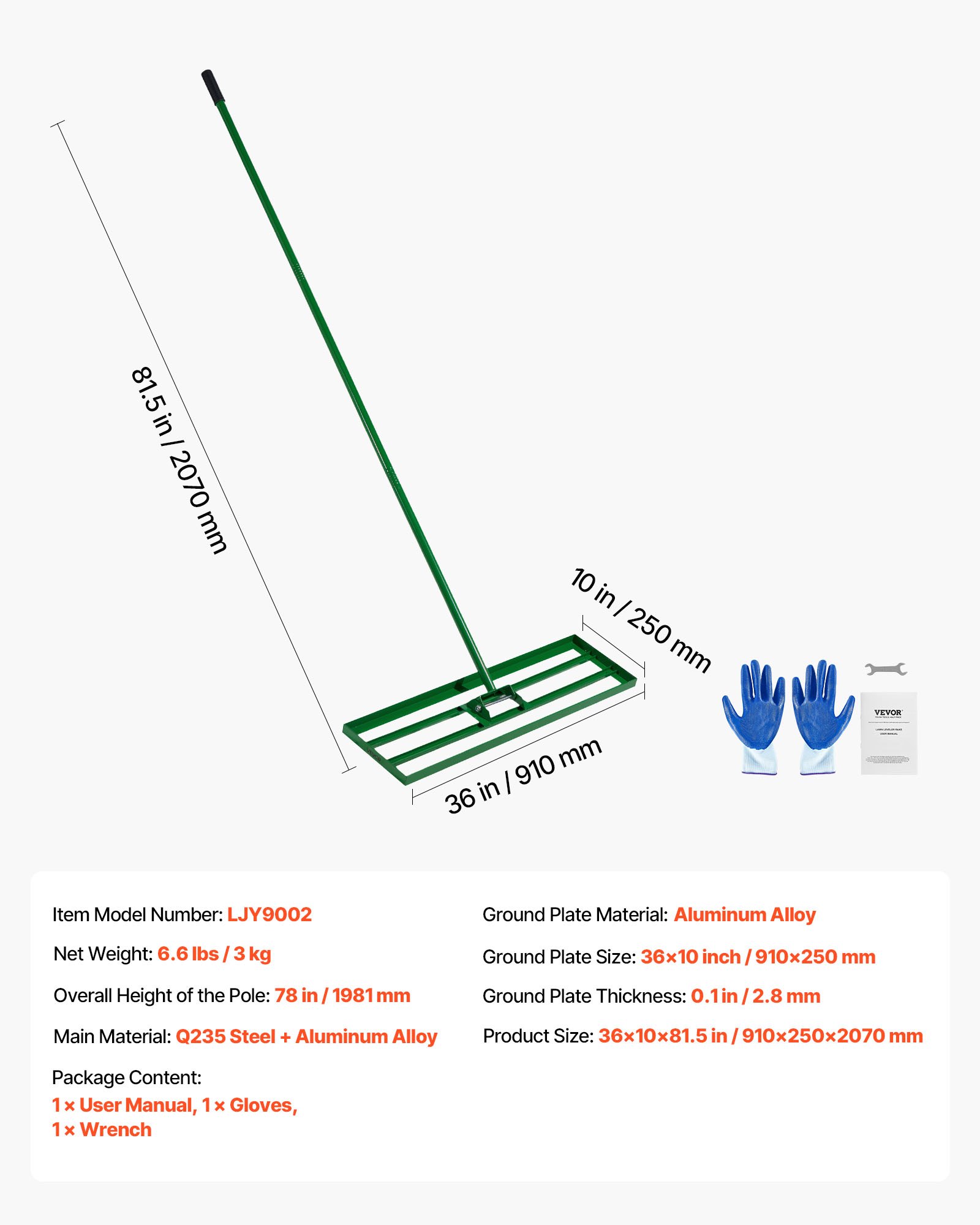 Lawn Leveling Rake, 36"x10" Level Tool, Heavy-duty Leveler With 78" Steel Extended Handle, Yard Suit For Garden, Golf Farm$51.99View on Mallflare
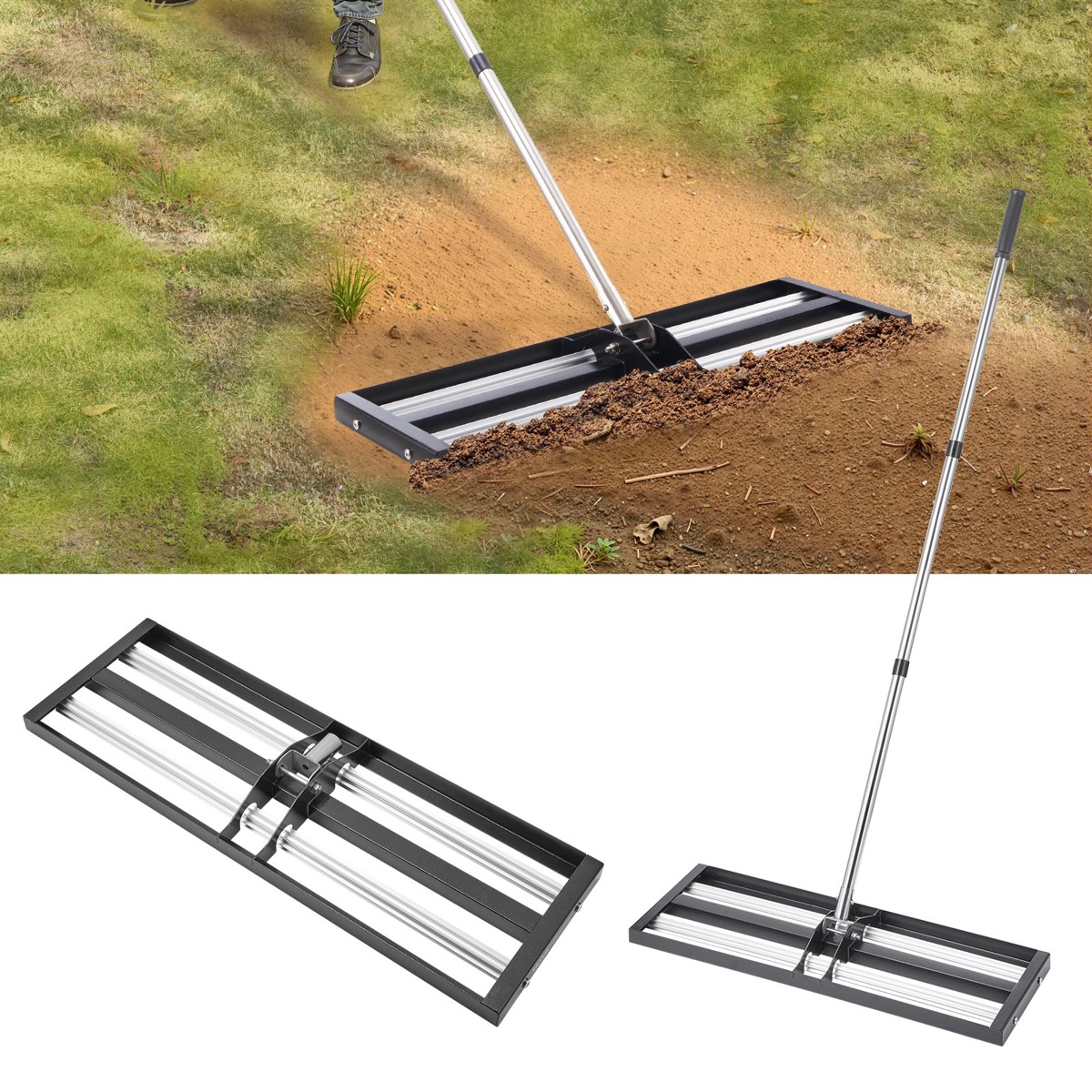 Updated Lawn Leveling Rake With Roller, 30 X 10 Stainless Steel Leveler 83.9 Adjustable Handle, Heavy Duty Yard Effort Saving Tool For Golf Court$59.99View on Mallflare
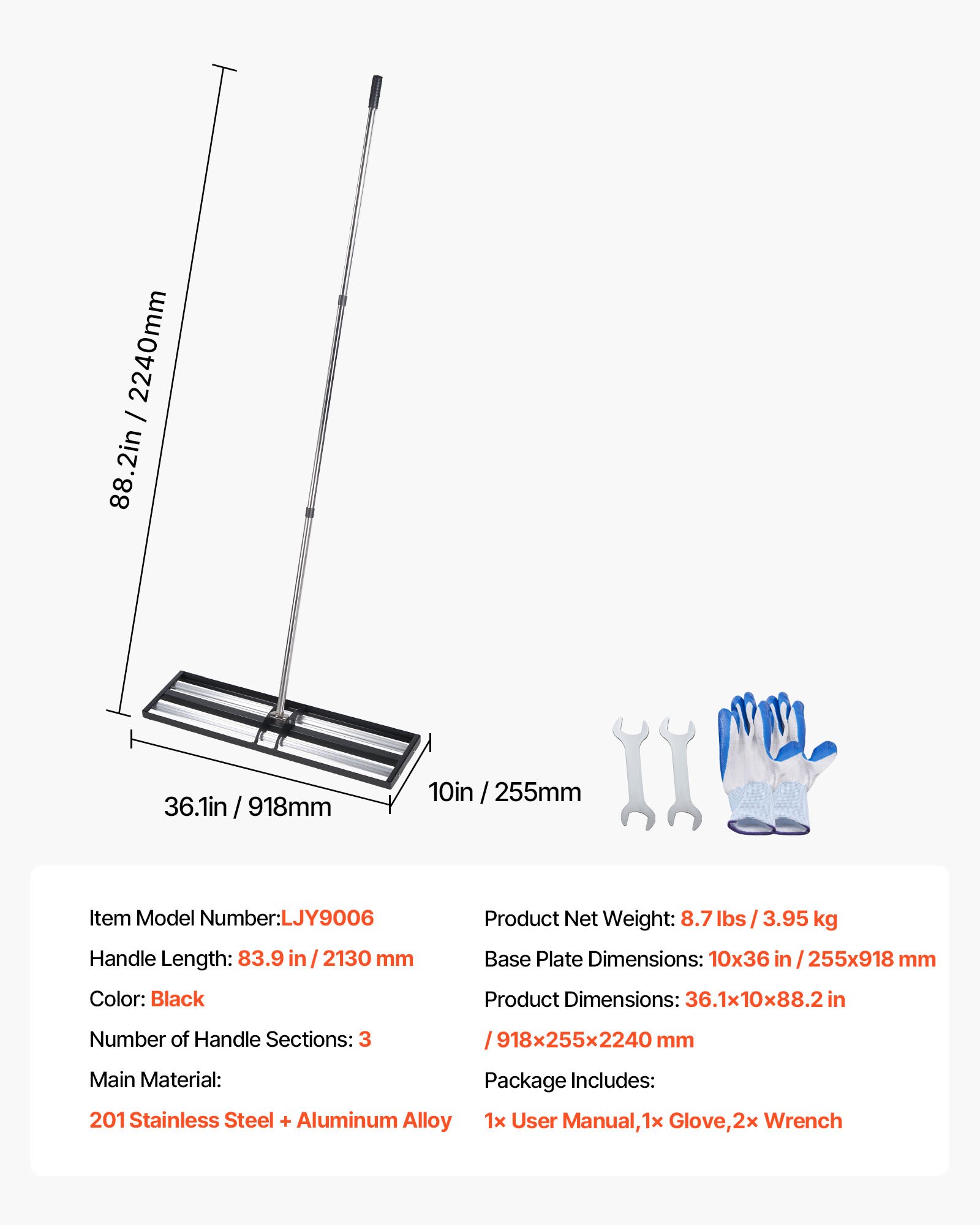 Updated Lawn Leveling Rake With Roller, 36" X 10" Stainless Steel Leveler 83.9" Adjustable Handle, Heavy Duty Yard Effort Saving Tool For Golf Court$63.99View on Mallflare
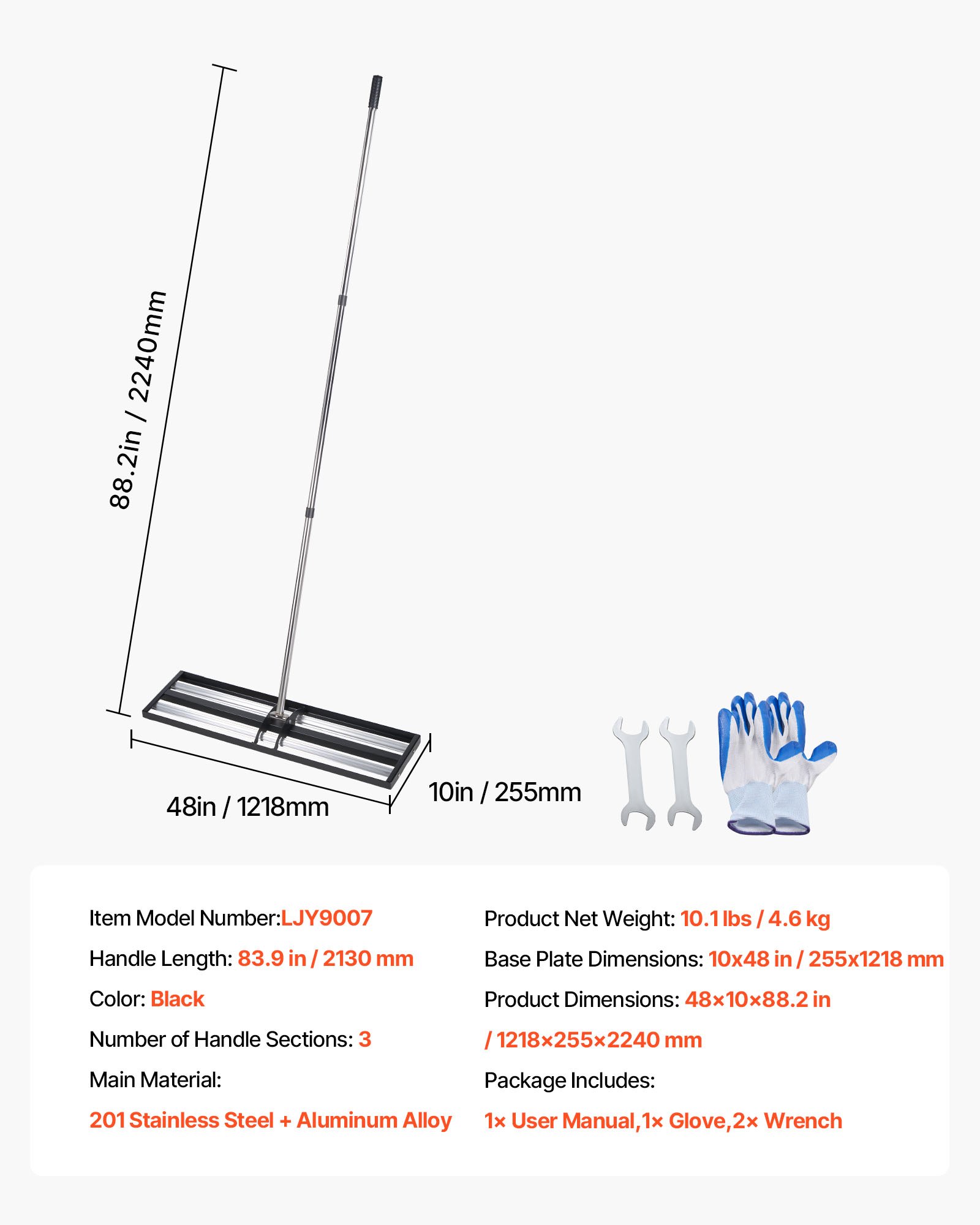 Updated Lawn Leveling Rake With Roller, 48'' X 10" Stainless Steel Leveler 83.9'' Adjustable Handle, Heavy Duty Yard Effort Saving Tool For Golf Court$74.99View on Mallflare
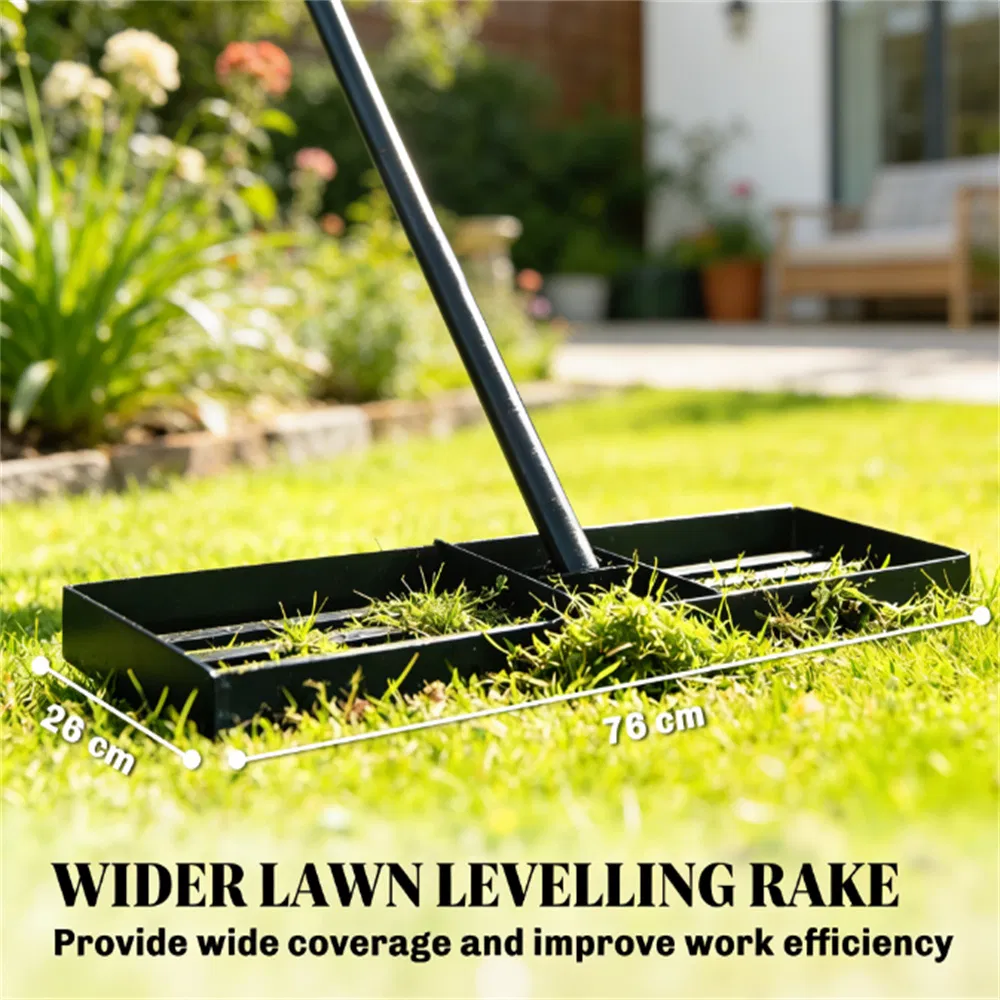 Lawn leveling rake, courtyard rolling punching machine$82.99View on Mallflare
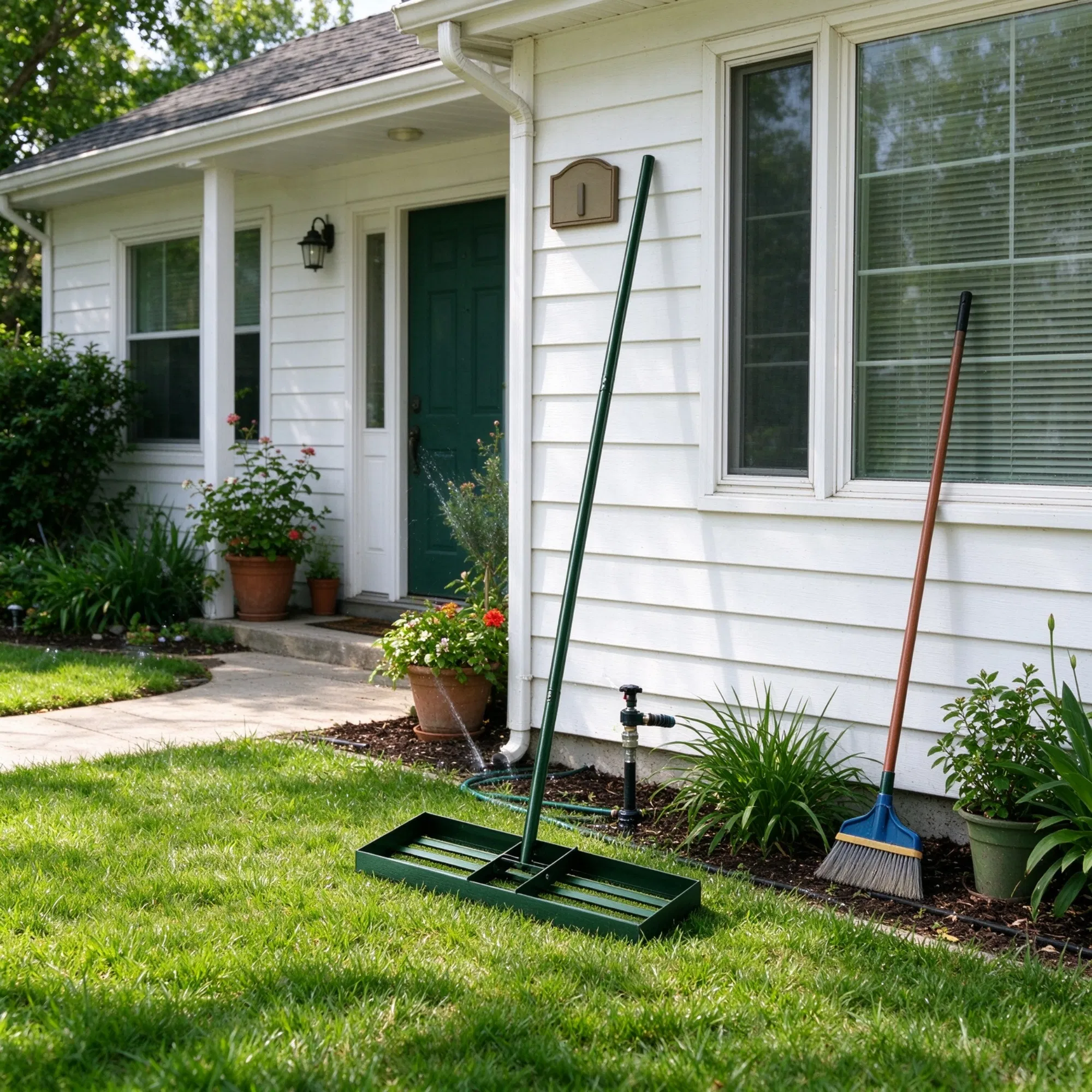 30" x 10" Heavy Duty Lawn Leveling Rake, Yard Tool with 66.5" Long Handle for Backyard, & Golf Course$86.99View on Mallflare
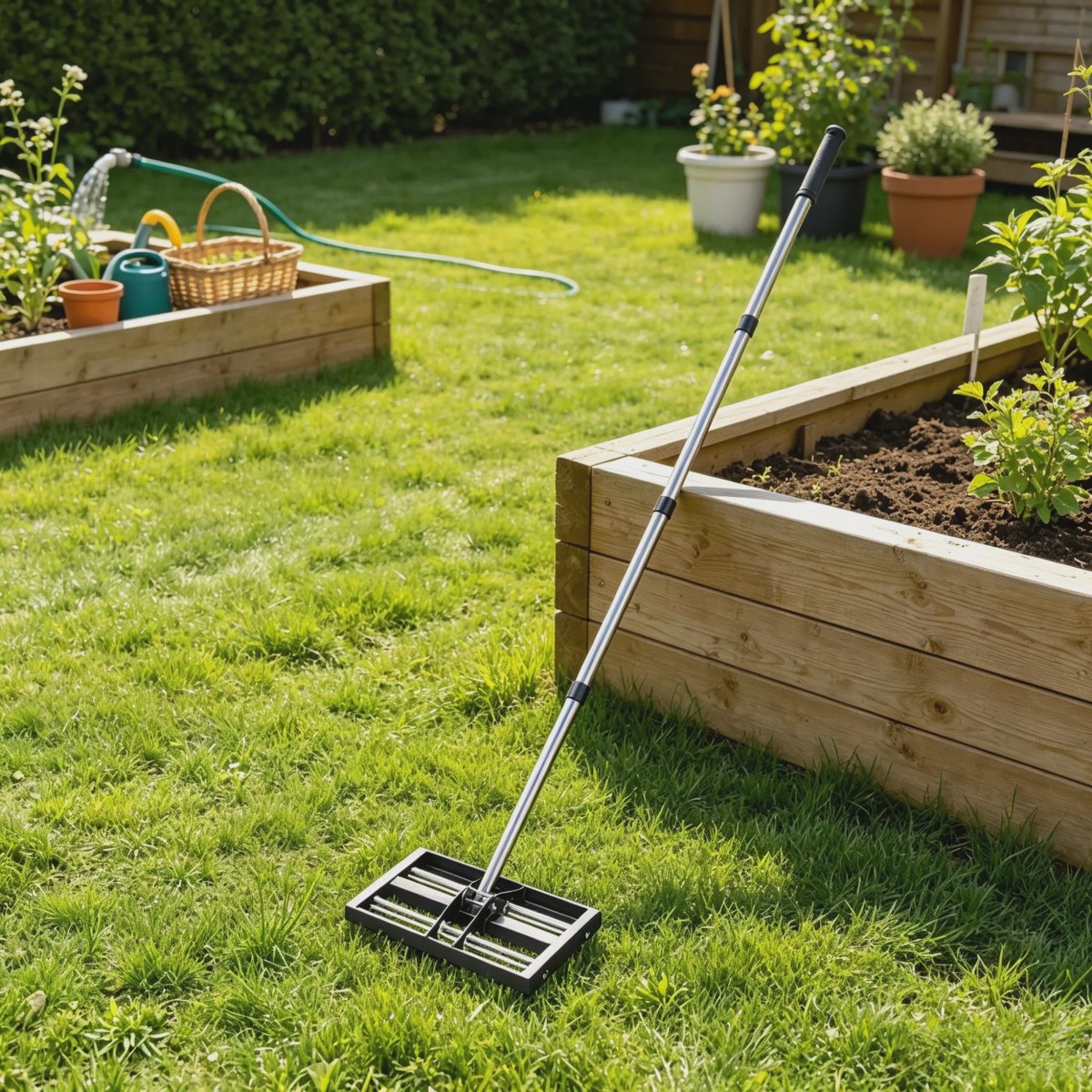 Lawn Leveling Rake with Roller Head, 17" x 10" Stainless Steel, 63.4" Adjustable Handle, Heavy Duty Effort-Saving Tool for Yard & Golf Course$89.99View on Mallflare
Highlights
- Blade widths run 24, 30, 36, and 48 inches; 30-36 inch heads suit most residential lawns while 48-inch heads demand a flat, unobstructed lawn and strong operator leverage.
- Stainless steel or thick powder-coated carbon steel blades resist rust and hold a straight edge; aluminum and thin stamped blades flex permanently under wet topsoil loads.
- Handle length matters more than rake width for ergonomics: 66.5-inch handles suit shorter users, while 78-inch and adjustable 83.9-inch steel handles let taller operators work upright and reduce back strain.
- Roller-equipped models pair a leveling blade with a rear roller to compact topdressing in one pass, saving a separate lawn roller step on golf-course-grade finish work.
Best use cases
- Best fit: homeowners renovating a 1,000-5,000 sq ft lawn should pick a 30-36 inch stainless blade with a 78-inch handle; this balances coverage with manageable pushing force.
- Best fit: large properties or golf-green-style finishing above 5,000 sq ft should use a 48-inch blade or a roller-equipped 36-48 inch model to reduce passes and compact topdressing simultaneously.
- Wrong fit: small patch repairs or tight landscaping beds should skip 48-inch heads entirely; a 24-inch blade maneuvers where wide heads cannot and prevents gouging around edges.
- Wrong fit: anyone leveling rocky or debris-heavy soil should not rely on a leveling rake alone; clear stones first because blade edges and spines bend against obstructions.
Buying tips
- Match blade width to lawn size: 24 inch for under 1,000 sq ft, 30-36 inch for 1,000-5,000 sq ft, and 48 inch only for open lawns above 5,000 sq ft with few obstacles.
- Choose stainless steel or thick powder-coated carbon steel over aluminum; blade thickness and a welded or riveted spine determine whether the head stays flat under wet sand.
- Select handle length by operator height: 66.5-inch handles suit users under about 5 ft 8 in, while 78-inch and adjustable 83.9-inch handles let taller users work without stooping.
- Buy roller-equipped models only if you topdress regularly; the roller adds weight and cost but eliminates a separate compaction pass on renovation projects.
Specs
| Blade Width | 24 / 30 / 36 / 48 in |
|---|---|
| Blade Material | Stainless or powder-coated steel |
| Handle Length | 66.5 / 78 / 83.9 in adjustable |
| Roller Option | Blade-only vs blade + roller |
Related searches
What to check before buying
- Measure your lawn's open runs and obstacle spacing; a 48-inch blade needs clear paths wider than the head plus operator clearance to avoid clipping trees and beds.
- Confirm the handle connection type and material: steel handles with threaded or locking couplings stay rigid, while wooden or push-fit handles loosen under load.
- Check blade gauge and spine construction before buying; a full-width reinforced spine is the single best predictor of a leveling rake that stays straight season after season.
- For roller models, verify the roller diameter and bearing type; sealed bearings and larger rollers roll over wet topdressing without sinking or clogging.
FAQ
Data sources: eBay / Amazon listings and product attribute feeds. Updated Nov 27, 2026.
Some links on this page are affiliate links. If you buy after clicking one, we may earn a commission at no extra cost to you. This does not change which products appear here or their order. Affiliate disclosure.