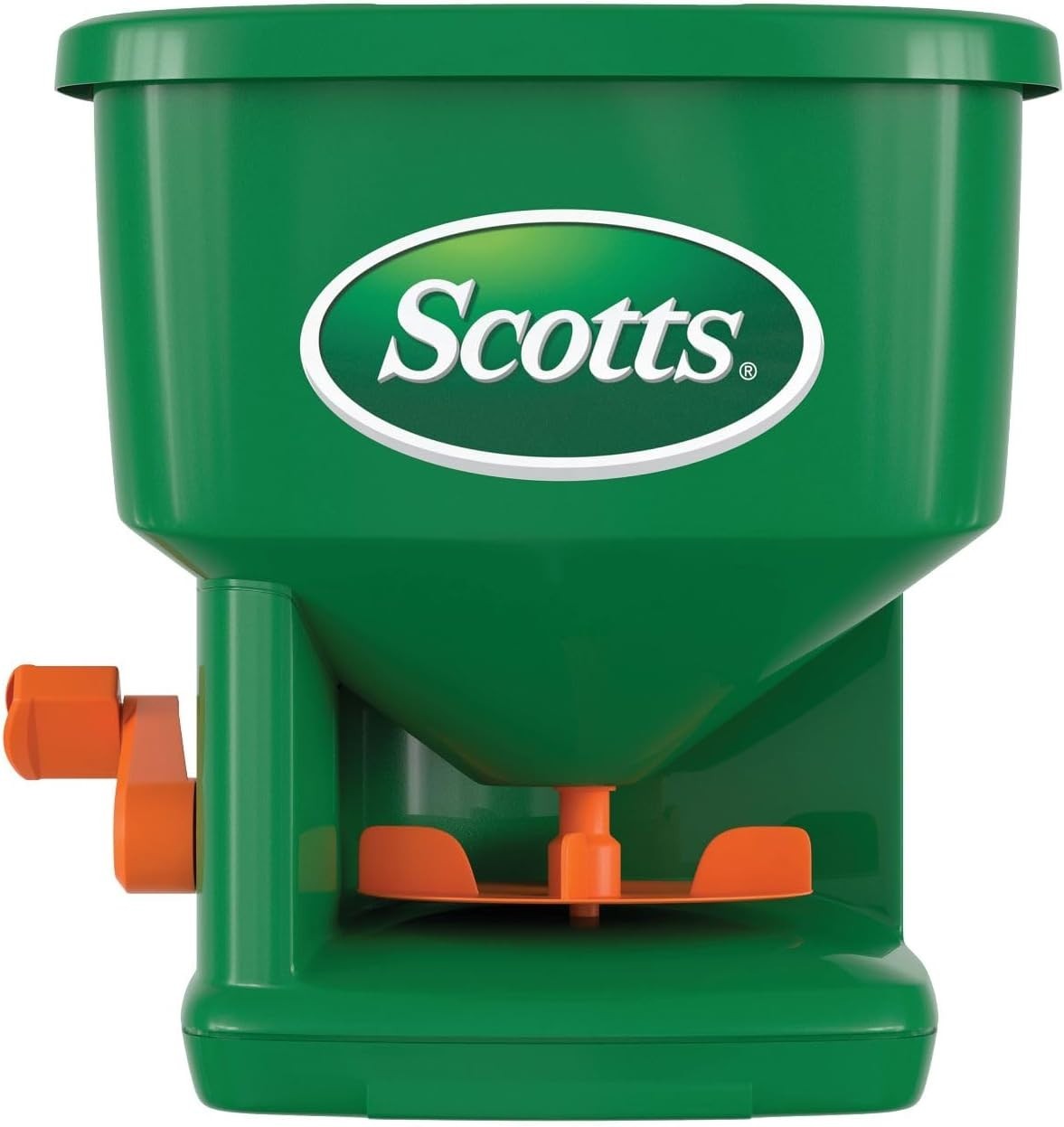

Photos from current listings. Actual item, color, and included accessories may vary.
Hand Spreader Lawn Buying Guide
A hand spreader is a manual broadcast spreader for applying grass seed, granular fertilizer, and ice melt on small-to-mid lawns where a push spreader is overkill. The core trade-off is between a rotary whirl design for even, wide coverage and a drop or shaker design for precise edge control. Buy a rotary hand spreader with an adjustable gate and a enclosed gearbox for general lawn care; skip open-gear or fixed-rate shakers unless you only spot-treat edges.
Key takeaways
- Rotary whirl spreaders broadcast 3-6 ft swaths via a spinning impeller, covering roughly 1,000-2,500 sq ft per hopper load depending on gate setting and material density.
- Adjustable gate calibration matters more than hopper size: a numbered dial from 0-20+ lets you match seed or fertilizer rate to walking speed and overlap.
- Enclosed gearboxes and sealed bearings resist fertilizer dust and moisture; open exposed gears corrode and strip within a season of abrasive granular salt.
At a glance
- Category
- Lawn Care
- Last updated
- Nov 28, 2026
Current offers
Highlights
- Rotary whirl spreaders broadcast 3-6 ft swaths via a spinning impeller, covering roughly 1,000-2,500 sq ft per hopper load depending on gate setting and material density.
- Adjustable gate calibration matters more than hopper size: a numbered dial from 0-20+ lets you match seed or fertilizer rate to walking speed and overlap.
- Enclosed gearboxes and sealed bearings resist fertilizer dust and moisture; open exposed gears corrode and strip within a season of abrasive granular salt.
- Hopper capacity typically ranges 1,500-5,000 cu in; larger hoppers reduce refill trips but add empty weight and arm fatigue on long passes.
Best use cases
- Best fit: rotary hand spreader for overseeding bare patches, fertilizing a quarter-acre lawn, or spreading ice melt on a driveway and walkway.
- Wrong fit: drop spreader or shaker for large open lawns—they are slow, narrow, and leave striping unless you overlap passes meticulously.
- Best fit: calibrated gate dial for repeatable fertilizer rates; wrong fit: fixed-opening shaker for coated slow-release granules, which clog and dose unevenly.
- Best fit: lightweight plastic hopper for occasional seasonal use; wrong fit: thin polypropylene under heavy rock salt—step up to a reinforced hopper or metal impeller.
Buying tips
- Match hopper capacity to lawn size: under 5,000 sq ft, a 1,500-2,500 cu in hopper is enough; above that, choose 3,000+ cu in to cut refills.
- Demand an enclosed gearbox and metal impeller shaft; exposed plastic gears wear out fast with abrasive fertilizer and salt.
- Check the gate calibration dial has at least 10 numbered settings so you can dial in seed and fertilizer rates precisely.
- Prefer a comfortable grip and balanced empty weight under 3 lb; a full hopper adds 4-8 lb and causes arm fatigue on long passes.
Specs
| Spreader Type | Rotary whirl / Drop / Shaker |
|---|---|
| Gate Adjustment | 10-20+ numbered settings |
| Hopper Capacity | 1,500-5,000 cu in |
| Gearbox | Enclosed vs exposed gears |
Related searches
What to check before buying
- Measure your lawn area in square feet and confirm the spreader's stated coverage per hopper load meets it without excessive refills.
- Verify the spread width (typically 3-6 ft) fits your lawn's narrowest strip and overlap pattern for even coverage.
- Confirm the hopper material handles your material: plastic for seed and fertilizer, reinforced or metal for rock salt and ice melt.
- Check the handle grip and empty weight suit your carrying strength, especially if you will walk long passes or refill frequently.
FAQ
Data sources: eBay / Amazon listings and product attribute feeds. Updated Nov 28, 2026.
Some links on this page are affiliate links. If you buy after clicking one, we may earn a commission at no extra cost to you. This does not change which products appear here or their order. Affiliate disclosure.