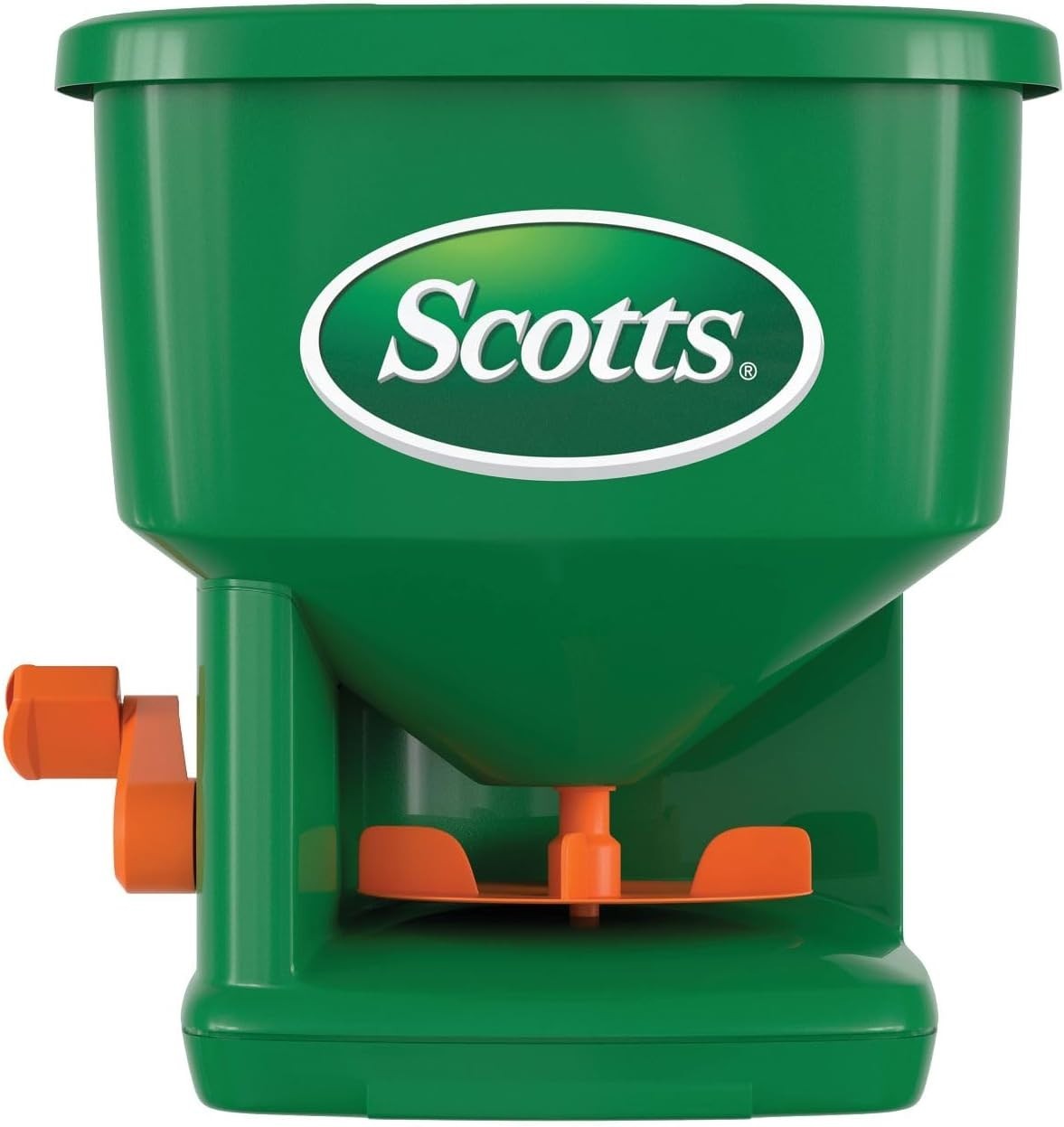

Photos from current listings. Actual item, color, and included accessories may vary.
Grass Fertilizer Buying Guide
Grass fertilizer is a granular or liquid product that supplies nitrogen, phosphorus, and potassium plus secondary nutrients to turf, and the primary trade-off is between fast-release nitrogen for quick greening and slow-release or controlled-release nitrogen for steady, burn-free feeding. The decision rule is to match the nitrogen release profile, NPK ratio, and application rate to your grass species, season, and climate; compromise products with high fast-release nitrogen or vague analysis are the ones that cause burn, leaching, and wasted money.
Median $31.24
Key takeaways
- Nitrogen release type is the core durability metric: polymer-coated or sulfur-coated urea (slow-release) feeds for 8–12 weeks with low burn risk, while urea or ammonium nitrate (fast-release) greens in days but leaches and burns in heat.
- NPK ratios signal purpose: high first number (e.g., 30-0-4) for summer green-up, balanced ratios (e.g., 10-10-10) for establishment, and low-nitrogen/high-potassium (e.g., 5-5-20) for fall root hardening.
- Granular fertilizer is measured by pounds of nitrogen per 1,000 sq ft; most cool-season and warm-season turf needs 0.5–1.0 lb N per 1,000 sq ft per application, so bag coverage math must match your lawn area.
At a glance
- Category
- Lawn Care
- Last updated
- Nov 28, 2026
Current offers
Highlights
- Nitrogen release type is the core durability metric: polymer-coated or sulfur-coated urea (slow-release) feeds for 8–12 weeks with low burn risk, while urea or ammonium nitrate (fast-release) greens in days but leaches and burns in heat.
- NPK ratios signal purpose: high first number (e.g., 30-0-4) for summer green-up, balanced ratios (e.g., 10-10-10) for establishment, and low-nitrogen/high-potassium (e.g., 5-5-20) for fall root hardening.
- Granular fertilizer is measured by pounds of nitrogen per 1,000 sq ft; most cool-season and warm-season turf needs 0.5–1.0 lb N per 1,000 sq ft per application, so bag coverage math must match your lawn area.
- Weed-and-feed products combine fertilizer with 2,4-D or dicamba, which restricts use to established lawns and specific temperatures; straight fertilizer is safer for new seed, sod, and summer heat stress.
Best use cases
- Best fit for summer feeding: choose a slow-release high-nitrogen granular (e.g., 24-0-6 or 30-0-4 with 50%+ slow-release N) applied at 0.5–0.75 lb N per 1,000 sq ft; skip fast-release urea in heat above 85°F.
- Best fit for fall root-building on cool-season grass: pick a low-nitrogen, high-potassium blend (e.g., 5-5-20 or 10-0-20) to harden turf before winter; skip high-nitrogen summer products that push tender growth into frost.
- Best fit for new seed or sod: use a starter fertilizer with high phosphorus (e.g., 10-20-10) worked into the top 2 inches; skip weed-and-feed products entirely until the lawn is established and mowed at least 3–4 times.
- Best fit for small lawns or spot feeding: liquid concentrate hose-end or tank sprayers give even coverage under 2,000 sq ft; skip 15,000 sq ft broadcast bags that are hard to meter accurately on tiny lawns.
Buying tips
- Calculate bag coverage before buying: divide bag weight by the label's nitrogen percentage, then divide by 0.5–1.0 lb N per 1,000 sq ft to get square feet per bag—buy two smaller bags rather than one oversized bag for lawns under 5,000 sq ft.
- Demand a guaranteed analysis (N-P-K) with at least 30–50% slow-release nitrogen for summer applications; straight urea (46-0-0) is a budget burn risk on warm-season grass in heat.
- Match phosphorus to local rules: many states restrict phosphorus in established lawns, so choose 0-phosphorus maintenance blends unless a soil test shows deficiency or you are seeding.
- For warm-season grasses (Bermuda, St. Augustine, Zoysia), feed 0.5–1.0 lb N per 1,000 sq ft monthly during active growth; for cool-season grasses (fescue, bluegrass), feed 0.75–1.0 lb N in spring and fall and skip mid-summer heat.
Specs
| Nitrogen Release | Slow-release 30–50%+ vs fast-release |
|---|---|
| NPK Analysis | Guaranteed N-P-K, e.g. 24-0-6 or 10-10-10 |
| Application Rate | 0.5–1.0 lb N per 1,000 sq ft |
| Form & Coverage | Granular broadcast vs liquid concentrate |
Related searches
What to check before buying
- Measure lawn square footage (length × width for rectangles, or break into sections) so bag coverage and application rate match your actual turf area.
- Confirm grass type and season: warm-season grasses feed in summer, cool-season grasses feed in spring/fall; applying the wrong timing wastes product and stresses turf.
- Check spreader type and calibration: rotary spreaders need a setting from the bag, drop spreaders are more precise near beds and drives—verify your spreader model's setting chart.
- Run a soil test (pH 6.0–7.0 target for most turf) before choosing phosphorus and lime; fertilizer cannot fix pH problems, and phosphorus is wasted outside the 6.0–7.0 range.
FAQ
Data sources: eBay / Amazon listings and product attribute feeds. Updated Nov 28, 2026.
Some links on this page are affiliate links. If you buy after clicking one, we may earn a commission at no extra cost to you. This does not change which products appear here or their order. Affiliate disclosure.