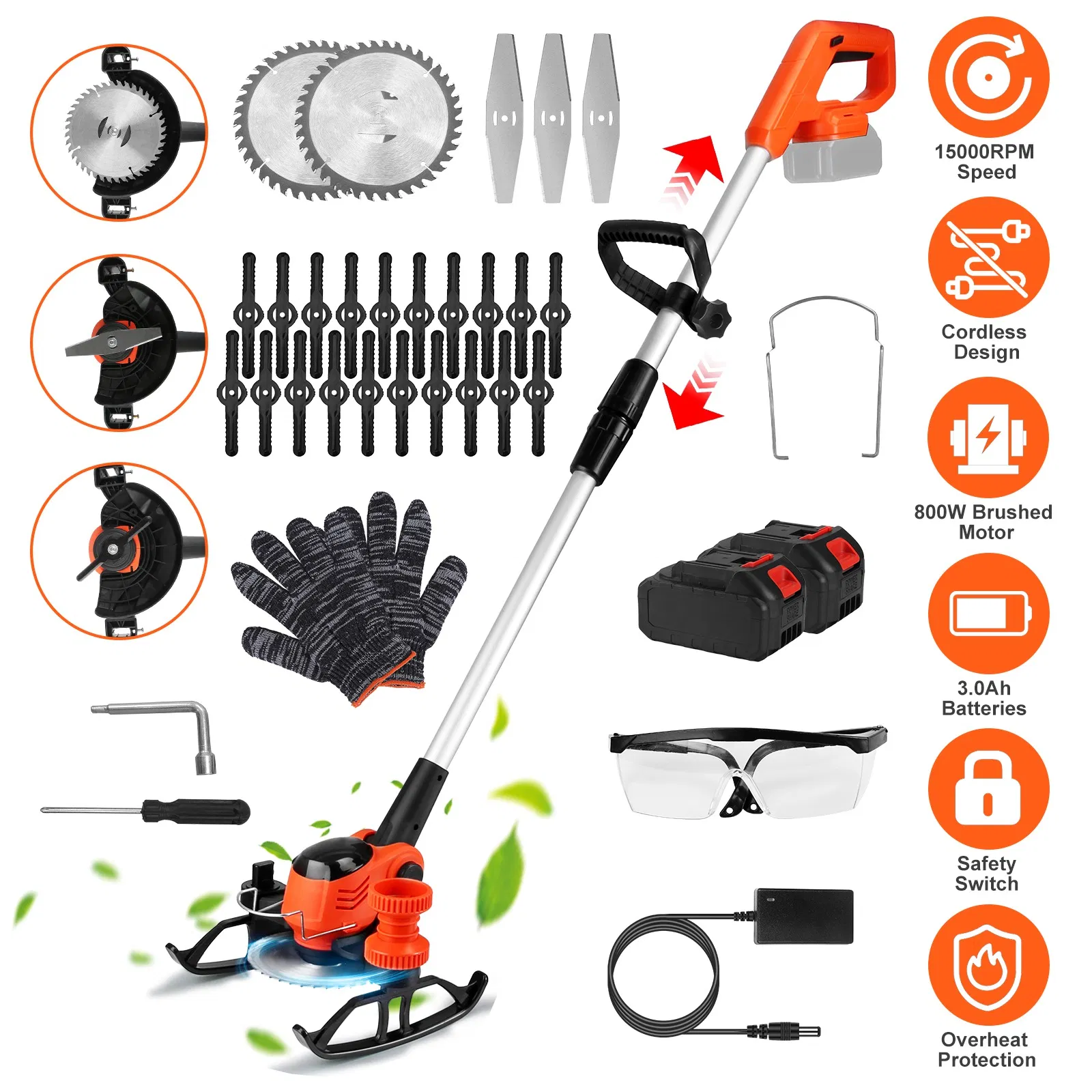

Photos from current listings. Actual item, color, and included accessories may vary.
Brush Cutter Buying Guide
A brush cutter is a heavy-duty vegetation tool that clears saplings, brambles, and thick grass where a standard string trimmer stalls, and the core trade-off is engine or motor torque versus weight and vibration. Choose a petrol unit with a harness and metal blade for sustained dense cutting, or a cordless/battery unit for light-to-medium growth and low-noise suburban use; skip lightweight 800W-class cordless heads for anything woody over finger thickness.
Key takeaways
- Petrol brush cutters typically use 2-stroke 25-52cc engines; 43cc+ classes drive metal blades through saplings, while 25-35cc suits heavy grass and brambles.
- Cordless brush cutters run 18V-80V battery platforms; 800W-class motors with 15,000 no-load RPM handle grass and weeds but not woody stems above roughly 10mm.
- Metal tri-blade or circular saw blades cut brush up to 50-75mm; nylon line heads are for grass only and shear off on saplings.
At a glance
- Category
- Lawn Care
- Last updated
- Nov 28, 2026
Current offers
Highlights
- Petrol brush cutters typically use 2-stroke 25-52cc engines; 43cc+ classes drive metal blades through saplings, while 25-35cc suits heavy grass and brambles.
- Cordless brush cutters run 18V-80V battery platforms; 800W-class motors with 15,000 no-load RPM handle grass and weeds but not woody stems above roughly 10mm.
- Metal tri-blade or circular saw blades cut brush up to 50-75mm; nylon line heads are for grass only and shear off on saplings.
- Professional petrol units use anti-vibration mounts and full harnesses to keep vibration below roughly 5 m/s² over multi-hour sessions.
Best use cases
- Dense brambles, saplings, and overgrown acreage: pick a 43cc+ petrol brush cutter with harness, bike handle, and metal blade; skip cordless 800W units.
- Suburban fence lines, ditches, and tall grass: a 36V-40V cordless brush cutter with line head or light blade is quieter and exhaust-free; skip 2-stroke petrol if noise matters.
- Small garden touch-ups and edging: a lightweight 18V-20V string trimmer with brush-cutter attachment covers it; a dedicated 50cc petrol unit is overkill and fatiguing.
Buying tips
- Match engine displacement to stem diameter: 25-35cc for grass and brambles under 20mm, 43cc+ for saplings and sustained brush cutting.
- For cordless, choose a battery platform above 36V with at least 4Ah cells; 800W-class 18V units overheat in continuous dense cutting.
- Select a bike-handle (bullhorn) model for heavy brush for control and leverage; loop-handle units suit light trimming and are easier to store.
- Confirm blade arbor diameter (commonly 25.4mm) and rotation direction before buying aftermarket metal blades, or the blade will not seat or cut.
Specs
| Power Source | 2-stroke petrol vs 18V-80V battery |
|---|---|
| Engine / Motor Class | 25-52cc petrol / 800W-class cordless |
| Cutting Head | Nylon line / tri-blade / saw blade |
| Handle Type | Loop handle vs bike (bullhorn) handle |
Related searches
What to check before buying
- Measure the thickest stems you will cut: over 20mm requires a petrol unit with a metal blade and torque, not a cordless line trimmer.
- Check your battery platform voltage and connector if going cordless; mixing 18V and 40V systems means buying a second charger and batteries.
- For petrol, confirm local fuel storage and exhaust rules, and plan 2-stroke oil mix (typically 1:50) for every tank.
- Verify handle type and harness fit: bike handles need more swing clearance but reduce fatigue on slopes and long sessions.
FAQ
Data sources: eBay / Amazon listings and product attribute feeds. Updated Nov 28, 2026.
Some links on this page are affiliate links. If you buy after clicking one, we may earn a commission at no extra cost to you. This does not change which products appear here or their order. Affiliate disclosure.