
Photos from current listings. Actual item, color, and included accessories may vary.
Broadcast Spreader Buying Guide
A broadcast spreader flings granular material (fertilizer, seed, salt) in a fan pattern, trading precise edge control for fast coverage of large areas. The primary trade-off is hopper capacity and tire size versus maneuverability and storage footprint. Buyers should match hopper capacity to lawn square footage and tire type to terrain; skip lightweight plastic hoppers and small pneumatic tires if you spread dense fertilizer or salt regularly.
Median $90.99
Key takeaways
- Hopper capacity ranges from 15 lb for small yards to 130 lb for tow-behind models; capacity directly determines refill frequency and maximum practical lawn size.
- Spreading width is set by impeller speed and gate opening; typical broadcast spreaders throw 8–12 ft, with 9.8–12 ft common on walk-behind units, requiring overlapping passes for even coverage.
- Pneumatic tires (8–13 in) absorb bumps and roll over uneven turf; hard plastic wheels are lighter but sink in soft soil and transmit vibration to the operator.
At a glance
- Category
- Lawn Care
- Last updated
- Nov 27, 2026
Current offers
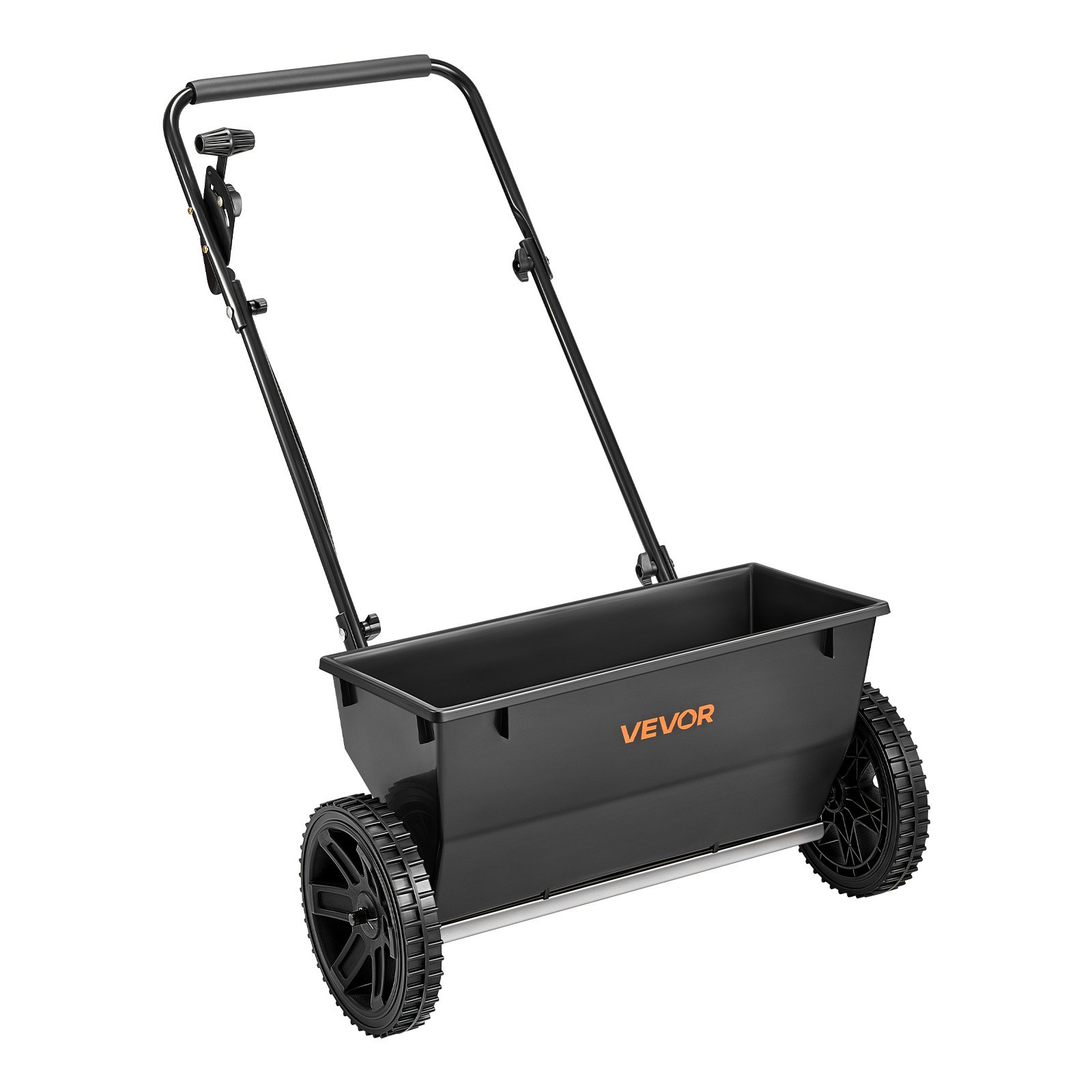 Broadcast Spreader 50 lbs Capacity Walk-Behind Push Drop for Lawn & Garden Care, 18 in Spreading Width & 10 Adjustable Settings, 10 in All Terrain Tires for Seed, Fertilizer, Black$75.99View on Mallflare
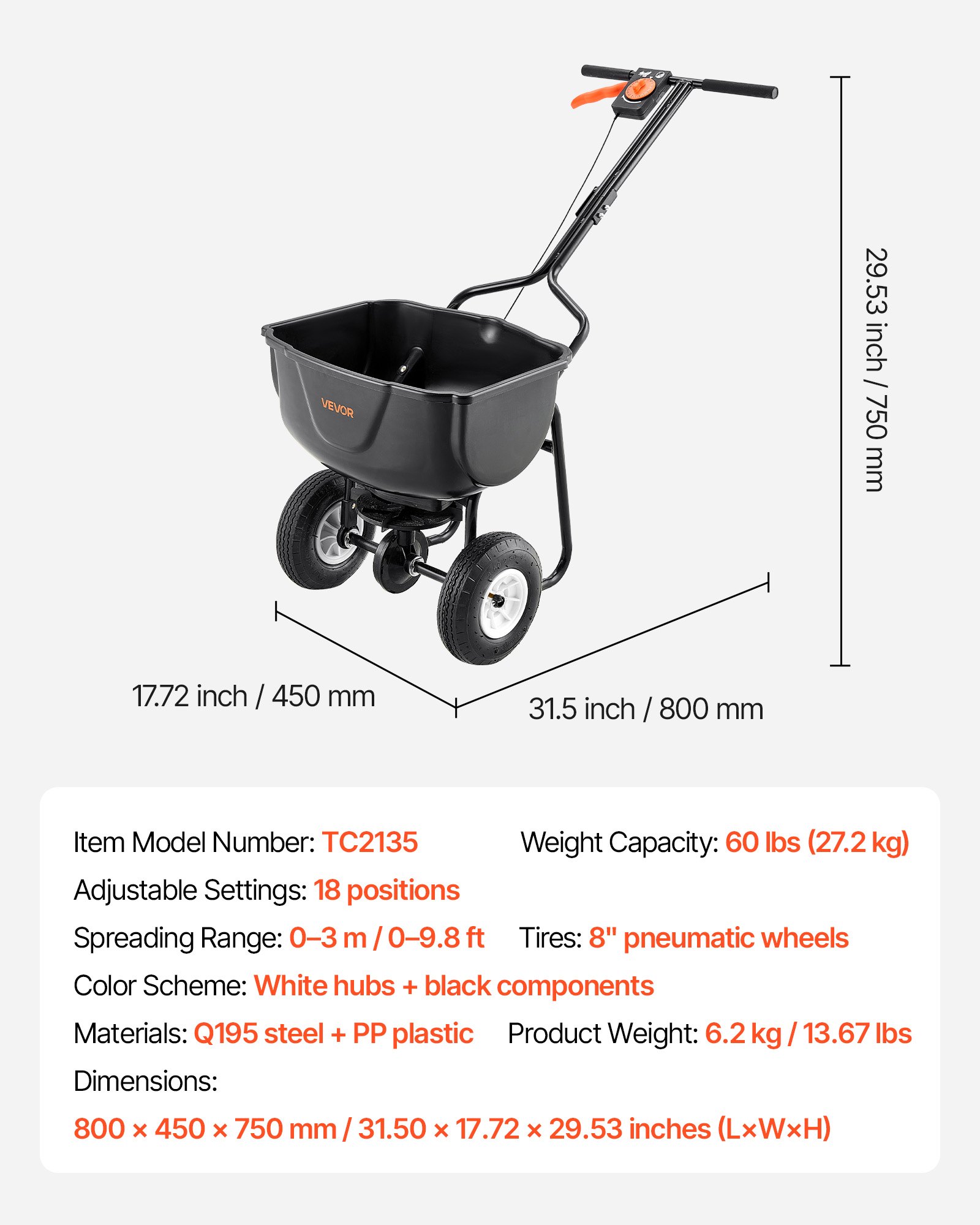 Walk Behind Spreader, 60LBS Capacity, Push With Hopper Grate, 0-9.8 Ft Spreading Width, 8 In All Terrain Pneumatic Tires, Garden & Lawn Broadcast Spreaders, For Seed, Fertilizer$90.99View on Mallflare
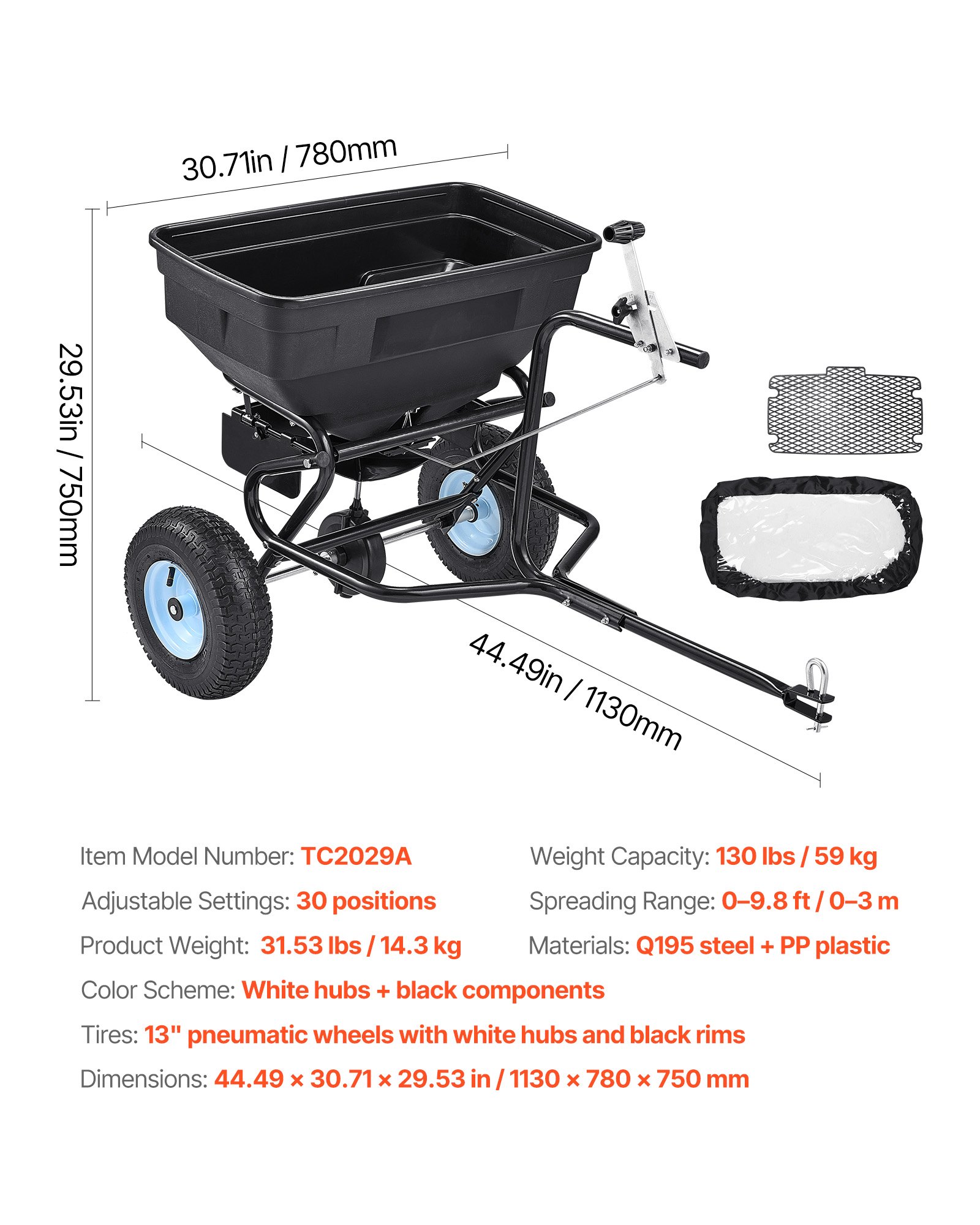 Tow Behind Broadcast Spreader, 130LBS Capacity, Tow/Push Garden With 13 In Tires, 30 Adjustable Setting & 9.8 Ft Spreading Width, Lawn Spreaders For Seed, Fertilizer, Salt, Ice Melt$164.99View on Mallflare
Highlights
- Hopper capacity ranges from 15 lb for small yards to 130 lb for tow-behind models; capacity directly determines refill frequency and maximum practical lawn size.
- Spreading width is set by impeller speed and gate opening; typical broadcast spreaders throw 8–12 ft, with 9.8–12 ft common on walk-behind units, requiring overlapping passes for even coverage.
- Pneumatic tires (8–13 in) absorb bumps and roll over uneven turf; hard plastic wheels are lighter but sink in soft soil and transmit vibration to the operator.
- Adjustable flow control (often 0–30 settings) and hopper grates are key usability features: grates break up clumps, while calibrated settings let you repeat application rates.
Best use cases
- Best fit: 15–50 lb walk-behind spreader with 8–10 in pneumatic tires for suburban lawns under 1/4 acre; skip tow-behind models that turn poorly around landscaping.
- Best fit: 60–80 lb push spreader with 10–12 in tires for 1/4 to 1/2 acre and mixed fertilizer/seed use; skip 15 lb hoppers that require constant refilling.
- Best fit: 130 lb tow-behind spreader with 13 in tires for large, open properties over 1/2 acre; skip if you have narrow gates, steep slopes, or tight turns.
- Wrong fit: lightweight plastic-hopper spreaders for rock salt or dense pellets — the hopper and gate wear quickly; choose a metal or reinforced hopper for abrasive materials.
Buying tips
- Calculate lawn area in square feet, then choose hopper capacity: 15–25 lb for under 5,000 sq ft, 50–80 lb for 5,000–15,000 sq ft, and 100+ lb or tow-behind for over 15,000 sq ft.
- Prioritize pneumatic tires of at least 10 in for uneven lawns; 8 in tires are acceptable only on flat, smooth turf, while 13 in tires improve flotation on soft ground.
- Look for a hopper grate and a flow-control lever with numbered settings; without a grate, clumpy fertilizer bridges and stops flow, causing stripes.
- Check the spread-width specification and plan 50% overlap between passes; a 10 ft spreader effectively covers 5 ft per pass for uniform coverage.
Specs
| Hopper Capacity | 15–130 lb (match to lawn sq ft) |
|---|---|
| Spread Width | 8–12 ft fan pattern |
| Tire Type | Pneumatic 8–13 in vs hard plastic |
| Drive Type | Push walk-behind vs tow-behind |
Related searches
What to check before buying
- Measure your lawn's square footage and narrowest gate width; tow-behind spreaders need a clear path at least as wide as the tow bar plus turning clearance.
- Confirm your terrain: pneumatic tires and larger diameters are mandatory for bumpy or soft ground; hard wheels suit only flat, firm turf.
- Verify the spreader's material compatibility — fertilizer, seed, and ice melt have different densities, so choose a hopper and gate rated for the heaviest material you will use.
- Check assembly and storage footprint: tow-behind models need hitch compatibility and more storage space, while walk-behind units fold or stand upright for compact storage.
FAQ
Data sources: eBay / Amazon listings and product attribute feeds. Updated Nov 27, 2026.
Some links on this page are affiliate links. If you buy after clicking one, we may earn a commission at no extra cost to you. This does not change which products appear here or their order. Affiliate disclosure.