
Photos from current listings. Actual item, color, and included accessories may vary.
Vevor Electric Honey Extractor Buying Guide
A Vevor electric honey extractor is a motorized centrifuge that spins uncapped frames to fling honey out via centrifugal force, replacing manual cranking with a gearmotor and speed control. The core trade-off is motor/controller quality and drum weld integrity versus lower upfront cost—cheap units use brushed motors and thin stamped stainless, while durable tiers use brushless or sealed gearmotors and TIG-welded 304 stainless. The decision rule: buy by frame count and motor type, not by listed 'capacity,' and reject any unit with a plastic honey gate or unsupported inner drum cage.
Median $269.90 · New listings
Key takeaways
- Electric extractors split into brushed-motor entry tiers (loud, brush-replacement interval, lower torque) and brushless/sealed gearmotor tiers (quieter, longer service life, better speed holding under load).
- Drum construction matters more than cosmetics: 304 stainless with TIG-welded seams resists honey acidity, while thin 201-grade or riveted drums pit and leak at seams over seasons.
- Frame capacity is radial vs tangential: radial cages hold more frames per spin with less flipping, tangential holds fewer and requires flipping frames halfway through extraction.
At a glance
- Category
- Honey Extraction & Packaging
- Last updated
- Nov 27, 2026
Current offers
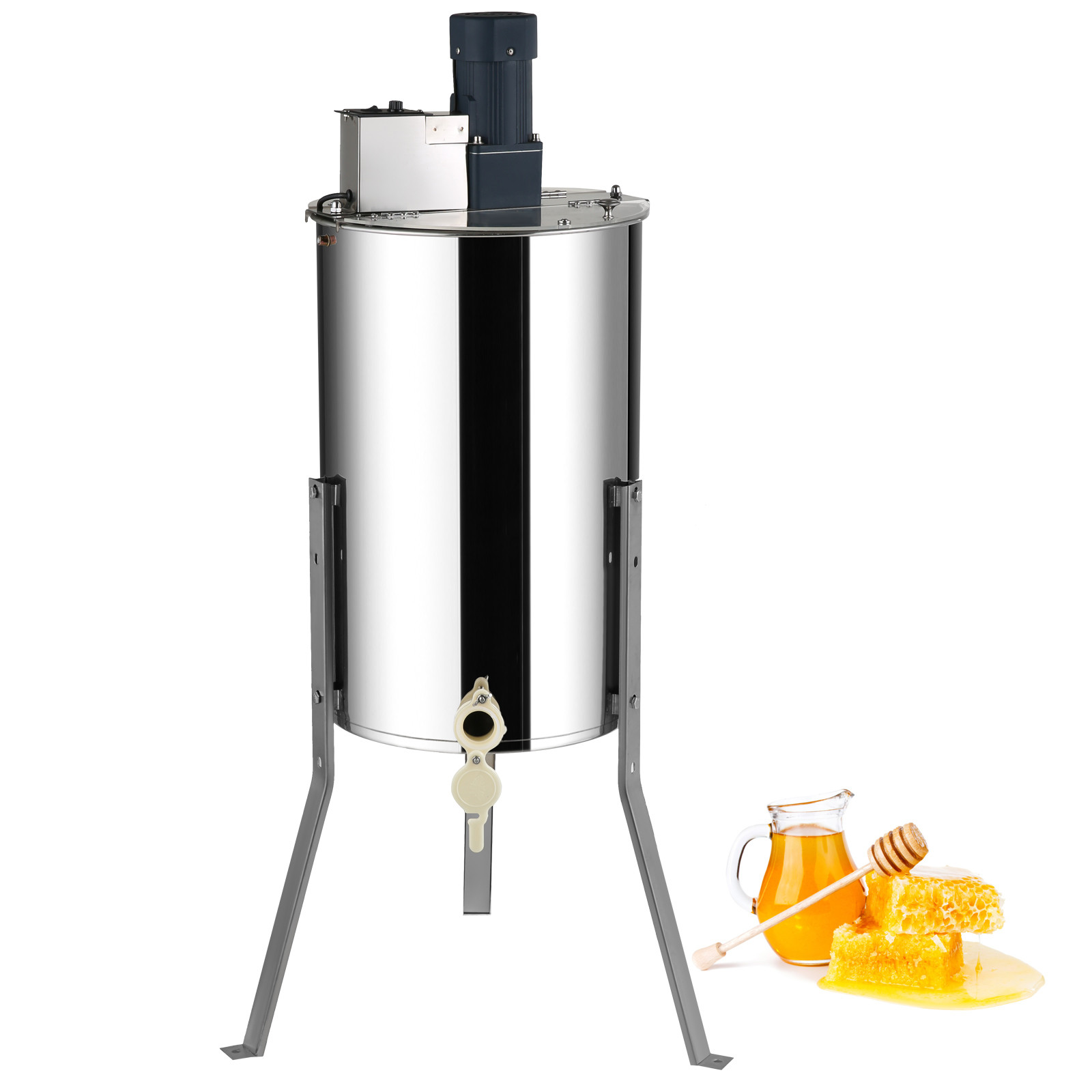 VEVOR Electric Honey Extractor Beekeeping Equipment 2/4 Frames Stainless Steel$209.90New · Last checked Nov 18, 2026View on eBay
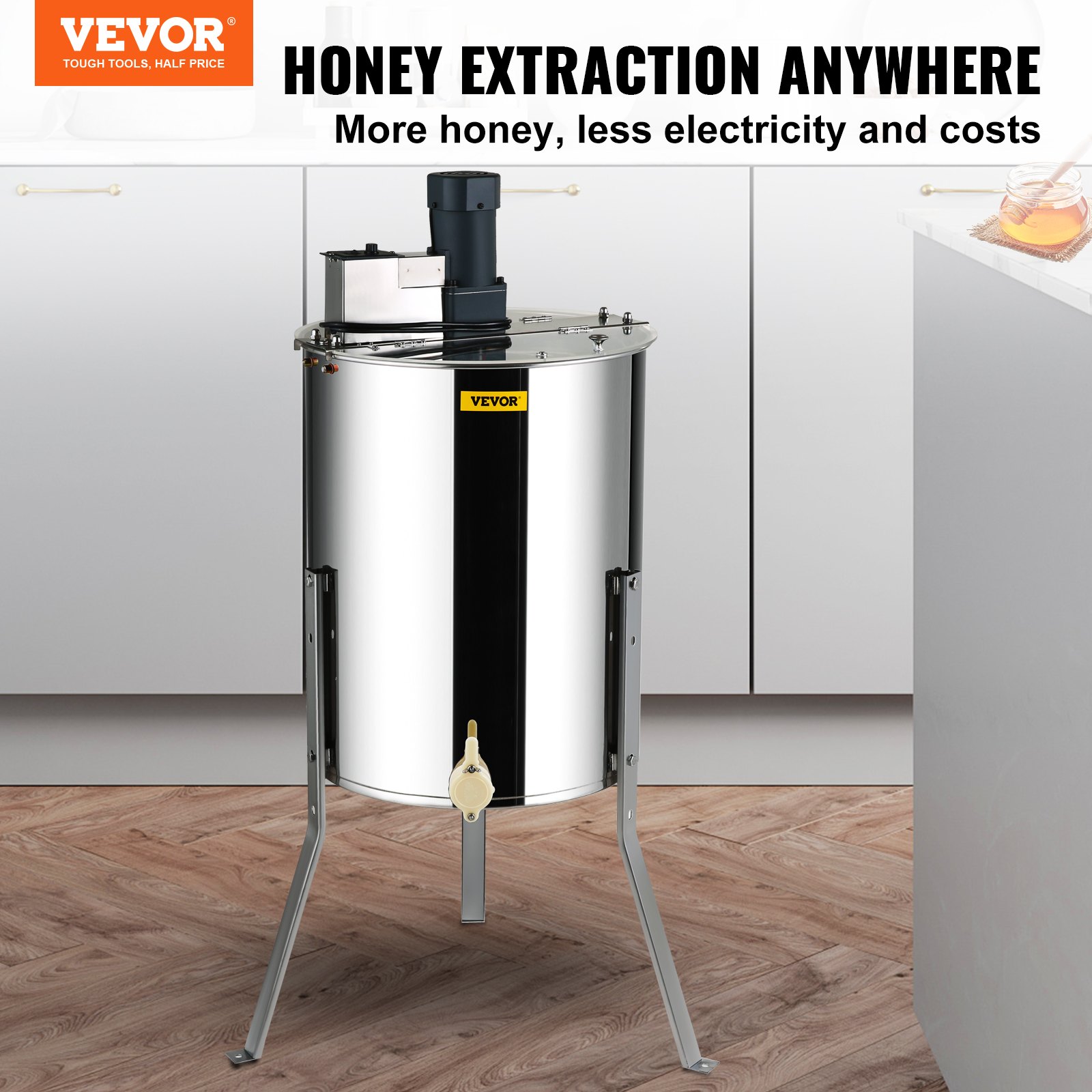 VEVOR Electric Honey Extractor, Frames Spinner Stainless Steel Beekeeping Extraction, Apiary Centrifuge Equipment With Height Adjustable Stand, Honeycomb Drum Lid$307.99View on Mallflare
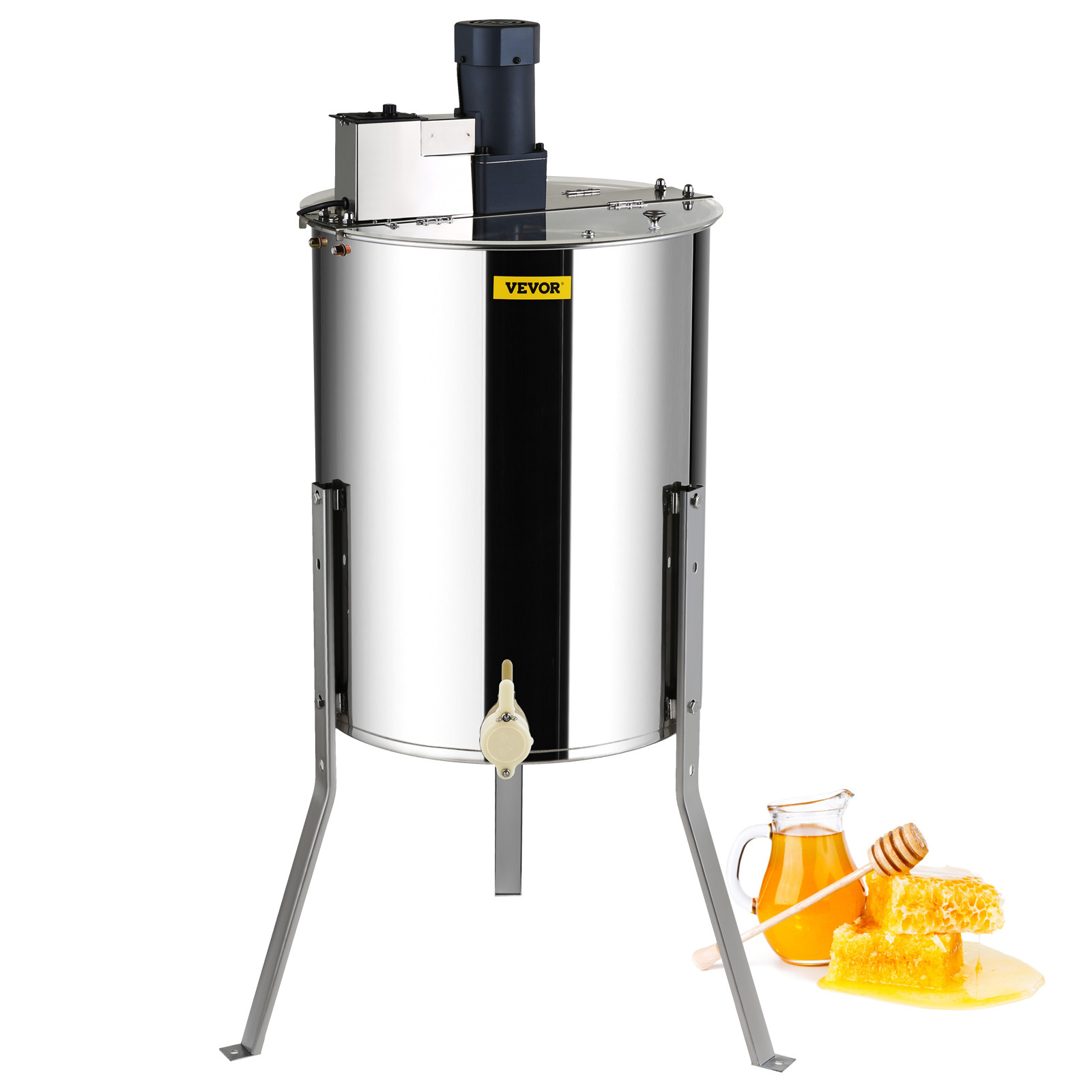 VEVOR Electric Honey Extractor Beekeeping Equipment 4/8 Frames Stainless Steel$269.90New · Last checked Nov 28, 2026View on eBay
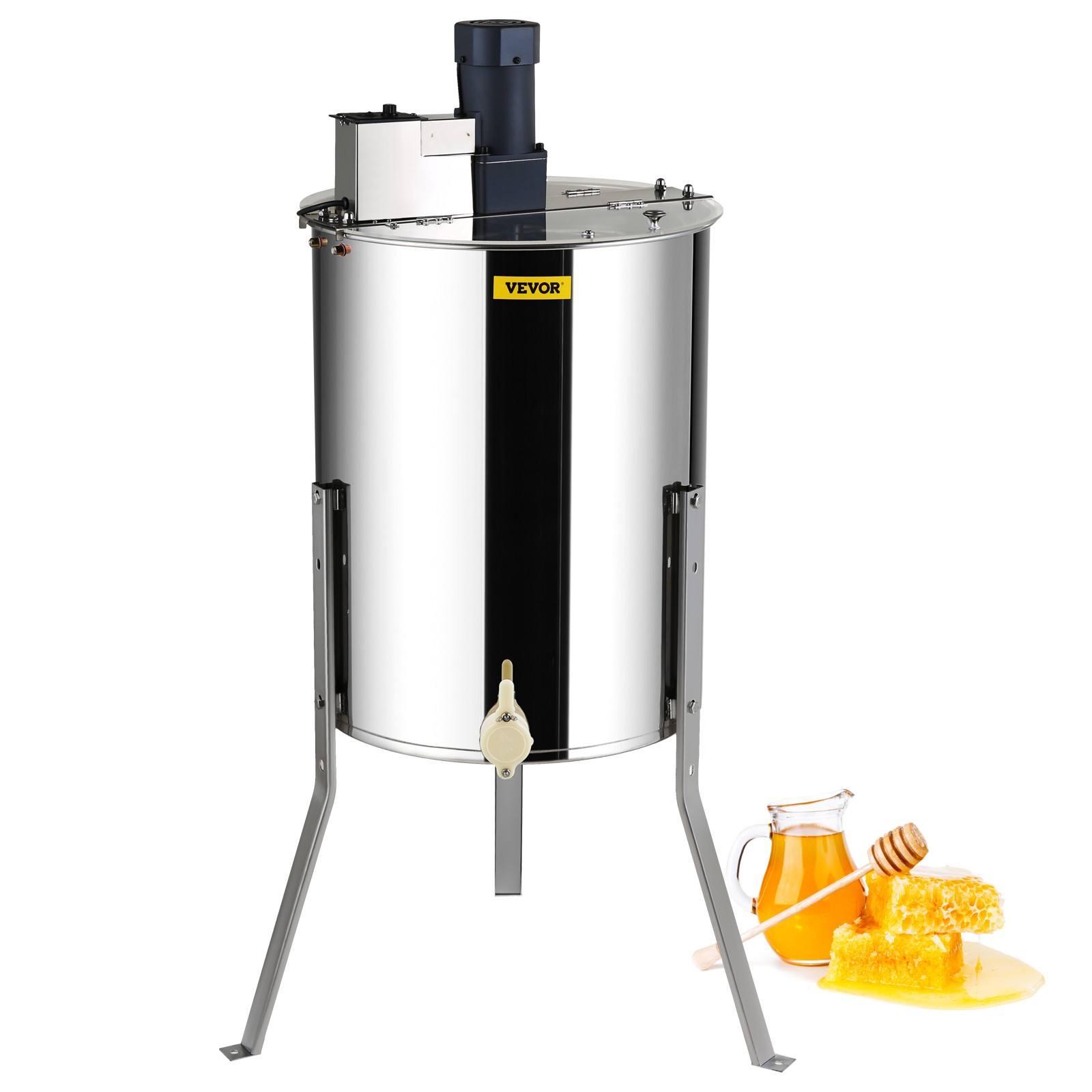 VEVOR Electric Honey Extractor Beekeeping Equipment 4/8 Frames Stainless Steel$269.90New · Last checked Nov 28, 2026View on eBay
- VEVOR Electric Honey Extractor Beekeeping Equipment 4/8 Frames Stainless Steel$291.78New · Last checked Nov 18, 2026View on eBay
Highlights
- Electric extractors split into brushed-motor entry tiers (loud, brush-replacement interval, lower torque) and brushless/sealed gearmotor tiers (quieter, longer service life, better speed holding under load).
- Drum construction matters more than cosmetics: 304 stainless with TIG-welded seams resists honey acidity, while thin 201-grade or riveted drums pit and leak at seams over seasons.
- Frame capacity is radial vs tangential: radial cages hold more frames per spin with less flipping, tangential holds fewer and requires flipping frames halfway through extraction.
- Speed control ranges from simple on/off to variable AC or DC controllers; a reversing switch and soft-start reduce frame blowout and comb damage on startup.
Best use cases
- Best fit: a hobbyist with 2–10 hives and standard Langstroth medium frames should pick a 4–8 frame radial electric unit with a variable-speed controller and stainless gate.
- Best fit: a sideliner processing 10–30 hives needs a 12–20 frame radial extractor with a sealed gearmotor and reversing switch to cut per-batch labor and comb damage.
- Wrong fit: buying a tangential-only or 2-frame electric unit for more than a few hives—flipping frames and tiny batch size erase the motor labor savings.
- Skip: any unit with a plastic honey gate, riveted drum seams, or no speed control if you extract more than a handful of frames per season.
Buying tips
- Match frame count to your real harvest: a 4-frame radial unit suits up to ~8 hives; step to 8–12 frame radial once you regularly extract more than 20 frames per session.
- Confirm frame compatibility explicitly—standard Langstroth deep, medium, and shallow frames differ in height, and some cages only accept one size without wobble.
- Prefer 304 stainless drums with welded (not riveted) seams and a stainless or food-grade nylon honey gate; brass gates are durable but must be lead-free for food contact.
- Check motor specs: sealed gearmotors with thermal protection and a reversing switch outlast exposed brushed motors, especially in humid extraction rooms.
Specs
| Motor Type | Brushed vs Brushless Gearmotor |
|---|---|
| Frame Capacity | 2–20 frames; radial vs tangential |
| Drum Material | 304 vs 201 stainless; welded seams |
| Speed Control | On/off vs variable + reversing |
Related searches
What to check before buying
- Measure your extraction space: electric units with legs and a gate need clearance for a bucket or bottling tank below the gate plus room to swing frames in and out.
- Verify your electrical supply matches the motor's voltage and plug standard—many units ship 110–120V US or 220–240V EU, and plug adapters do not change voltage.
- Confirm your frame type and size (Langstroth deep/medium/shallow or foundationless) against the cage dimensions before ordering.
- Plan for a honey gate height that clears your settling tank or bucket, and ensure the unit sits level so the drum drains fully.
FAQ
Data sources: eBay / Amazon listings and product attribute feeds. Updated Nov 27, 2026.
Some links on this page are affiliate links. If you buy after clicking one, we may earn a commission at no extra cost to you. This does not change which products appear here or their order. Affiliate disclosure.