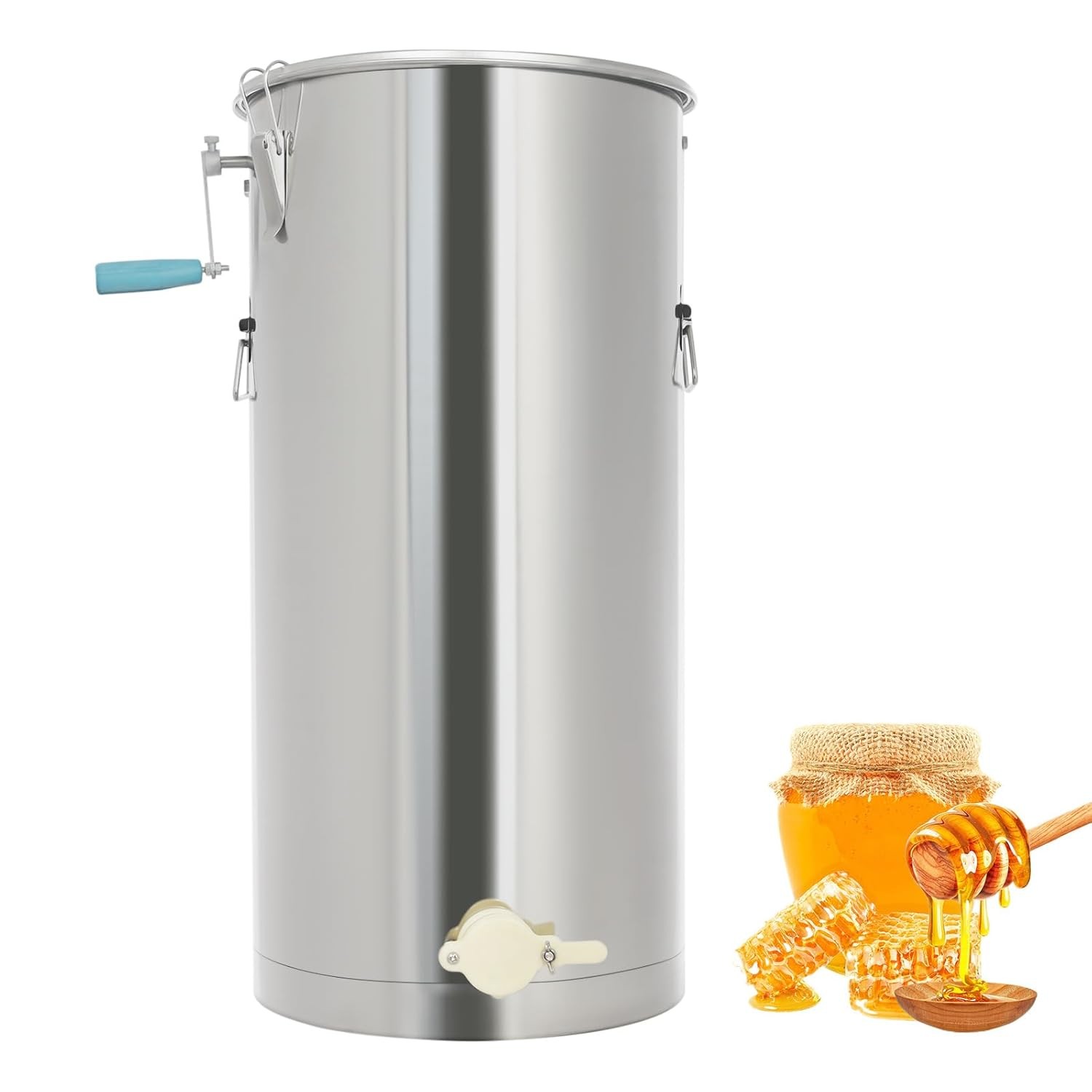

Photos from current listings. Actual item, color, and included accessories may vary.
Honey Press Buying Guide
A honey press is a manual or motorized screw-press that separates liquid honey from crushed comb and cappings, distinct from a centrifugal extractor that spins intact frames. The core trade-off is throughput versus extraction yield: small two-frame basket presses are cheap but slow and leave more honey in the wax, while heavy-duty cage presses recover more honey per batch and handle cappings. Buy a press only if you crush comb or process cappings; buy an extractor if you spin uncapped frames.
Median $86.27
Key takeaways
- Manual screw presses use a threaded rod and plate; two-frame basket presses process roughly one to two frames per load and require 10–20 minutes of cranking.
- Stainless steel (304 food grade) bodies and baskets resist honey acidity and clean easily; painted or galvanized steel can pit and contaminate honey.
- Presses recover honey from crushed comb and cappings, while centrifugal extractors only work on intact uncapped frames and leave cappings unprocessed.
At a glance
- Category
- Honey Extraction & Packaging
- Last updated
- Nov 27, 2026
Current offers
Highlights
- Manual screw presses use a threaded rod and plate; two-frame basket presses process roughly one to two frames per load and require 10–20 minutes of cranking.
- Stainless steel (304 food grade) bodies and baskets resist honey acidity and clean easily; painted or galvanized steel can pit and contaminate honey.
- Presses recover honey from crushed comb and cappings, while centrifugal extractors only work on intact uncapped frames and leave cappings unprocessed.
- Motorized hydraulic presses raise throughput and force but cost far more; manual presses are the norm for hobbyist and small-apiary volumes.
Best use cases
- Best fit: hobbyist with 2–10 hives who crushes comb or saves cappings—choose a two-frame stainless manual basket press with a bucket and mesh bag.
- Best fit: beekeeper producing comb honey or chunk honey—a small press lets you process cut-comb trimmings and cappings without a full extractor line.
- Wrong fit: beekeeper with 10+ hives spinning uncapped frames—skip the press and buy a centrifugal extractor; a two-frame press becomes the bottleneck.
- Wrong fit: anyone expecting press output to match an extractor—a manual two-frame press yields small batches and requires a separate settling tank for cleanup.
Buying tips
- Match press capacity to frame count: a two-frame press suits 2–10 hives; scale to a larger cage or motorized press beyond that or accept slow batch times.
- Choose 304 stainless steel for the basket, press plate, and bucket; avoid painted or galvanized contact surfaces that corrode in honey's acidic environment.
- Confirm the press includes or fits a food-grade mesh bag and a bucket with a honey gate; without a gate you cannot drain clarified honey cleanly.
- For cappings processing, pick a press with a deep cage and a ratcheting or two-handle screw; short-throw screws stall on dense cappings.
Specs
| Press Type | Manual screw vs motorized hydraulic |
|---|---|
| Basket Material | 304 stainless vs painted/galvanized |
| Batch Capacity | 2-frame to multi-frame cage |
| Included Drain | Bucket + honey gate vs press only |
Related searches
What to check before buying
- Measure your bucket or bottling setup: a two-frame press typically needs a 5-gallon bucket footprint and clearance for the screw handle above.
- Verify the press body and basket are 304 stainless steel and the weld seams are smooth and food-safe before purchase.
- Confirm the honey gate thread and valve type match your settling tank or bottling bucket fittings so honey can drain without leaking.
- Check that a food-grade mesh bag is included or sized to the basket diameter; a loose bag lets wax paste into the honey.
FAQ
Data sources: eBay / Amazon listings and product attribute feeds. Updated Nov 27, 2026.
Some links on this page are affiliate links. If you buy after clicking one, we may earn a commission at no extra cost to you. This does not change which products appear here or their order. Affiliate disclosure.