
Photos from current listings. Actual item, color, and included accessories may vary.
Bee Honey Extraction Buying Guide
Effective bee honey extraction hinges on matching the extractor's frame capacity and drive type to your apiary size and frame standard, not on buying the largest unit available. Most beginners lose time and honey by choosing a tangential extractor for more than a few hives or by ignoring the critical difference between Langstroth deep and medium frame dimensions. This guide covers the real engineering choices—motor type, drum material, frame orientation, and strainer configuration—that determine yield, clarity, and long-term durability.
Median $87.05
Key takeaways
- Manual crank extractors suit 1–4 hives but require 20–40 minutes of continuous cranking per harvest; motorized units cut labor and reduce comb blowout from uneven acceleration.
- Tangential extractors hold frames flat against the drum wall and need manual frame flipping; radial units hold frames perpendicular to rotation and extract both sides in one cycle, saving time at 8+ hives.
- Food-grade 304 stainless steel drums resist honey's natural acidity and cleaning chemicals; plastic drums are lighter and cheaper but can scratch and harbor bacteria over seasons.
At a glance
- Category
- Honey Extraction & Packaging
- Last updated
- Nov 27, 2026
Current offers
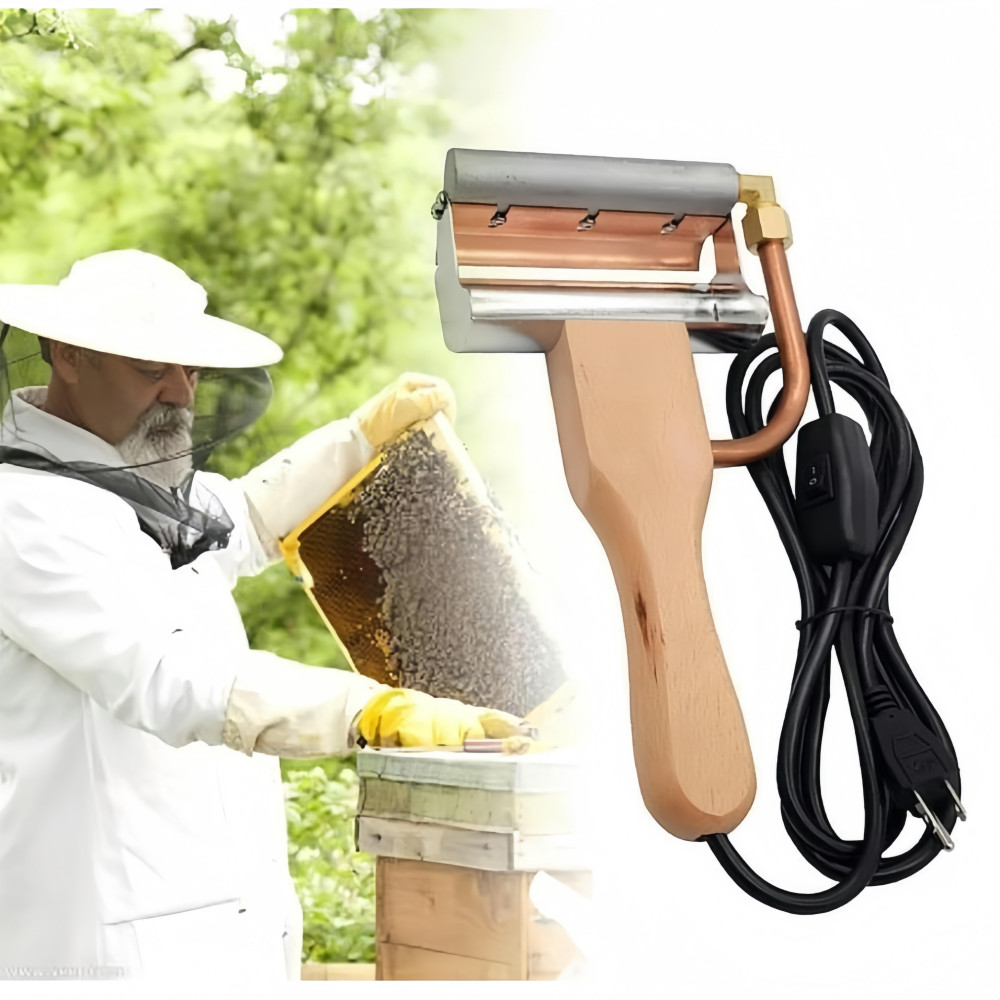 Electric Honey Cutter Uncapping Plane Hot Knife Honey Bee Scraping Extractor$57.00View on eBay
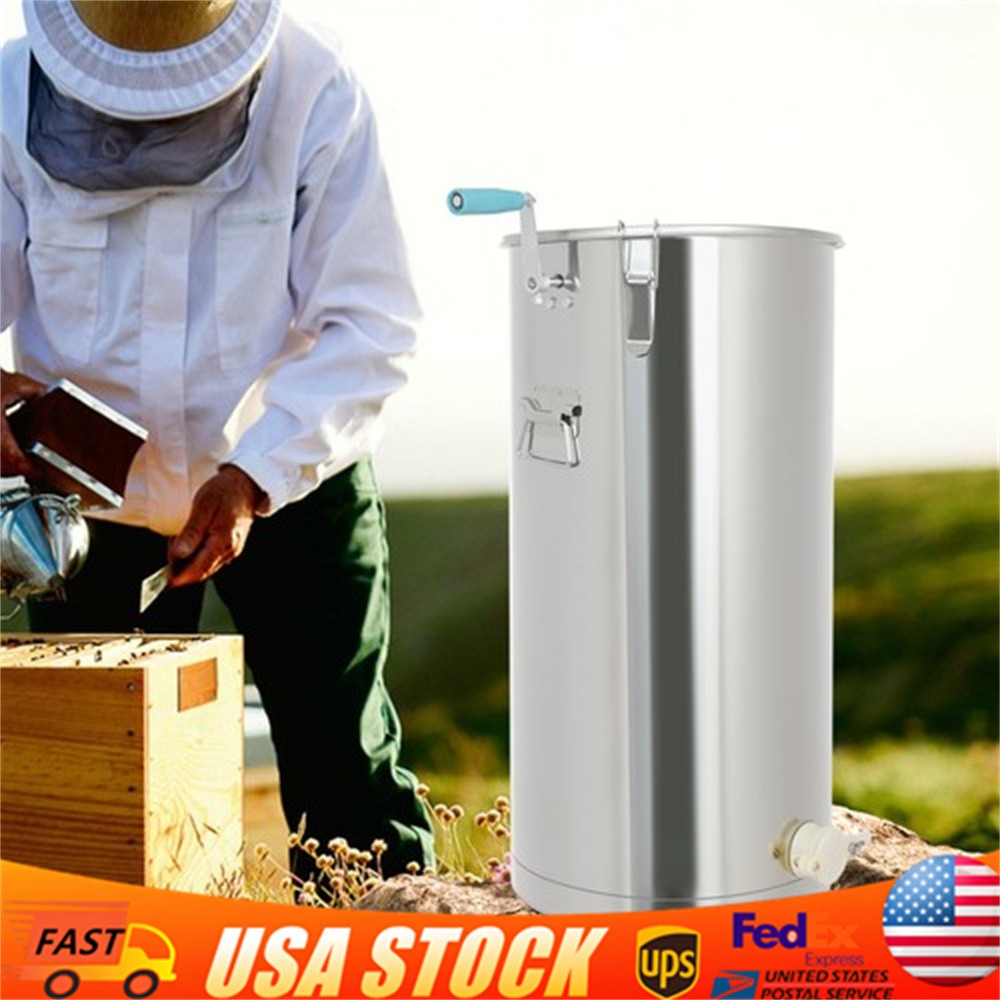 2 Frame Honey Extractor Manual Use Beekeeping Bee Hive Equipment Stainless Steel$86.18View on eBay
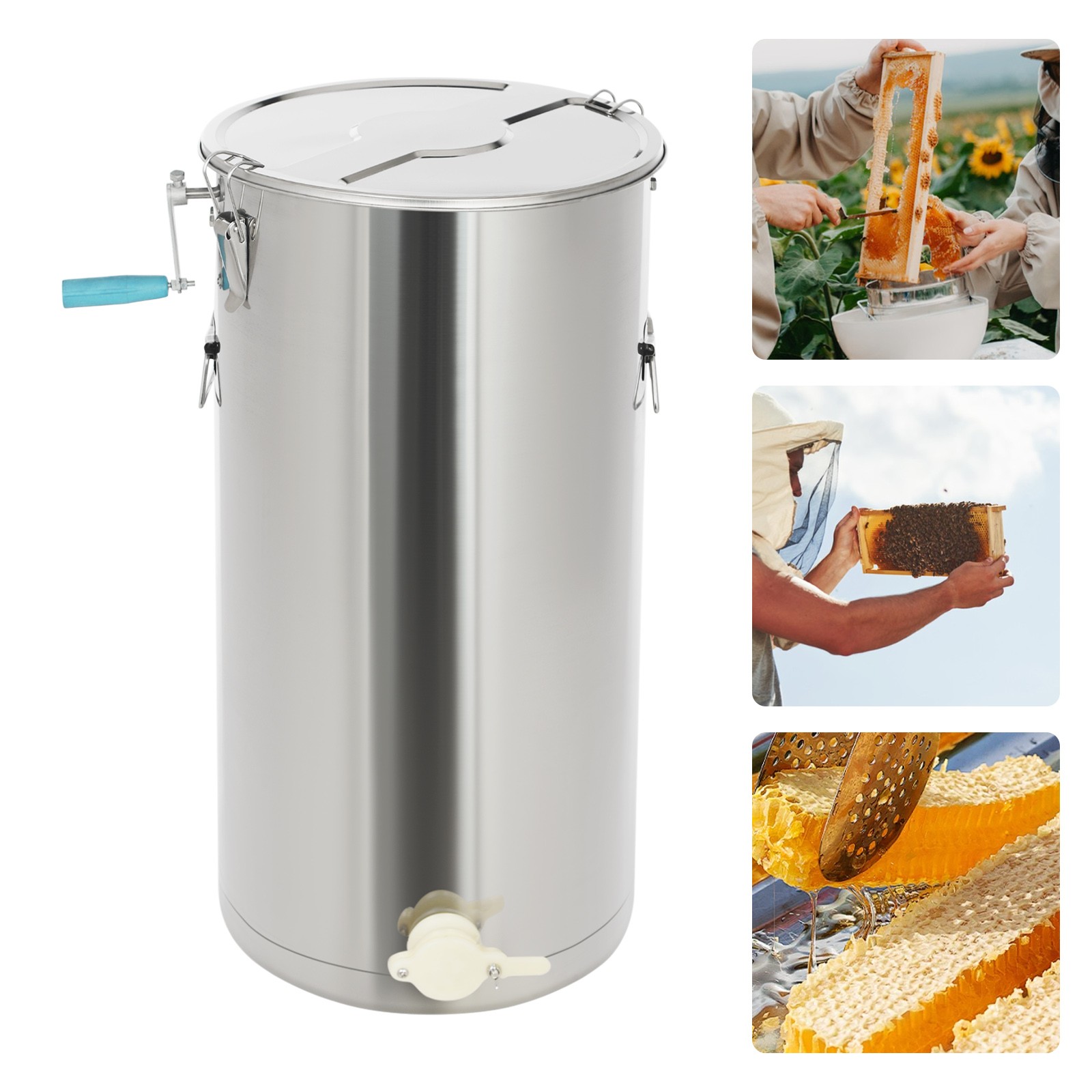 2 Frame Honey Extractor Manual Use Beekeeping Bee Hive Equipment Stainless Steel$87.05View on eBay
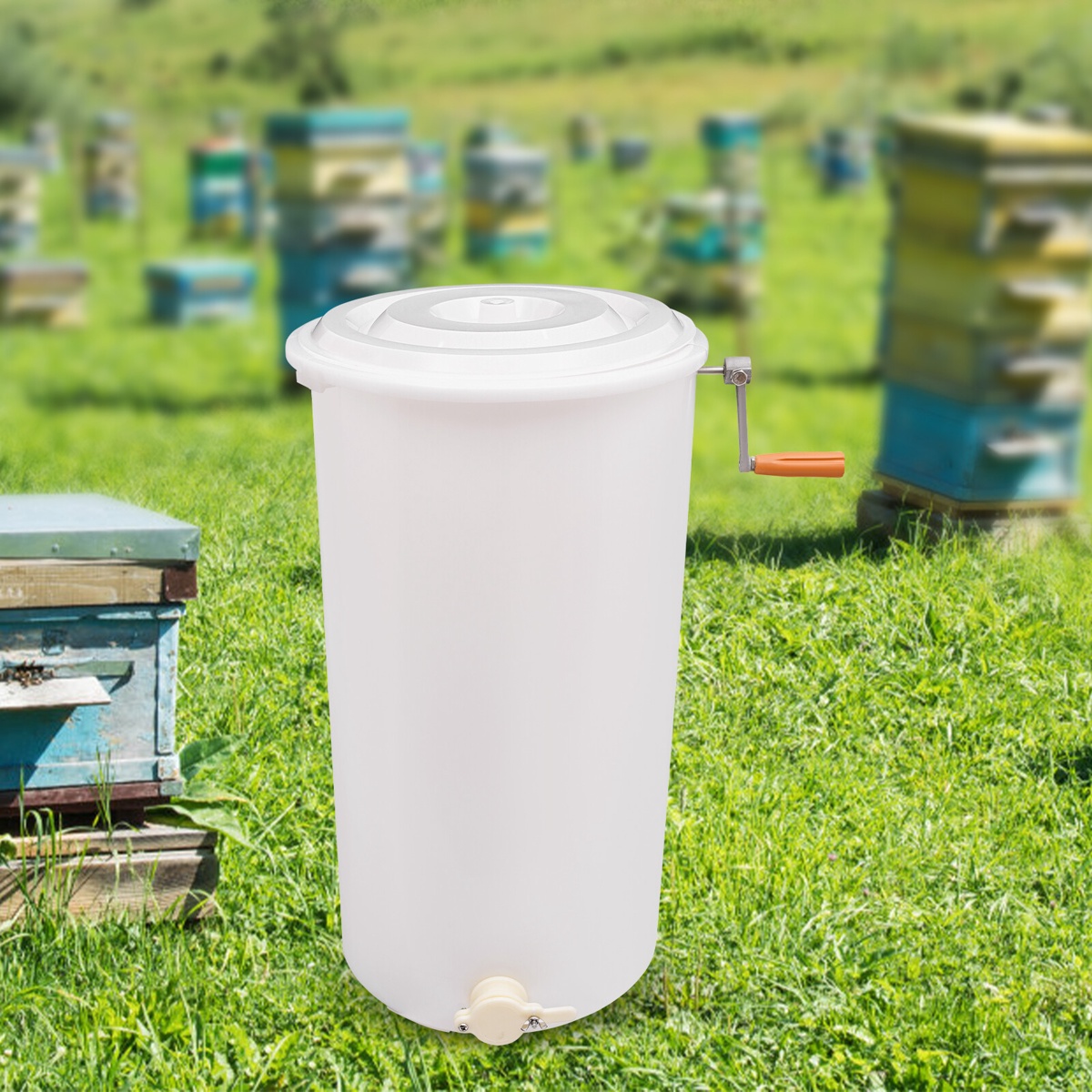 Honey Extractor 2 Two Frame Manual Crank Honey Bee Spinner Beekeeping Equipment.$104.37View on eBay
 Honey Extractor 2 Two Frame Manual Crank Honey Bee Spinner Beekeeping Equipment$109.87View on eBay
Highlights
- Manual crank extractors suit 1–4 hives but require 20–40 minutes of continuous cranking per harvest; motorized units cut labor and reduce comb blowout from uneven acceleration.
- Tangential extractors hold frames flat against the drum wall and need manual frame flipping; radial units hold frames perpendicular to rotation and extract both sides in one cycle, saving time at 8+ hives.
- Food-grade 304 stainless steel drums resist honey's natural acidity and cleaning chemicals; plastic drums are lighter and cheaper but can scratch and harbor bacteria over seasons.
- A two-stage strainer (coarse mesh over fine mesh) removes wax cappings and large debris before bottling; gravity-fed nylon strainers are standard, while stainless sieve sets offer faster flow and easier sanitizing.
Best use cases
- Backyard beekeeper with 2–5 hives using Langstroth medium frames: pick a 4-frame manual tangential stainless extractor with a two-stage strainer—skip large radial units that cost more and take up storage space.
- Sideliner or small commercial operation with 10–30 hives: choose a motorized radial extractor sized for deep frames with a variable-speed controller to prevent comb blowout during startup, and add a heated bottling bucket for efficient packing.
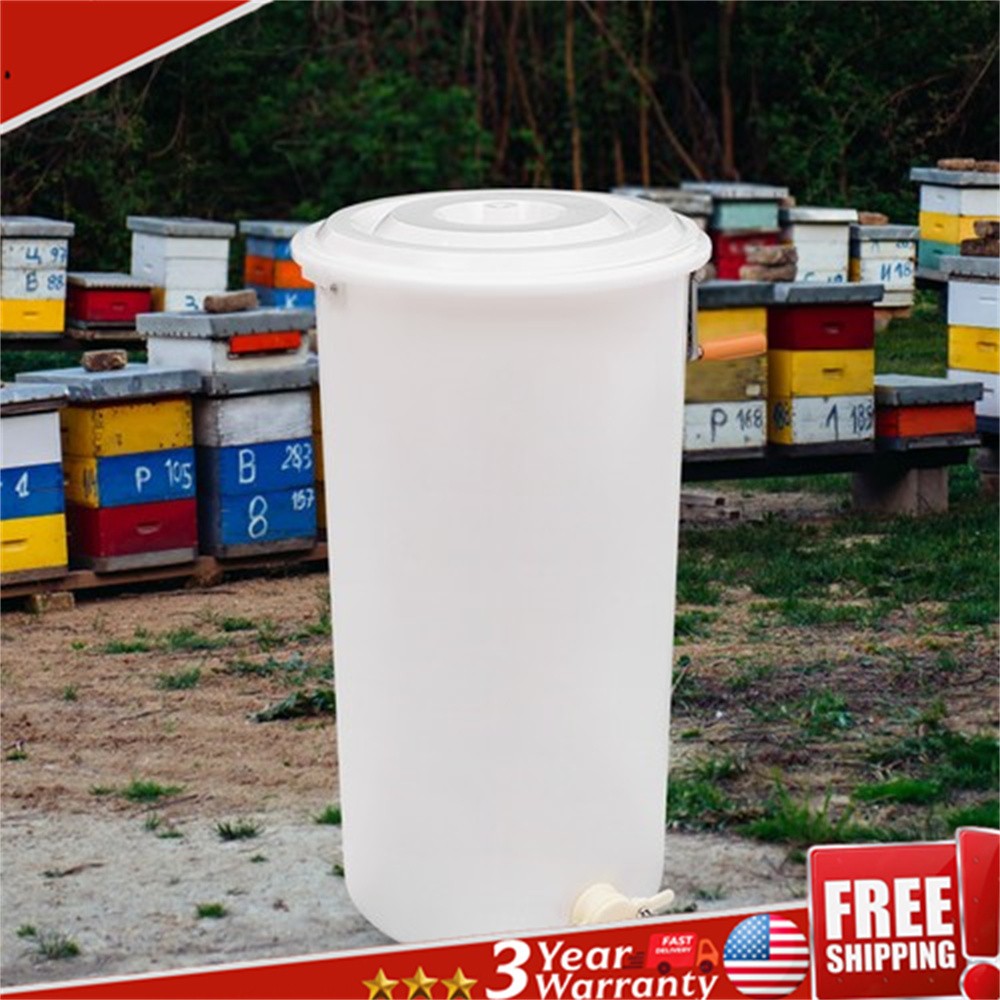
- Beekeeper harvesting crush-and-strain only (no frame reuse): use a simple food-grade bucket with a nylon strainer bag rather than investing in a centrifuge extractor, which is unnecessary for comb-destroying methods.
- Beekeeper with mixed frame sizes or top-bar hives: avoid standard Langstroth-only extractors and select an adjustable or universal frame cage, or use crush-and-strain to prevent frame incompatibility.
Buying tips
- Size the extractor frame count to your hive count: 4-frame units handle up to 5 hives per harvest, 8-frame units suit 5–15 hives, and 20+ frame radial units are for 15+ hives or frequent harvesting.
- Choose radial over tangential when harvesting 8 or more hives—radial extractors eliminate frame flipping and typically halve extraction time per batch.
- Prioritize 304 stainless steel drums and baskets over plastic or painted steel; honey's pH ranges from 3.4 to 6.1 and will corrode lower-grade metals over time.
- Inspect the drive mechanism: direct-drive motors with metal gears last longer than belt-driven units, and variable-speed control prevents frame blowout when starting rotation.
Specs
| Drive Type | Manual crank / Motorized electric |
|---|---|
| Frame Capacity | 2–4 / 8 / 20+ frames |
| Drum Material | 304 stainless / Food-grade plastic |
| Extraction Style | Tangential vs radial |
Related searches
What to check before buying
- Measure your frame dimensions: standard Langstroth deep frames are 19-1/8 by 9-1/2 inches, medium frames are 19-1/8 by 6-5/8 inches, and your extractor basket must match or exceed these.
- Confirm the extractor's leg height and drum clearance fit your floor space and allow a 5-gallon bucket or bottling tank to sit under the honey gate.
- Check electrical requirements for motorized units—most run on standard 120V AC in North America, and some variable-speed models need a grounded outlet near the extraction area.
- Verify the honey gate valve size (typically 1-1/2 or 2 inches) matches your strainer and bottling bucket openings to avoid leaks or adapters.
FAQ
Data sources: eBay / Amazon listings and product attribute feeds. Updated Nov 27, 2026.
Some links on this page are affiliate links. If you buy after clicking one, we may earn a commission at no extra cost to you. This does not change which products appear here or their order. Affiliate disclosure.