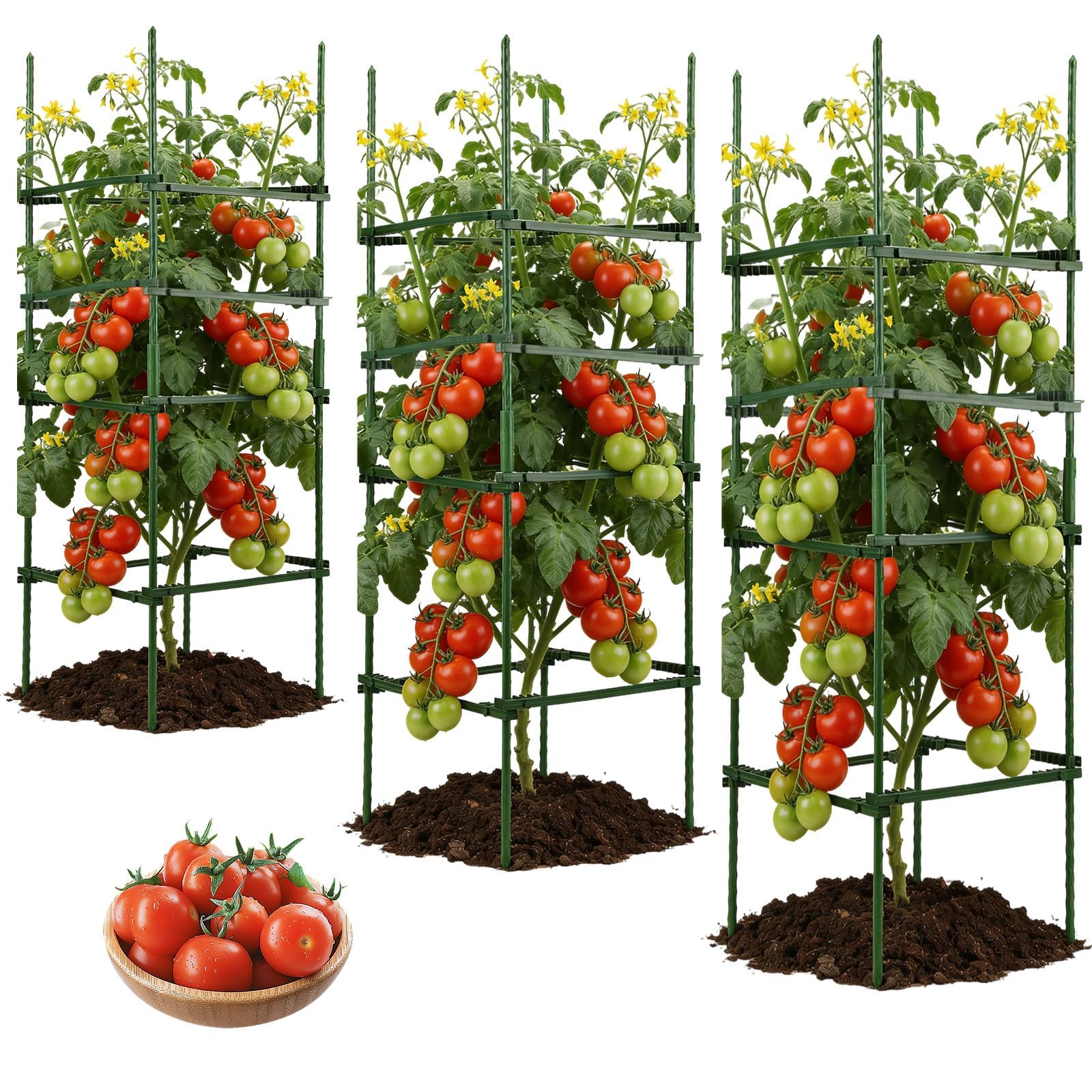

Photos from current listings. Actual item, color, and included accessories may vary.
Tomato Stake Buying Guide
Tomato stakes are vertical supports that keep indeterminate vines, heavy fruit clusters, and sprawling branches off the ground to prevent rot and breakage. The core trade-off is between thin single-stem stakes that need tying and rigid multi-arm cages that self-support but take more storage space. Choose a stake rated for your mature plant height and fruit load, and skip any stake under 4 ft for indeterminate varieties.
Key takeaways
- Stake height should exceed mature vine height by at least 12 in; determinate tomatoes need 3-4 ft stakes, indeterminate need 5-8 ft.
- Square steel or plastic-coated stakes resist bending better than round wood; wood rots at soil line unless it is rot-resistant cedar or pressure-treated.
- Cages with 10-12 in square grid openings and 4-5 ft height support full clusters; smaller 8 in grids trap branches and deform fruit.
At a glance
- Category
- Garden Tools
- Last updated
- Nov 28, 2026
Current offers
Highlights
- Stake height should exceed mature vine height by at least 12 in; determinate tomatoes need 3-4 ft stakes, indeterminate need 5-8 ft.
- Square steel or plastic-coated stakes resist bending better than round wood; wood rots at soil line unless it is rot-resistant cedar or pressure-treated.
- Cages with 10-12 in square grid openings and 4-5 ft height support full clusters; smaller 8 in grids trap branches and deform fruit.
- Steel stakes should be at least 3/8 in diameter or 14-gauge thickness to hold a loaded indeterminate vine without bowing.
Best use cases
- Determinate bush tomatoes in containers: use a 3-4 ft single stake or a compact 3-ring cage; skip 6 ft stakes that waste space and shade the pot.
- Indeterminate heirloom vines in open ground: choose a 6-8 ft stake driven 12 in into soil or a 5 ft heavy-gauge cage; skip flimsy 4 ft cages that collapse under fruit weight.
- Raised-bed gardens with wind exposure: pick square steel stakes with a wide base or tie to a horizontal top rail; skip thin bamboo that snaps at the node in gusts.
- Seasonal renters or small patios: use foldable or snap-together cages that store flat; skip welded one-piece cages that need a truck to move.
Buying tips
- Match stake length to variety: determinate 3-4 ft, indeterminate 6-8 ft; drive one-third of the stake into the ground for stability.
- Choose 14-gauge or thicker steel, or 1 in diameter wood; thinner bamboo or 1/4 in fiberglass flexes and fails under a full fruit load.
- For cages, require 10-12 in grid spacing and at least 4 ft height; 8 in grids and 3 ft heights are only for determinate or dwarf plants.
- Prefer powder-coated or galvanized steel over bare metal; coating prevents rust staining on fruit and extends service life by several seasons.
Specs
| Stake Height | 3-4 ft determinate; 6-8 ft indeterminate |
|---|---|
| Material Gauge | 14-gauge steel or 1 in wood min |
| Cage Grid Size | 10-12 in openings; 4-5 ft tall |
| Profile Shape | Square or triangular steel vs round wood |
Related searches
What to check before buying
- Measure mature plant height for your specific variety; add 12-18 in to determine minimum stake or cage height.
- Confirm soil depth and bed location: stakes need 10-12 in of penetrable soil, not compacted clay or shallow raised beds.
- Check storage space for cage footprint; welded cages occupy 10-12 sq ft each year-round, foldable cages collapse to inches.
- Verify tie material compatibility: soft cloth or stretch tie for stems; avoid bare wire or zip ties that cut into vines.
FAQ
Data sources: eBay / Amazon listings and product attribute feeds. Updated Nov 28, 2026.
Some links on this page are affiliate links. If you buy after clicking one, we may earn a commission at no extra cost to you. This does not change which products appear here or their order. Affiliate disclosure.