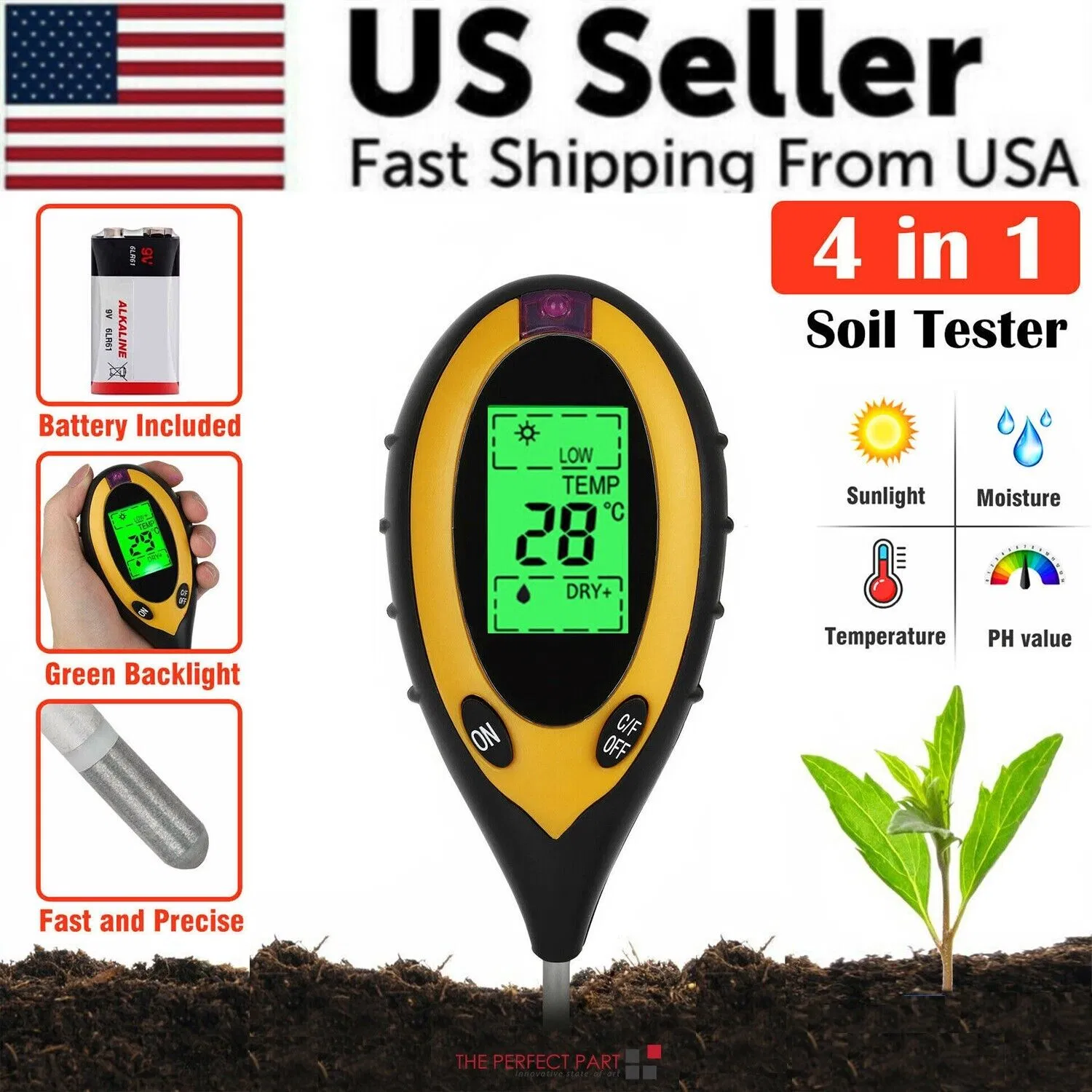

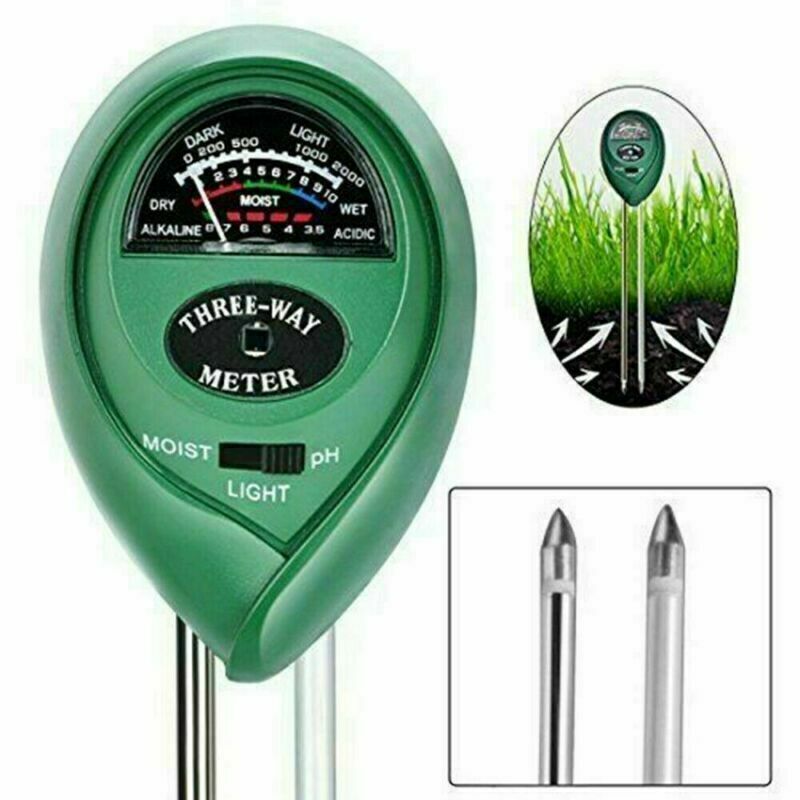
Photos from current listings. Actual item, color, and included accessories may vary.
Soil Ph Meter Buying Guide
A soil pH meter is a handheld probe that estimates acidity/alkalinity (and often moisture, light, or temperature) via a galvanic or conductivity sensor in contact with moist soil. The core trade-off is analog needle simplicity versus digital multifunction sensors: analog units are rugged and battery-free but drift and read only pH/moisture, while digital 3-in-1/4-in-1 units add sunlight and temperature at the cost of calibration and battery dependency. The decision rule: choose analog for quick field pH checks in wet soil with no electronics to fail, and choose digital only when you need logged multi-parameter readings and will calibrate against buffer solutions.
Median $24.49
Key takeaways
- Analog meters use a bimetallic/galvanic probe pair generating a small voltage proportional to soil ion activity; they need no battery but typically carry ±0.5–1.0 pH accuracy and drift with probe corrosion.
- Digital 3-in-1 and 4-in-1 units add a photodiode light sensor and thermistor, but pH still comes from the same two-metal probe; sunlight and temperature channels are separate circuits, not improvements to pH accuracy.
- Probe material matters more than display type: stainless-steel or brass tips resist corrosion, while plated or painted tips degrade in wet, fertilized soil and cause erratic readings within a season.
At a glance
- Category
- Garden Tools
- Last updated
- Nov 28, 2026
Current offers
Highlights
- Analog meters use a bimetallic/galvanic probe pair generating a small voltage proportional to soil ion activity; they need no battery but typically carry ±0.5–1.0 pH accuracy and drift with probe corrosion.
- Digital 3-in-1 and 4-in-1 units add a photodiode light sensor and thermistor, but pH still comes from the same two-metal probe; sunlight and temperature channels are separate circuits, not improvements to pH accuracy.
- Probe material matters more than display type: stainless-steel or brass tips resist corrosion, while plated or painted tips degrade in wet, fertilized soil and cause erratic readings within a season.
- Depth and soil contact govern accuracy: probes must reach 2–4 inches into moist (not waterlogged) soil, and a 6–8 inch probe shaft is needed for accurate readings in established beds and containers.
Best use cases
- Best fit: analog 2-in-1 pH/moisture meter for vegetable beds, compost, and lawn spot-checks where you want no batteries and will rinse the probe after each use; skip digital if you only need pH.
- Best fit: digital 4-in-1 (pH, moisture, light, temperature) for greenhouse and indoor plant owners tracking light and temp alongside pH; skip it for outdoor field use where LCDs fog and batteries die in cold.
- Best fit: long-shaft (8 inch+) probe meter for raised beds, shrubs, and lawn root zones; skip short 4–5 inch pen-style probes for anything deeper than a seedling tray.
- Wrong fit: using any probe meter for hydroponics or soilless media—these read soil ion conductivity and give meaningless pH in water or coco; use a dedicated pH pen with calibration instead.
Buying tips
- Match probe length to root depth: 4–6 inch probes suit containers and seedlings; 8 inch or longer is required to reach the root zone of shrubs, lawns, and raised beds.
- Choose stainless-steel or brass probe tips over plated steel; plated tips corrode in fertilized, moist soil and cause ±1 pH drift within a season.
- Digital units need calibration against pH 4.0 and 7.0 buffer solutions; if the model has no calibration screw or button, treat its pH reading as a relative trend only.
- Prefer units with a separate moisture probe or clear two-probe spacing; closely spaced probes short through wet soil and read low pH in saturated conditions.
Specs
| Meter Type | Analog 2-in-1 vs Digital 3/4-in-1 |
|---|---|
| pH Accuracy | ±0.5–1.0 pH (probe meters) |
| Probe Length | 4–6 in (pots) / 8 in+ (beds) |
| Probe Material | Stainless steel / brass vs plated |
Related searches
What to check before buying
- Confirm your soil is moist before testing—dry soil gives open-circuit readings; water 30–60 minutes ahead and test at 2–4 inch depth.
- Measure your bed or container depth: probe shaft must exceed planned insertion depth by at least 2 inches to avoid bending at the handle.
- For digital 4-in-1 units, confirm the light sensor faces up and is not shadowed by the housing when reading sunlight in the garden.
- Check probe tip material and handle sealing: rubber or sealed handles survive rinsing, while unsealed wooden or open handles swell and fail in wet soil.
FAQ
Data sources: eBay / Amazon listings and product attribute feeds. Updated Nov 28, 2026.
Some links on this page are affiliate links. If you buy after clicking one, we may earn a commission at no extra cost to you. This does not change which products appear here or their order. Affiliate disclosure.