
Photos from current listings. Actual item, color, and included accessories may vary.
Animal Repellent Buying Guide
Animal repellents for yards split into three architectures: motion-activated sprinklers, ultrasonic sonic/ultrasonic emitters, and passive granular/scent barriers; each trades coverage area against persistence and weather tolerance. The core trade-off is active detection range (PIR and emitter power) versus passive durability (water resistance and scent longevity). Choose an active unit only for defined entry corridors with a clear line of sight; choose passive barriers for broad perimeter defense and areas without power or sun.
Median $52.49
Key takeaways
- Motion sprinklers use a PIR sensor triggering a solenoid valve; coverage is a 30-40 ft detection cone with a 3-5 second spray burst, effective only above 40°F to avoid freeze damage.
- Ultrasonic repellers emit 15-25 kHz at 80-110 dB; effectiveness drops sharply beyond 30 ft and through foliage, fences, or walls, so placement must face the approach path directly.
- Solar units rely on a 5V panel charging a 3.7V Li-ion cell (often 1200-2000 mAh); IPX4 handles rain splash but not submersion, and IP55 adds dust sealing for farm use.
At a glance
- Category
- Garden Tools
- Last updated
- Nov 28, 2026
Current offers
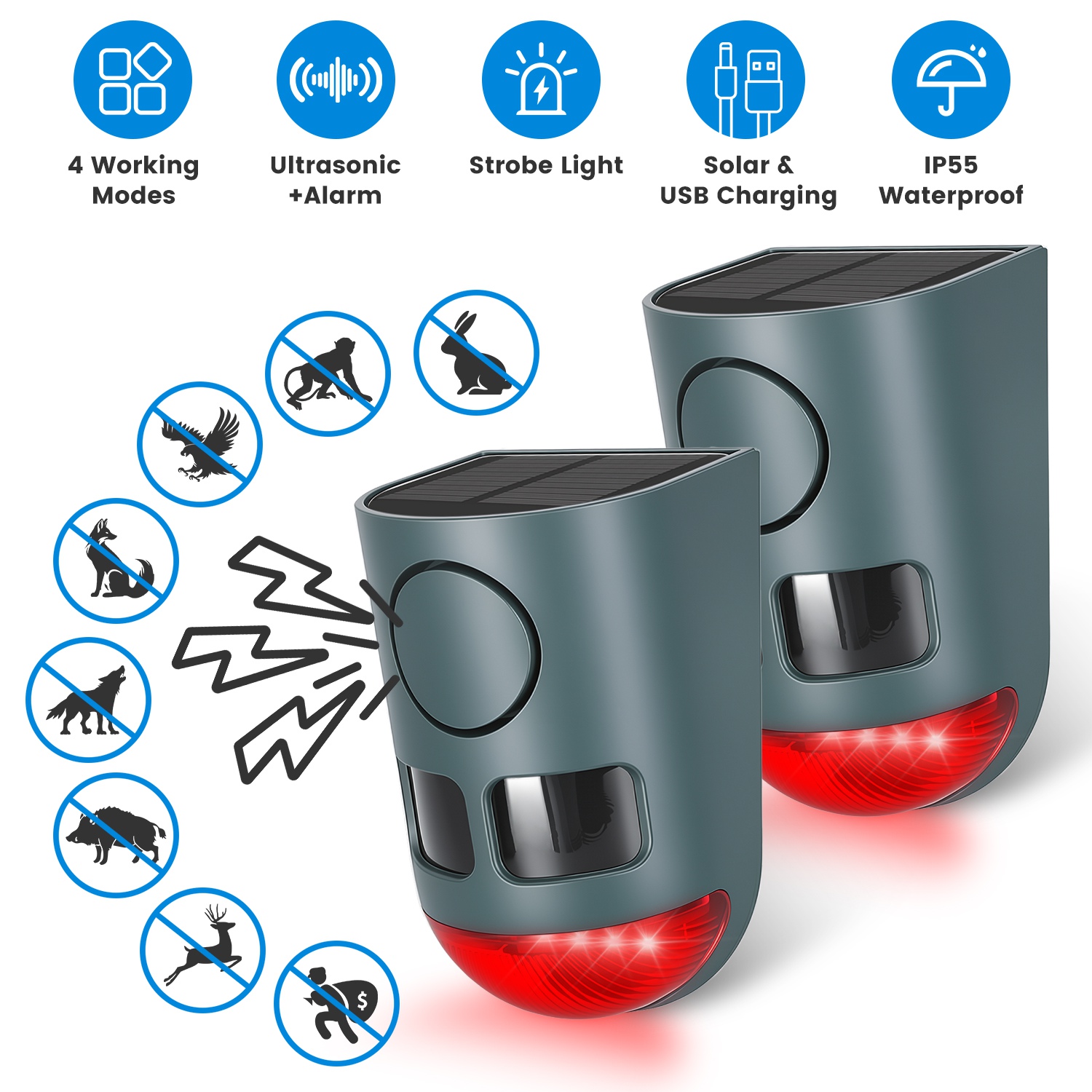 2Pack OR 1Pack Option 3-In-1 Ultrasonic Solar Animal Repeller Motion Activated Repellent With Sound Alarm Strobe Light 4 Modes IP55 Waterproof For Deer Raccoon Squirrel Skunk Coyote$50.99View on Mallflare
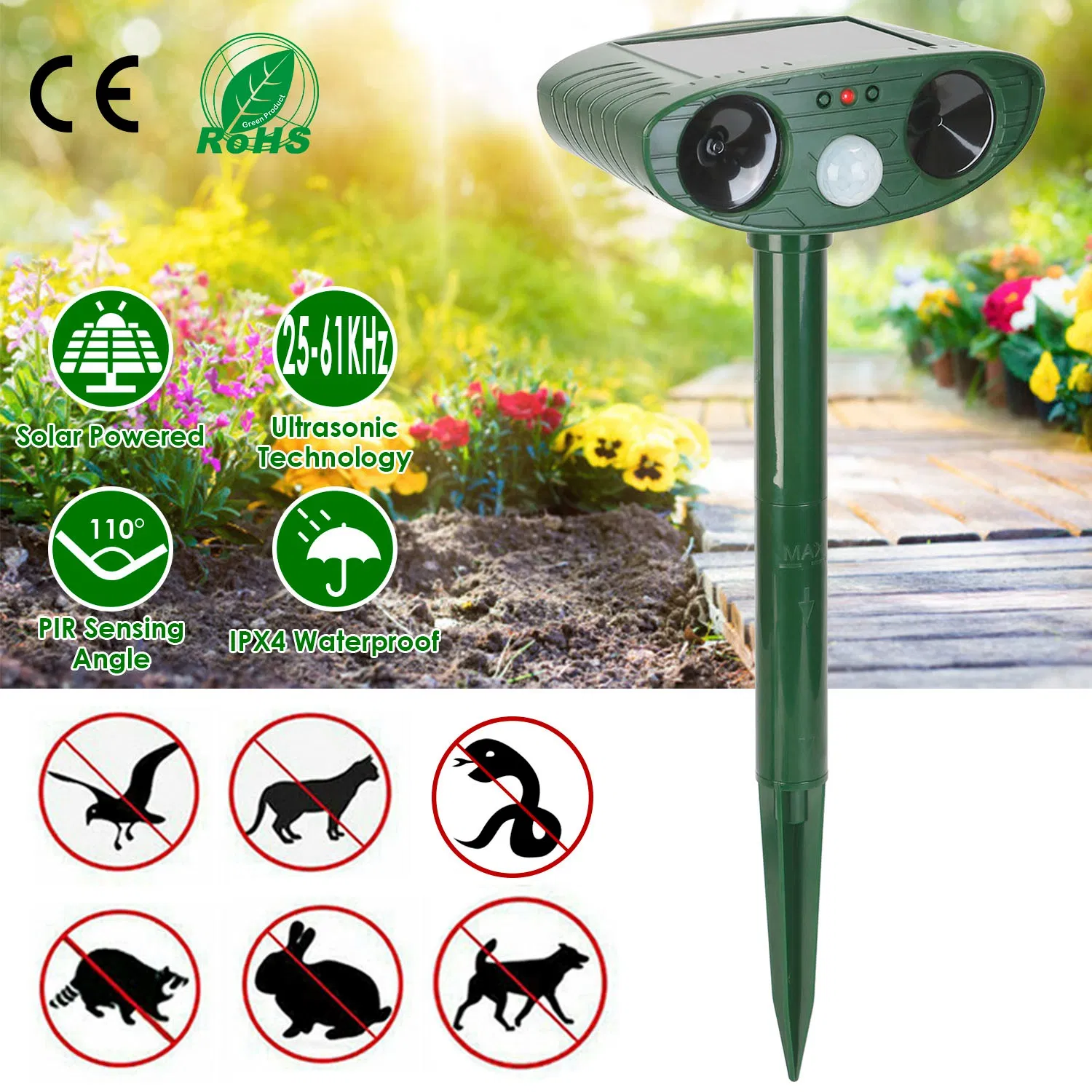 Solar Ultrasonic Animal Repeller PIR Motion Sensor Repellent Chaser IPX4 Waterproof for Farm Garden Yard to Drive Raccoon Squirrel Rat Skunk Rabbit Mole Dog Cat Snake$51.99View on Mallflare
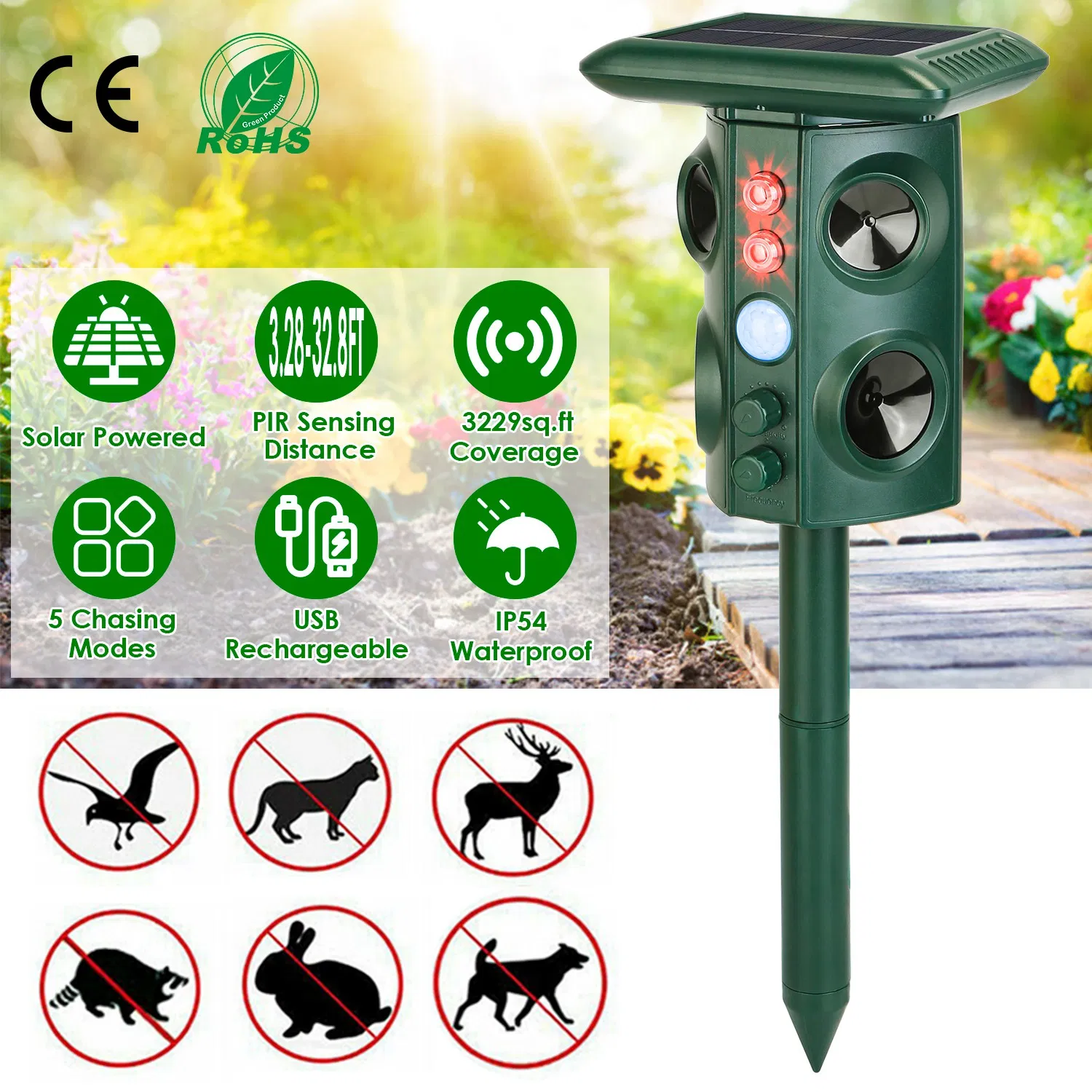 Solar Ultrasonic Animal Repeller Powered Repellent Chaser with PIR Motion Sensor IP54 Waterproof Sound Flashing Light for Deer Raccoon Squirrel Mice Snakes Cat Dog$52.99View on Mallflare
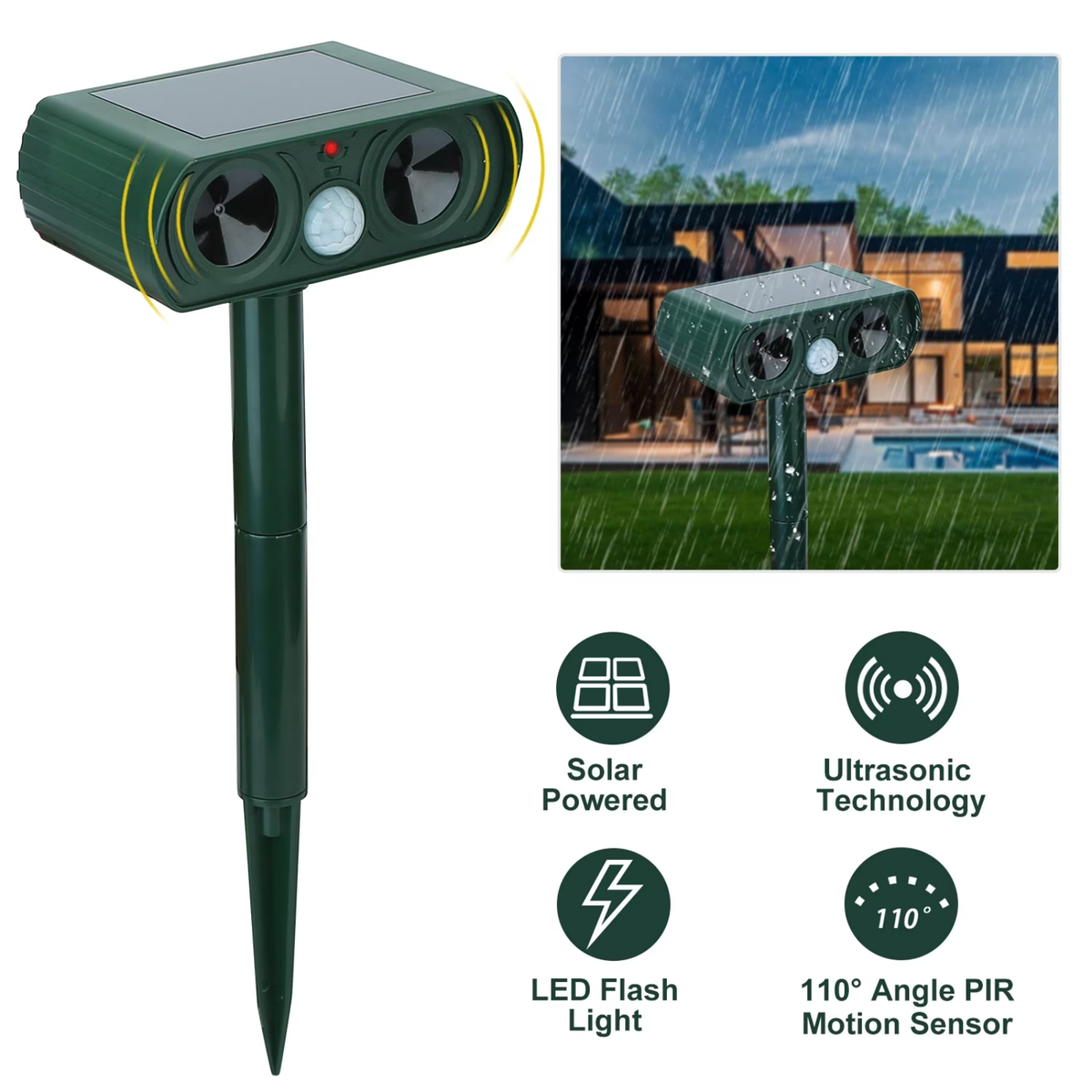 Ultrasonic Animal Repeller Solar Powered Motion Sensor Repellent IPX4 Waterproof Outdoor For Farm Garden Yard Repelling Deer Raccoon Cat Dog Rabbit Squirrel Bird$75.99View on Mallflare
Highlights
- Motion sprinklers use a PIR sensor triggering a solenoid valve; coverage is a 30-40 ft detection cone with a 3-5 second spray burst, effective only above 40°F to avoid freeze damage.
- Ultrasonic repellers emit 15-25 kHz at 80-110 dB; effectiveness drops sharply beyond 30 ft and through foliage, fences, or walls, so placement must face the approach path directly.
- Solar units rely on a 5V panel charging a 3.7V Li-ion cell (often 1200-2000 mAh); IPX4 handles rain splash but not submersion, and IP55 adds dust sealing for farm use.
- Passive granular repellents use putrescent egg solids, capsaicin, or predator urine; reapplication is required every 2-4 weeks and after 1 inch of rain, making them a maintenance tier rather than a set-and-forget solution.
Best use cases
- Best fit: a motion sprinkler for a single garden bed or trash enclosure with a hose bib nearby and clear PIR sightlines; skip ultrasonic units here because foliage blocks the sound cone.
- Best fit: a solar ultrasonic repeller with strobe for open lawn edges or driveways where cats, raccoons, or deer cross; skip it for burrowing moles or voles because the emitter sits above ground.
- Best fit: granular predator-urine or capsaicin barriers for perimeter strips, mulch beds, and fence lines where sun and hose access are absent; skip active units in deep shade where solar cells cannot recharge.
- Wrong fit: any active repeller for a whole-acre property with dense shrubs; use a combination of passive perimeter granules plus one directional sprinkler at the highest-value entry point.
Buying tips
- Size the PIR cone, not the yard: a 110-degree sensor covers roughly a 30-40 ft radius at ground level, so one unit guards a single bed or gate, not a full property line.
- Match water resistance to exposure: IPX4 for covered beds and patios, IP55 or higher for open farm and field placement where dust and driving rain occur.
- For ultrasonic units, pick adjustable frequency (15-25 kHz) and dB above 90; fixed-frequency units lose effectiveness as animals habituate within 2-3 weeks.
- For sprinklers, confirm a standard 3/4-inch garden hose thread and 30-60 PSI supply; low-pressure drip lines will not trigger the solenoid valve reliably.
Specs
| Repeller Type | Ultrasonic / Sprinkler / Granular |
|---|---|
| Detection Range | PIR 30-40 ft cone |
| Waterproof Rating | IPX4 splash / IP55 dust+jet |
| Power Source | Solar 5V panel + 3.7V Li-ion |
Related searches
What to check before buying
- Measure the approach corridor: place the unit within 30 ft of the target zone with an unobstructed line of sight; foliage and fencing block PIR and ultrasonic output.
- Confirm sun exposure: solar panels need 4-6 hours of direct sun; shaded placements require a wired or battery-replaceable unit instead.
- Check hose and pressure for sprinklers: a nearby 3/4-inch GHT spigot at 30-60 PSI; verify the valve and supply line will not freeze in winter.
- Verify climate rating: ultrasonic and sprinkler units are rated for 40°F and above; drain sprinkler lines and bring solar units indoors before first frost.
FAQ
Data sources: eBay / Amazon listings and product attribute feeds. Updated Nov 28, 2026.
Some links on this page are affiliate links. If you buy after clicking one, we may earn a commission at no extra cost to you. This does not change which products appear here or their order. Affiliate disclosure.