
Photos from current listings. Actual item, color, and included accessories may vary.
Animal Deterrent Buying Guide
Animal deterrents for yards are motion-triggered devices that use ultrasonic speakers, strobe lights, or water sprays to startle pests away without traps or chemicals. The core trade-off is between deterrent modalities and weather-sealed durability: ultrasonic-only units are affordable but species-selective and easily habituated, while multi-mode and sprinkler types resist repeat visits but demand stronger IP ratings and water access. The decision rule: buy IP65 or higher with solar plus USB backup and at least two deterrent stimuli; skip IPX4 single-mode units for permanent outdoor installs.
Median $52.99
Key takeaways
- Ultrasonic deterrents are species-selective: frequencies above 20 kHz deter rodents and cats, but deer and raccoons respond better to strobe light and sound alarms combined.
- Ingress protection is the durability benchmark: IPX4 handles light rain only, IP54 tolerates dust and splashing, and IP65/IPX6 withstand direct jets and heavy seasonal weather.
- PIR detection range and coverage area are independent specs: a 30 ft detection cone rarely covers the advertised square footage, so match coverage claims to actual sensor angle.
At a glance
- Category
- Garden Tools
- Last updated
- Nov 28, 2026
Current offers
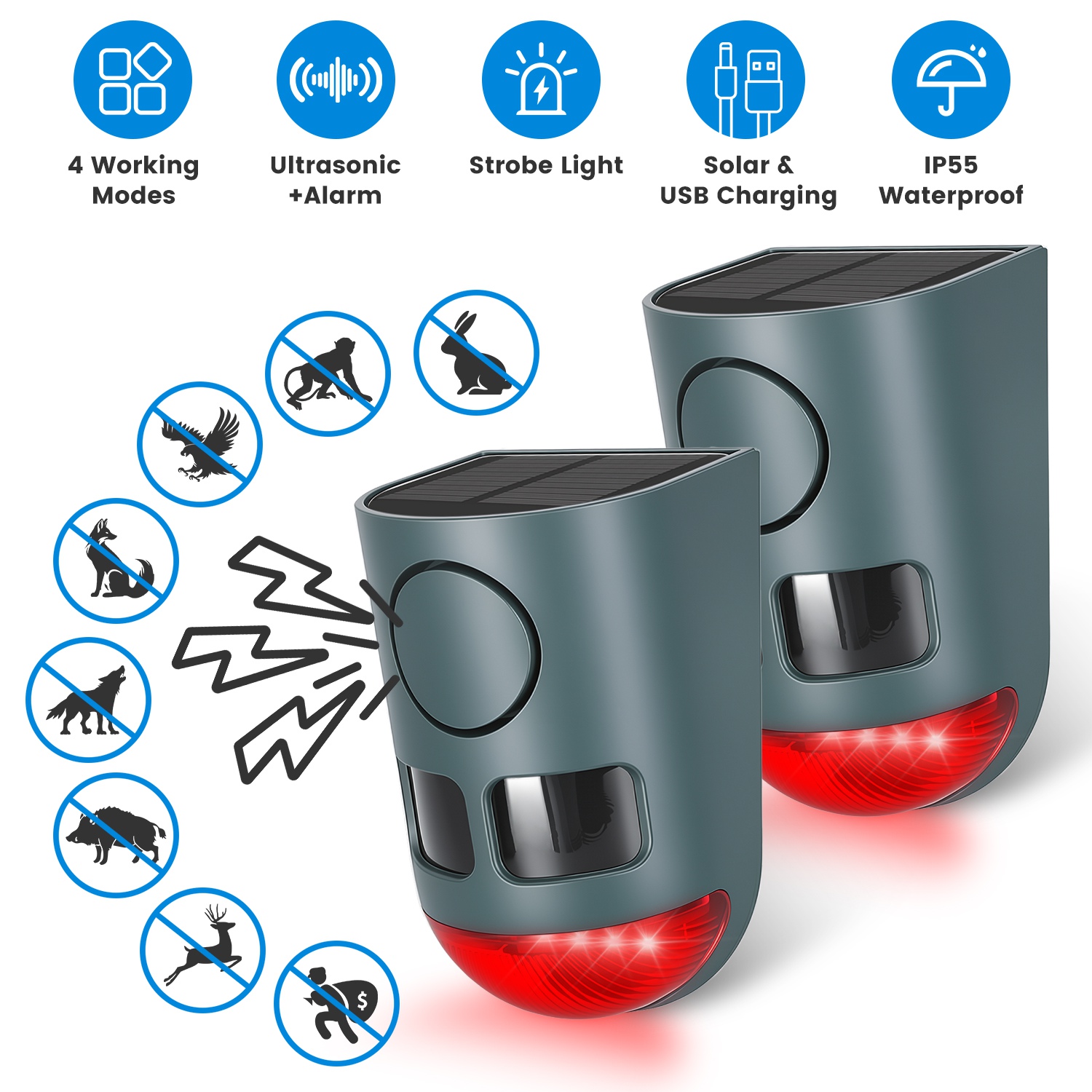 2Pack OR 1Pack Option 3-In-1 Ultrasonic Solar Animal Repeller Motion Activated Repellent With Sound Alarm Strobe Light 4 Modes IP55 Waterproof For Deer Raccoon Squirrel Skunk Coyote$50.99View on Mallflare
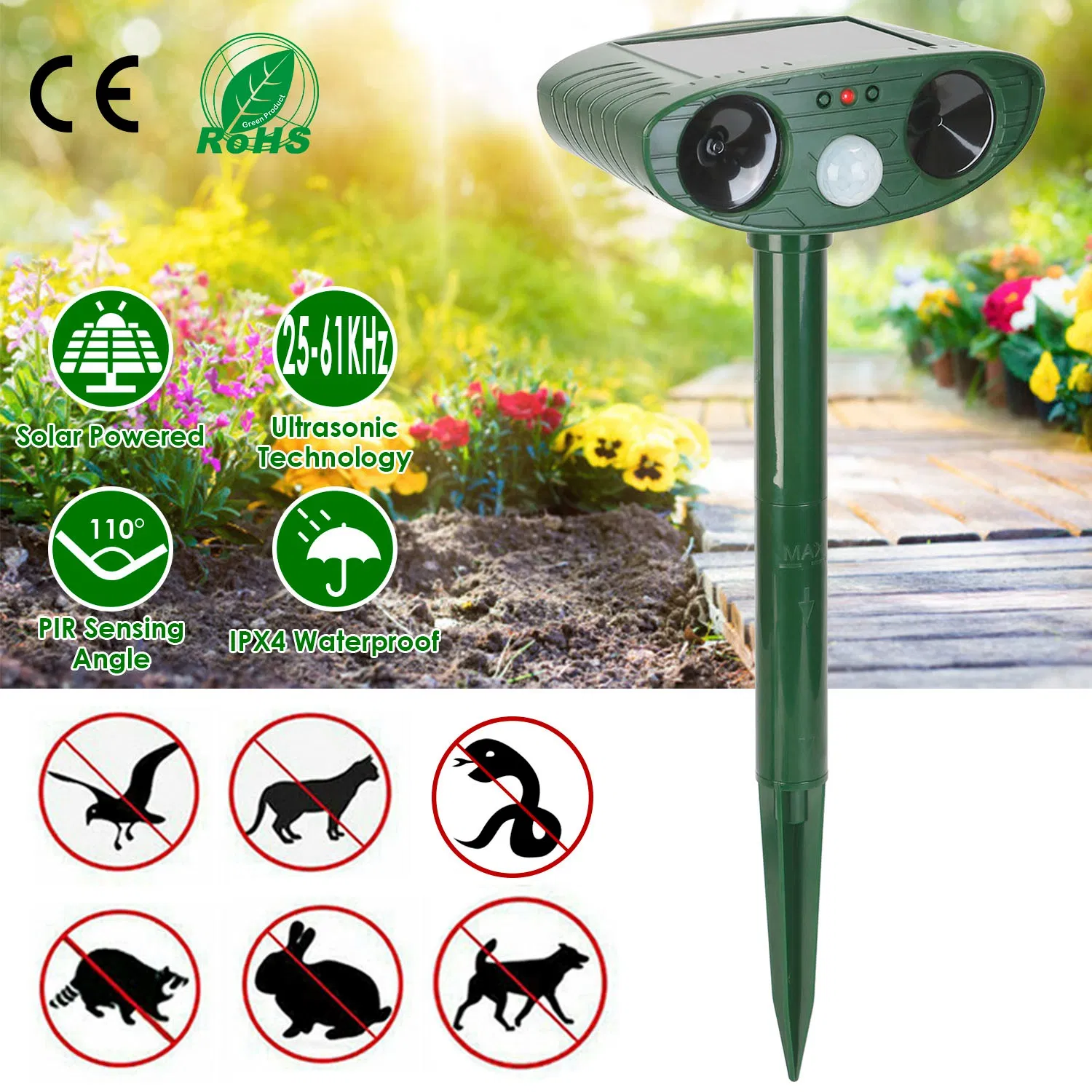 Solar Ultrasonic Animal Repeller PIR Motion Sensor Repellent Chaser IPX4 Waterproof for Farm Garden Yard to Drive Raccoon Squirrel Rat Skunk Rabbit Mole Dog Cat Snake$51.99View on Mallflare
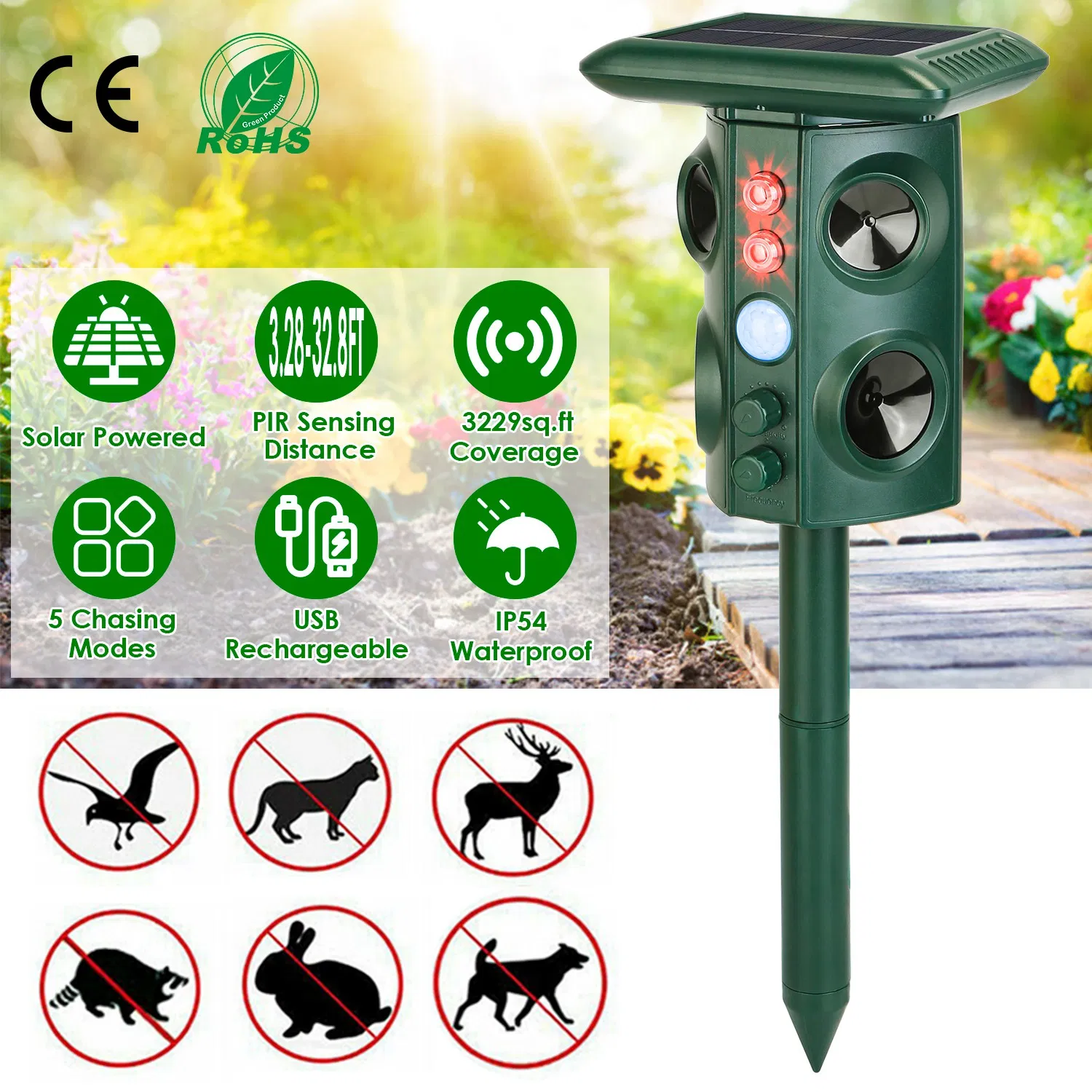 Solar Ultrasonic Animal Repeller Powered Repellent Chaser with PIR Motion Sensor IP54 Waterproof Sound Flashing Light for Deer Raccoon Squirrel Mice Snakes Cat Dog$52.99View on Mallflare
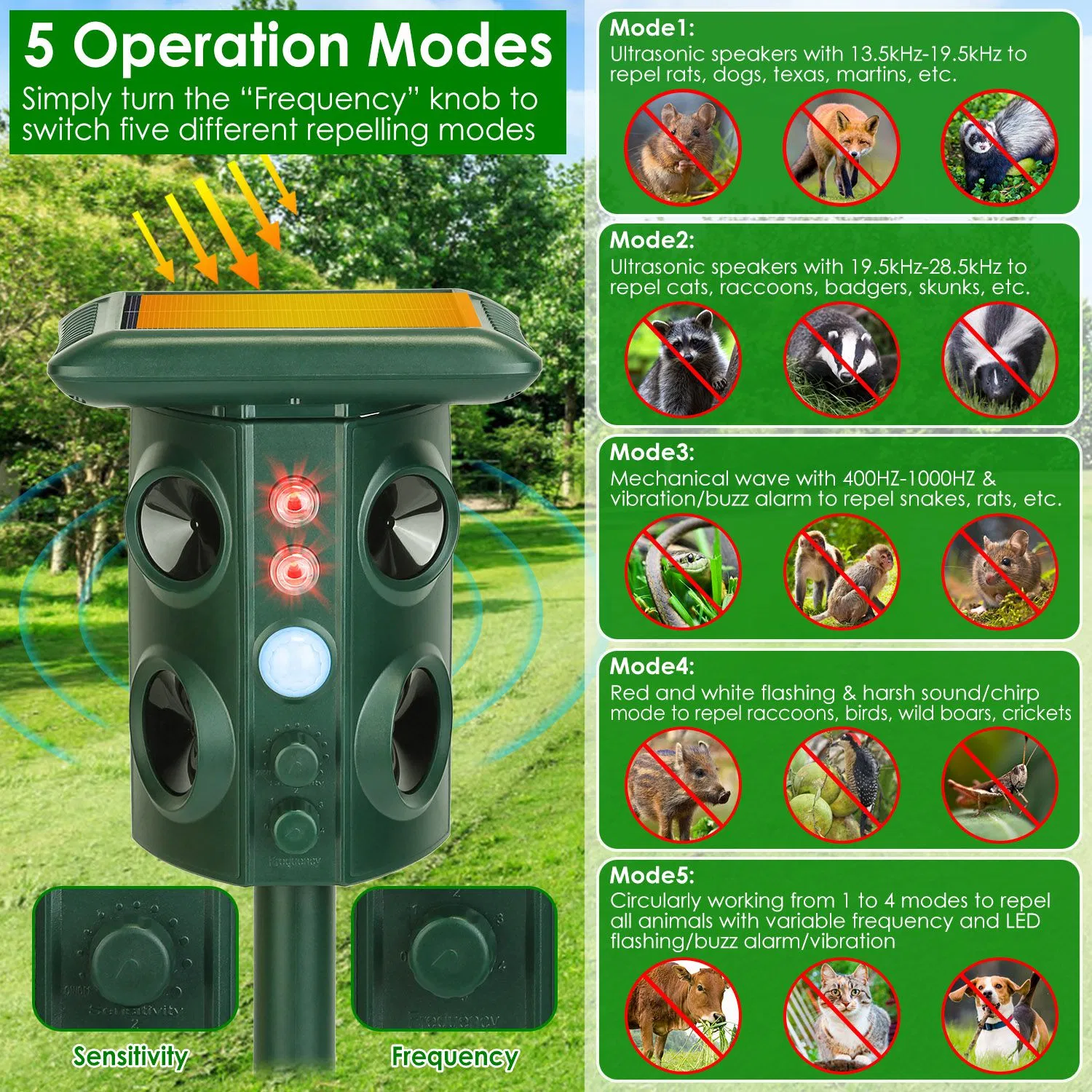 Outdoor Indoor Animal Deterrent - Solar USB Rechargeable, 5 Chasing Modes, 3229Sq.ft Protection, IP54 Waterproof, Easy Install for Yard Garden Farm Garage$65.99View on Mallflare
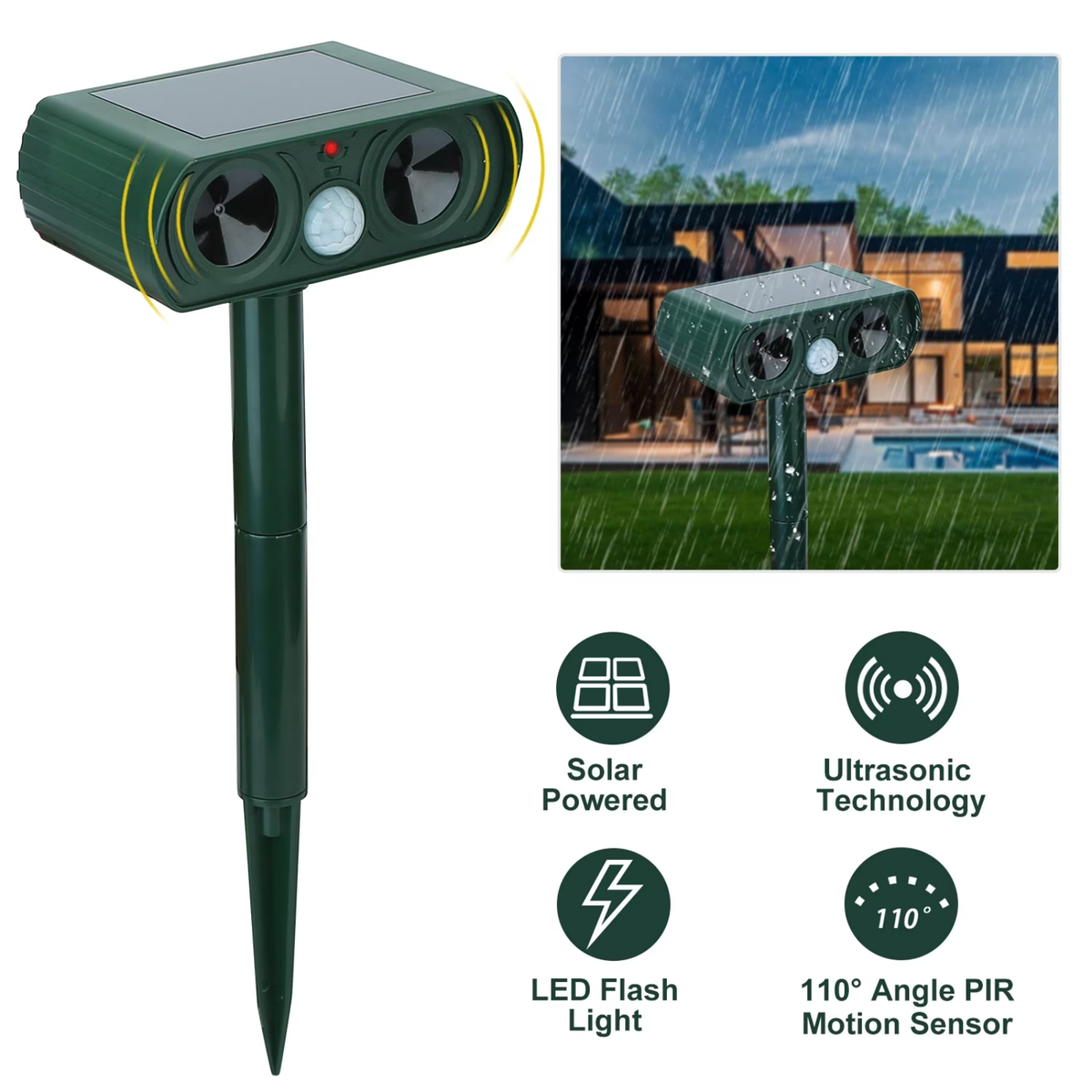 Ultrasonic Animal Repeller Solar Powered Motion Sensor Repellent IPX4 Waterproof Outdoor For Farm Garden Yard Repelling Deer Raccoon Cat Dog Rabbit Squirrel Bird$75.99View on Mallflare
Highlights
- Ultrasonic deterrents are species-selective: frequencies above 20 kHz deter rodents and cats, but deer and raccoons respond better to strobe light and sound alarms combined.
- Ingress protection is the durability benchmark: IPX4 handles light rain only, IP54 tolerates dust and splashing, and IP65/IPX6 withstand direct jets and heavy seasonal weather.
- PIR detection range and coverage area are independent specs: a 30 ft detection cone rarely covers the advertised square footage, so match coverage claims to actual sensor angle.
- Sprinkler deterrents need constant hose pressure and above-freezing temperatures, while solar ultrasonic units run on panel plus USB backup for off-grid placement.
Best use cases
- Best fit: a 0.25-acre garden with raccoons and deer — choose a dual-speaker ultrasonic unit with strobe, IP65 rating, and 30 ft PIR range; skip IPX4 single-speaker models.
- Best fit: a suburban lawn with cats and squirrels — a solar ultrasonic repeller with 5 chasing modes and IP54 is sufficient; skip sprinkler units that require hose routing.
- Best fit: a farm perimeter or garage with skunks and coyotes — pair two or more units for overlapping coverage and pick IPX6 waterproofing; skip single-pack low-coverage units.
- Wrong fit: an indoor shed or covered patio with pets present — avoid ultrasonic units that can stress dogs and cats; use a sprinkler deterrent only where water spray is acceptable.
Buying tips
- Calculate coverage by detection cone, not label: a 110-degree PIR sensor at 30 ft covers roughly 500 sq ft, so a 3,000 sq ft claim needs multiple units or a wider sensor angle.
- Choose IP65 or IPX6 for year-round outdoor mounting; IPX4 models belong under eaves or in mild climates with no direct rain exposure.
- Prefer solar plus USB rechargeable power so the unit keeps running through cloudy weeks; a unit with solar only may stall in low-light seasons.
- Match deterrent type to species: ultrasonic plus strobe for nocturnal mammals, sprinkler for birds and cats, and audible alarm modes for deer and coyotes.
Specs
| Deterrent Mode | Ultrasonic / Strobe / Alarm / Spray |
|---|---|
| Waterproof Rating | IPX4 / IP54 / IP65 / IPX6 |
| Power Source | Solar + USB rechargeable / Battery |
| Detection Range | PIR 20–30 ft, 110° cone |
Related searches
What to check before buying
- Measure the actual garden or yard area and divide by the realistic detection cone coverage (about 500 sq ft per 30 ft PIR unit) to size the number of units.
- Confirm mounting height and location: PIR sensors work best 1–3 ft above ground aimed across the pest path, with the solar panel facing direct sun.
- Check climate and water access: sprinkler deterrents need a pressurized hose and above-freezing temperatures; ultrasonic units need an IP rating matched to local rainfall.
- Verify power strategy: solar panel plus USB rechargeable battery for off-grid spots, or battery-only for shaded areas where panels underperform.
FAQ
Data sources: eBay / Amazon listings and product attribute feeds. Updated Nov 28, 2026.
Some links on this page are affiliate links. If you buy after clicking one, we may earn a commission at no extra cost to you. This does not change which products appear here or their order. Affiliate disclosure.